
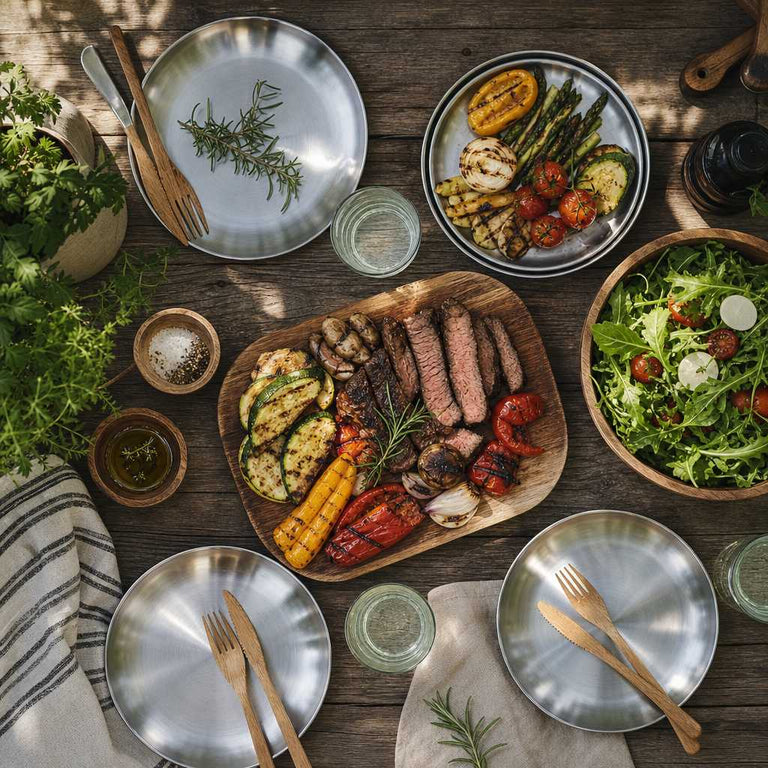
The average American backyard BBQ generates roughly 6 pounds of trash per person, according to the EPA's municipal solid waste data. Multiply that by a guest list of twenty, and you have a landfill contribution before the coals even cool. Hosting a zero waste BBQ is not about perfectionism or expensive gear. It is about making deliberate swaps that cut waste dramatically without cutting the fun. This guide walks you through every stage of your eco-friendly backyard party, from planning the menu to choosing drinkware that does not end up in a dumpster by Sunday morning.
Table of Contents
- Quick Takeaways
- Plan Your Guest List and Portions First
- Choose Reusable and Biodegradable Drinkware
- Build a Zero-Waste Food Station
- Compost and Recycling Setup That Guests Actually Use
- Sustainable Grilling Fuel and Equipment
- Decorations That Do Not Create Waste
- Zero-Waste BBQ Approach Comparison
- Frequently Asked Questions
- References
Quick Takeaways
Key Insight |
Explanation |
|---|---|
Portion planning eliminates the biggest source of food waste |
Use the 1.5 serving rule: plan 1.5 portions per adult per protein item, then adjust sides downward. Overbuying perishable food is the single largest avoidable waste stream at backyard parties. |
Biodegradable can insulators replace single-use plastic foam |
Products like the TreeSleeve from Better Wheel VT are made from sustainably sourced Vermont hardwood and fully biodegrade, unlike foam koozies that persist in landfills for decades. |
Labeled bins triple correct sorting behavior |
Research from the Waste Management industry consistently shows that guests sort waste correctly at far higher rates when bins are clearly labeled with images and text. |
Lump hardwood charcoal burns cleaner than briquettes |
Standard charcoal briquettes contain coal dust and binding agents. Lump hardwood charcoal produces less ash, fewer additives, and a smaller carbon footprint per cook session. |
Cloth napkins cost less per use than paper over a season |
A set of 20 cloth napkins averages $15-25 and lasts an entire summer. Paper napkins for the same number of events cost more and create guaranteed landfill waste every time. |
Potluck-style requests reduce packaging waste at the source |
Asking guests to bring dishes in reusable containers means less single-use packaging arrives at your event before it even starts. |
Natural beeswax or soy candles replace plastic lighting decorations |
String lights use electricity but are reusable. Disposable plastic tiki torch inserts and single-use decorative lighting create unnecessary waste that natural alternatives avoid entirely. |
Plan Your Guest List and Portions First
Every successful zero waste BBQ starts before you touch a grocery cart. In practice, overbuying food accounts for more waste at backyard parties than all packaging combined. The USDA estimates that 30 to 40 percent of the food supply is wasted in the United States, and summer cookouts are a reliable contributor to that number.
Nail down your headcount firmly. A rough "maybe twenty people" turns into twelve, and suddenly you have eight extra burger patties going bad by Tuesday. Send a simple RSVP request with a firm deadline, even for informal gatherings.
Use the 1.5 Protein Serving Rule
Plan 1.5 servings of your main protein per adult, one per child. For a party of 16 adults and 4 kids, that is 28 burger patties or equivalent. Round to the nearest pack size that does not put you over. For sides like potato salad or corn, plan one serving per person, not 1.5. People pile on proteins and take modest portions of sides.
Build a simple spreadsheet before shopping. List every item, the quantity needed, the package size available, and the leftover estimate. This takes ten minutes and eliminates guesswork at the store.
Plan for Leftovers Intentionally
A common mistake is treating leftovers as a problem. Plan for them as a feature. Have reusable containers ready so guests can take food home. Label them with masking tape and a marker. This turns potential waste into appreciated hospitality, and nothing gets thrown away.
Pro tip: Ask guests to bring their own reusable containers if they want to take food home. This eliminates your need to stock disposable takeout boxes and makes the take-home option frictionless for everyone.


Choose Reusable and Biodegradable Drinkware
Drinks are where the most visible waste happens at any outdoor party. A typical cooler full of canned beer, once the cans are drained, leaves behind a pile of metal that hopefully gets recycled and, more often, a cluster of foam or plastic insulators that definitely do not. This is one of the easiest waste streams to fix with a single intentional product choice.
Aluminum cans are actually the most recycled beverage container in the United States, with a recycling rate above 50 percent, according to the Aluminum Association. The problem is not the can. The problem is everything wrapped around it.
Why Foam Koozies Are a Sustainability Dead End
Standard foam can insulators are made from polyurethane or EVA foam. Neither material biodegrades meaningfully. They end up in landfills or as litter in exactly the kinds of outdoor spaces your guests love. Competitors like cooziecooler.com and koozieking.com sell foam and neoprene products that keep drinks cold but create permanent waste. That tradeoff is not acceptable at a zero waste BBQ.
The TreeSleeve as a Functional and Eco-Friendly Alternative
The TreeSleeve from Better Wheel VT is crafted from sustainably sourced hardwood from Vermont forests. It is fully biodegradable, which means it will not outlive your grandchildren in a landfill. The wood construction also makes it a keepsake item. Guests take them home and actually keep them, which means they stop being single-use objects entirely.
For outdoor and nature-themed BBQs, the wildlife and outdoor motif designs from Better Wheel VT double as party favors that reinforce the event's eco-conscious theme. You are not just insulating a beer. You are giving guests something connected to the Vermont forests the product comes from.
Pro tip: Order custom TreeSleeves with your event name or date engraved. Guests keep personalized drinkware at a far higher rate than generic items, which means zero units end up in the trash after the party.
"The most sustainable product is the one someone actually keeps and uses." This principle, widely cited in sustainable product design circles, explains exactly why a beautiful hardwood can insulator outperforms a throwaway foam one on every environmental metric that matters.
Build a Zero-Waste Food Station
The food station is where an eco-friendly backyard party either holds together or falls apart. Condiments in individual plastic packets, single-use paper plates, and plastic cutlery are the typical culprits. Every one of them has a better alternative that costs the same or less over a summer.
Set up condiments in reusable squeeze bottles or small glass jars. Buy bulk mustard, ketchup, and relish, then fill your own containers. You reduce packaging waste before the party even starts, and refillable bottles look far more intentional than a cluster of plastic squeeze packets.
Plates and Cutlery That Are Worth Using
Compostable plates made from sugarcane or bamboo are the right call when reusable dishes are not practical. They cost slightly more than cheap paper plates but break down in a home compost pile within 90 days under the right conditions. Avoid the word "biodegradable" on plates without certification. It means almost nothing without a ASTM D6400 or BPI certification label.
Reusable stainless steel or bamboo utensils are the best option. Set them out in a mason jar, provide a small tub for used ones, and wash after the party. The cost per event drops to zero after the first use. A common mistake is buying "compostable" plastic cutlery without verifying it requires industrial composting. That packaging goes straight to landfill when home composting is the only option available.
Buy Local and Reduce Packaging at the Source
Farmers markets and local butchers often sell produce and meat with minimal or no plastic packaging. Buying local also reduces transportation emissions, which is a meaningful secondary benefit for sustainable summer entertaining. Bring your own bags and containers. Many vendors actively support this.

Compost and Recycling Setup That Guests Actually Use
The sorting station is the single most underestimated element of a zero waste BBQ. You can do everything else right and still end up with a full garbage bag if guests cannot quickly identify which bin accepts what. In practice, the problem is almost never guest motivation. It is confusing bin design.
Set up three clearly labeled stations: Compost, Recycling, and Landfill. Do not label the last one "Trash" without explanation. Use a small sign that reads "Landfill Only: Foam, Chip Bags, Foil" so guests understand the stakes of that bin.
Make Compost the Easiest Choice
Place the compost bin closest to where guests eat. Food scraps should take the least effort to sort correctly. Use a bin with a foot pedal or wide opening so it requires no hand contact. Line it with a certified compostable bag, not a plastic trash bag.
Post a laminated sheet on or near each bin with three example items and a visual. Keep it simple. "Corn cobs, plate scrapings, napkins" on the compost bin. "Cans, glass bottles, cardboard" on the recycling bin. Guests make decisions in under two seconds at a party. Make the right decision the obvious one.
What to Do with Party Waste After the Event
Check your municipality's composting program. Many areas now offer curbside pickup or drop-off composting. If yours does not, a backyard compost pile handles food scraps and certified compostable materials effectively. The Vermont Agency of Natural Resources, for example, provides strong resources on food scrap composting for exactly this kind of residential use.
Sustainable Grilling Fuel and Equipment
Most BBQ fuel choices are not scrutinized the way food choices are, but they should be. Standard charcoal briquettes contain coal dust, sodium nitrate, and various binders. Lump hardwood charcoal burns hotter, produces less ash, and contains no additives. It is the straightforward better choice for an eco-friendly backyard party.
Propane grills burn cleaner than charcoal in terms of particulate emissions, which matters if air quality is a priority. The tradeoff is that propane is a fossil fuel. For a truly low-impact BBQ, a propane grill used efficiently for a larger group often results in lower per-serving emissions than individual charcoal fires. The data depends heavily on usage patterns.
Natural Fire Starters Instead of Lighter Fluid
Lighter fluid is petroleum-based and releases volatile organic compounds when burned. Natural fire starters made from wood shavings and beeswax or soy wax light just as reliably and contain no synthetic chemicals. They cost slightly more per unit but the difference over a summer of BBQs is a few dollars, not a significant expense.
A chimney starter eliminates the need for lighter fluid entirely and is the method any experienced griller should already be using. Fill it, stuff newspaper underneath, light the paper. Coals are ready in 15 minutes with zero chemical input.
Reusable Grill Tools and Cleaning
Avoid single-use aluminum grill pans unless the material will actually be recycled afterward, which requires rinsing off food residue first. Cast iron or stainless steel grill grates last decades with basic maintenance. A natural bristle grill brush or a halved onion rubbed across a hot grate cleans effectively without synthetic materials.
Decorations That Do Not Create Waste
Party decorations are optional. Waste from party decorations is also optional. The sustainable summer entertaining approach to decor is simple: use what you already own, borrow what you do not, and buy only things that will be reused.
Potted plants from your garden or patio serve as centerpieces that go back outside after the party. Mason jars filled with wildflowers are biodegradable, compostable, and genuinely attractive. Avoid balloon arches, single-use plastic banners, and metallic streamers. All of these end up in the trash within hours and some, particularly balloons, are documented hazards to wildlife.
Lighting That Does Not Create Waste
Reusable string lights are the single best investment for outdoor entertaining. Buy them once, store them well, use them for years. LED string lights consume a fraction of the energy of incandescent versions. Battery-powered versions create battery waste. Plug-in LED string lights connected to a renewable-energy grid or solar extension cord are the cleanest option.
Beeswax pillar candles or soy candles in reusable glass jars burn cleanly, create a warm atmosphere, and produce no synthetic waste. The glass jars can store condiments or supplies at your next event.
Zero-Waste BBQ Approach Comparison
Not every zero waste swap carries the same impact. Here is a direct comparison of three core approaches to sustainable summer entertaining so you can prioritize where your effort actually goes.
Approach |
Waste Reduction Impact |
Cost to Implement |
|---|---|---|
Reusable Drinkware with Biodegradable Insulators (e.g., TreeSleeve) |
High. Eliminates foam koozie waste entirely. TreeSleeves double as take-home gifts, removing them from the waste stream permanently. |
Low to Medium. Comparable to foam koozies per unit. Custom versions add small premium but eliminate single-use entirely. |
Compostable Certified Plates and Utensils (BPI-certified) |
Medium to High when paired with active composting. Low if no composting infrastructure exists, as many compostables require industrial facilities. |
Low. Certified compostable plates cost $0.10-0.25 more per unit than standard paper. Reusable dishes cost more upfront but nothing per use afterward. |
Three-Bin Sorting Station with Clear Labeling |
Very High for sorting accuracy. Industry data shows clearly labeled stations can divert over 60 percent of party waste from landfill when hosts invest in simple signage. |
Very Low. Three bins and a printed label sheet cost under $10 and can be reused at every future event. |
Frequently Asked Questions
What is the single highest-impact change I can make for a zero waste BBQ?
The single highest-impact change is eliminating single-use disposable drinkware and its accessories. Canned beverages are already highly recyclable, but the foam and plastic insulators wrapped around them are not. Switching to a biodegradable wood can insulator like the TreeSleeve from Better Wheel VT removes a permanent landfill item from every drink served. Combined with a labeled recycling bin for the cans themselves, this one change addresses the most visible and persistent waste category at any outdoor party.
Are compostable plates actually better than regular paper plates?
Only if you have access to composting. BPI-certified compostable plates break down properly in a home compost pile or industrial composting facility. If your only option is curbside landfill collection, certified compostable plates still end up in landfill where they break down far more slowly. Reusable dishes are the genuinely superior option. Compostable plates are a good backup when washing dishes for 30 guests is not practical.
How do I keep food cold without single-use plastic or foam?
Use a quality stainless steel or rotomolded plastic cooler that will last many years rather than a disposable foam cooler. For drinks specifically, a large galvanized metal tub filled with ice is fully reusable and keeps beverages cold effectively. The ice itself is the only consumable, and it melts into water. Avoid single-use foam coolers entirely. They crack, cannot be effectively recycled, and break down into microplastic fragments.
What do I do with leftover food to avoid waste?
Have a clear leftover plan before guests arrive. Set out reusable containers on a dedicated table so guests can pack food to take home before you even start cleaning up. Anything remaining after guests leave should go directly into your refrigerator in covered containers. Cooked meats stay safe for three to four days. Compost anything genuinely past use. The goal is zero food in the garbage bag, which is achievable with advance planning.
Can I host a zero waste BBQ on a tight budget?
Yes, and in many cases a zero waste BBQ costs less than a conventional one. Cloth napkins bought once replace paper napkins bought repeatedly. Reusable cutlery from a thrift store costs a few dollars and lasts indefinitely. Planning portions carefully reduces food spend. The only area where upfront cost is higher is reusable drinkware and quality coolers, both of which pay for themselves within a single season of regular use.
What makes TreeSleeve different from a regular koozie for an eco-friendly party?
A standard foam or neoprene koozie from mass-market suppliers like customkoozies.com or koozieking.com is made from synthetic materials that do not biodegrade. The TreeSleeve from Better Wheel VT is made from sustainably sourced Vermont hardwood and fully biodegrades at end of life. More importantly, it is a quality keepsake item that guests actually hold onto, which means it never becomes waste in the first place. For a sustainable summer entertaining setup, that distinction matters far more than the insulation performance, which is comparable across both types.
What is your approach to zero waste entertaining? Share what has worked at your own backyard gatherings or let us know which of these swaps you are planning to try first.

Share:
Sustainable Shopping Guide: What Eco Labels Really Mean
Father's Day for Outdoor Dads: Gifts He'll Actually Use