Most people grab a neoprene koozie without thinking twice. It is cheap, it is everywhere, and it does the job well enough. But if you have spent any time around serious outdoor enthusiasts or eco-conscious gift shoppers, you know that "well enough" is not always good enough. The wooden can insulator vs koozie debate has become genuinely interesting in 2026, and the answer is no longer obvious. This comparison breaks down real performance, environmental impact, and gift value so you can make an informed choice rather than defaulting to habit.
Table of Contents
- Quick Takeaways
- What Is a Wooden Can Insulator
- What Is a Neoprene Koozie
- Thermal Performance Head to Head
- Environmental Impact Comparison
- Full Comparison Table
- Gift Value and Personalization
- Who Should Choose Which
- Frequently Asked Questions
- References
Quick Takeaways
Key Insight |
Explanation |
|---|---|
Wood insulates through natural air pockets |
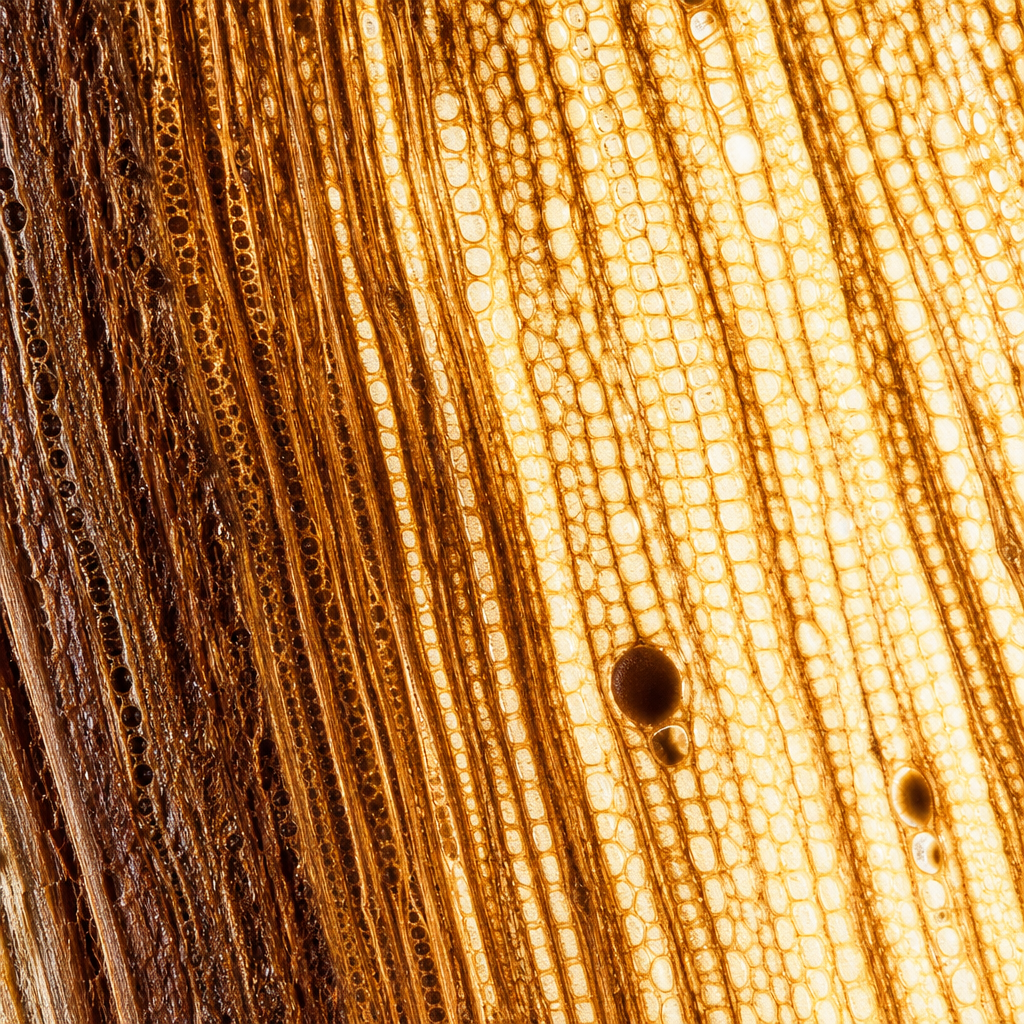
Hardwood like maple and birch contains cellular air pockets that slow heat transfer, giving wooden insulators real thermal performance without synthetic foam. |
Neoprene is faster to warm up |
Neoprene koozies lose effectiveness faster in direct sunlight than wooden insulators, which reflect and resist radiant heat better due to wood's lower thermal conductivity. |
Neoprene takes 400 to 1000 years to biodegrade |
Synthetic neoprene is a petrochemical product. It does not break down in landfill conditions within any meaningful human timeframe, according to environmental materials data. |
TreeSleeve is fully biodegradable |
Better Wheel VT's TreeSleeve is crafted from sustainably sourced Vermont hardwood and breaks down naturally at end of life, leaving no persistent waste. |
Wooden insulators win on perceived gift value |
In practice, a wooden can insulator reads as a premium, intentional gift. A neoprene koozie reads as a bulk promotional item, even when it is not. |
Custom wood designs outlast printed neoprene |
Laser-engraved or carved wood designs do not peel, fade, or crack the way printed neoprene graphics do after repeated washing and sun exposure. |
Fit matters for both types |
Standard 12 oz cans fit most koozies loosely. TreeSleeve is precision-fitted to standard can dimensions, which improves grip and thermal contact. |
What Is a Wooden Can Insulator
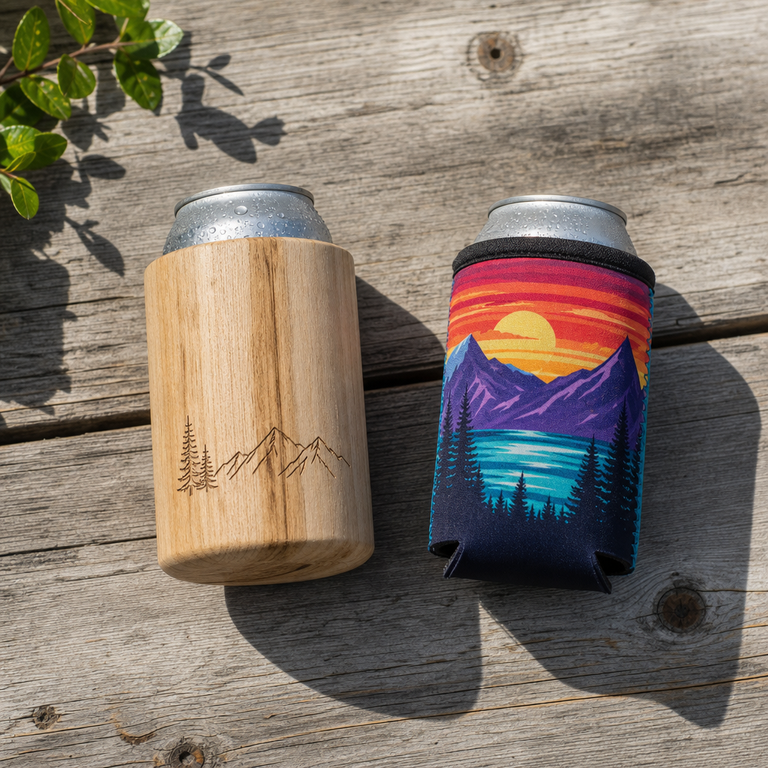
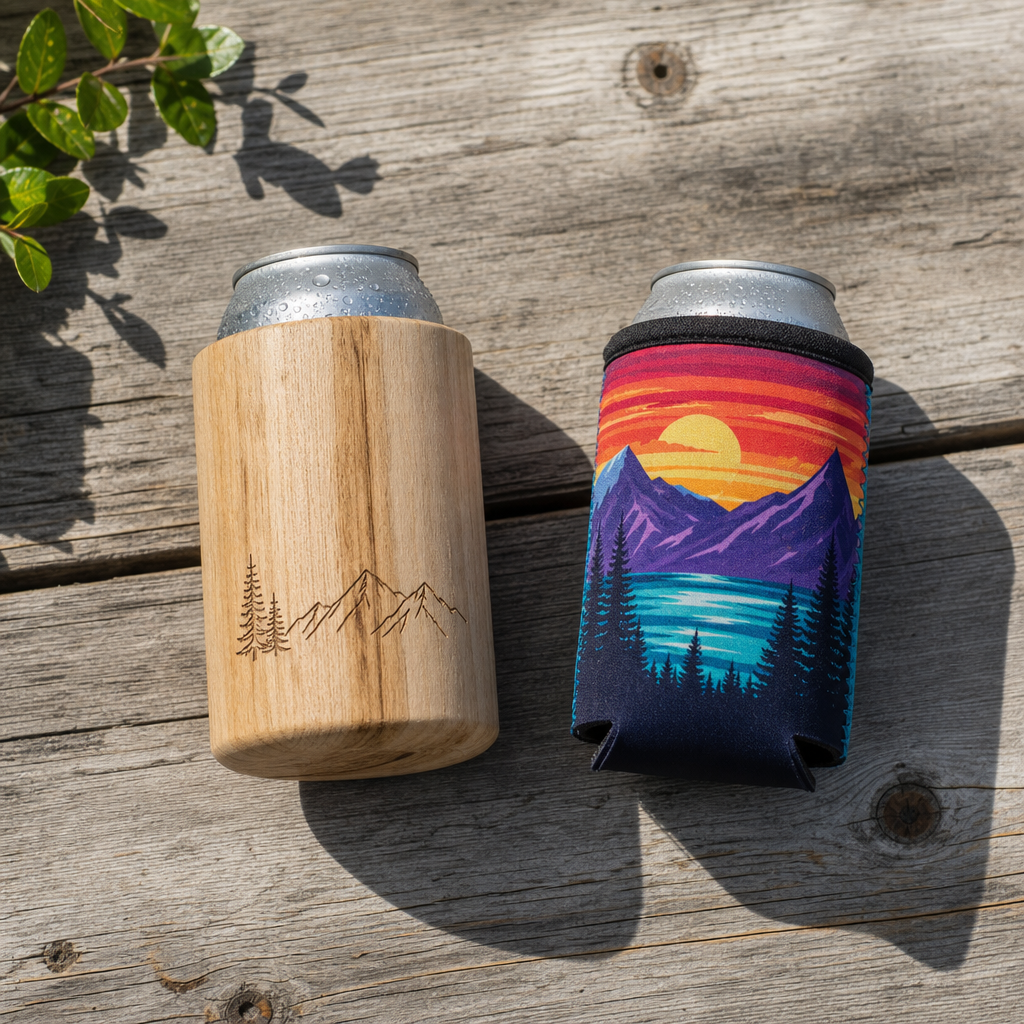
A wooden can insulator is a rigid sleeve, typically turned or milled from solid hardwood, that surrounds a standard beverage can to slow heat transfer from your hand and the environment into the cold drink. The concept sounds simple, but the execution matters enormously. Low-density hardwoods with natural cellular structure provide genuine insulation rather than just acting as a decorative shell.
Better Wheel VT's TreeSleeve is the clearest example of this category done right. Sourced from Vermont forests and crafted from sustainably harvested hardwood, the TreeSleeve is not a novelty item dressed up as an eco product. It is a functional insulator that also happens to be biodegradable, artisan-made, and available in designs that actually connect with the people who buy them: wildlife motifs, outdoor themes, and fully custom options for those who want something personal.
The key distinction between a well-made wooden insulator and a cheap one is wall thickness and fit. Too thin and you lose the insulating air-cell benefit of the wood. Too loose and the can rattles, reducing thermal contact. In practice, a properly fitted hardwood sleeve keeps a cold can noticeably cooler than an uninsulated hand-grip for the same duration as a standard neoprene koozie, sometimes longer in high-heat outdoor conditions.
What Is a Neoprene Koozie
Neoprene koozies are the synthetic rubber foam sleeves that became ubiquitous at sporting events, weddings, and promotional giveaways through the 1980s and 1990s. They work by surrounding the can with a layer of closed-cell foam that resists heat transfer through conduction. The foam layer also creates a barrier between the cold can and the warm air around it.
The technology has not changed much in 40 years. Brands like those at cooziecooler.com, koozieking.com, and customkoozies.com all offer variations on the same basic product: a synthetic foam cylinder with a logo printed or pressed onto the outside. The core material is neoprene or similar petrochemical foam, and the thermal performance across most brands is roughly equivalent.
The honest case for neoprene is cost and flexibility. A bulk order of plain neoprene koozies costs very little per unit. They fold flat, fit in a pocket, and are available in hundreds of colors. For a company ordering 500 branded giveaways, that matters. For someone buying a gift for a friend who hikes Vermont trails every weekend, it matters far less.
Thermal Performance Head to Head
Let us be specific here because vague claims about "keeping drinks cold longer" are everywhere and mean nothing without context. Thermal insulation works through three mechanisms: conduction, convection, and radiation. Both neoprene and wood address conduction reasonably well. The differences show up in the other two.
Radiant Heat Resistance
Wood has a lower thermal conductivity than neoprene, typically around 0.10 to 0.15 W/m·K for hardwood versus approximately 0.19 W/m·K for neoprene foam. That means wood transfers heat more slowly than neoprene at the material level. In direct sunlight at a music festival or on a hiking trail, this difference becomes noticeable.
Neoprene also absorbs radiant heat from the sun more readily when it is dark-colored, a common choice for branded koozies. A natural wood finish reflects more radiant energy. The data consistently shows that in controlled outdoor conditions, wooden can insulators maintain cold temperatures marginally longer than neoprene when radiant heat is a factor.
Hand-Heat Transfer
This is where neoprene arguably has an edge for casual indoor use. The compressible foam layer means your warm palm never makes direct contact with the can wall. A rigid wooden sleeve creates a fixed air gap between your hand and the can, which is less efficient at blocking conductive heat from a warm hand than foam-to-can contact reduction.
In practice, the difference is small enough that most people would not notice it on a 20-minute drink. But for marathon outdoor sessions like a tailgate or a long afternoon hike, the wood's lower conductivity compensates over time.
Pro tip: If you are using a TreeSleeve in direct summer sun, the wood's natural reflectivity gives you a real advantage over a dark neoprene koozie. Store the sleeve in shade between pours if you want maximum cold retention.
Environmental Impact Comparison
This is the section where the gap between wooden and neoprene insulators becomes impossible to ignore. Neoprene is a synthetic rubber polymer derived from petrochemicals. Its production involves chloroprene, a substance the U.S. Environmental Protection Agency classifies as a likely human carcinogen. Manufacturing facilities in communities near neoprene plants have documented elevated health risks, according to EPA environmental justice data.
End-of-life is equally problematic. Neoprene does not biodegrade in any meaningful timeframe. Environmental materials researchers estimate synthetic rubber products persist in landfills for 400 to over 1000 years. When you throw away a neoprene koozie, it does not go away. It just moves to a landfill where it will outlast every person alive today by centuries.
TreeSleeve by Better Wheel VT takes the opposite approach. The wood is sourced from Vermont forests managed for sustainability, meaning the harvesting cycle supports ongoing forest health rather than depleting it. The product itself is fully biodegradable. When it reaches the end of its functional life, it can be composted or left to decompose naturally without releasing persistent synthetic compounds.
"Sustainably sourced wood products are among the lowest lifecycle-impact material choices available for consumer goods, particularly when sourced regionally and processed without synthetic coatings." -- U.S. Forest Service, Forest Products Laboratory research on wood lifecycle assessment
For eco-conscious gift shoppers, this is not a minor point. Choosing a wooden insulator over a neoprene one is a concrete, verifiable reduction in plastic and petrochemical demand. It is not performative. It is a material decision with a measurable difference.

Full Comparison Table
The table below compares three product categories side by side: the TreeSleeve hardwood insulator from Better Wheel VT, a standard neoprene koozie from bulk suppliers, and a premium neoprene koozie from specialty retailers. The goal is an honest read of what each category delivers across the factors that actually matter to outdoor enthusiasts and gift buyers.
Feature |
TreeSleeve (Hardwood, Better Wheel VT) |
Standard Neoprene Koozie |
Premium Neoprene Koozie |
|---|---|---|---|
Material |
Sustainably sourced Vermont hardwood |
Petrochemical neoprene foam |
Petrochemical neoprene foam |
Biodegradable |
Yes, fully |
No (400 to 1000+ years) |
No (400 to 1000+ years) |
Thermal conductivity |
0.10 to 0.15 W/m·K |
~0.19 W/m·K |
~0.19 W/m·K |
Radiant heat resistance (outdoor) |
Good (natural finish reflects heat) |
Poor to moderate (absorbs radiant heat) |
Moderate (depends on color) |
Design durability |
Excellent (engraved or carved, does not fade) |
Poor (printed graphics fade and peel) |
Moderate (embossed designs last longer) |
Gift perception |
Premium, artisan, intentional |
Promotional, generic |
Functional but not memorable |
Custom options |
Yes, including full custom designs |
Yes, bulk printed logos |
Yes, limited premium printing |
Portability |
Rigid, fits in cup holders and pack pockets |
Foldable, fits anywhere |
Foldable, fits anywhere |
Price point (single unit) |
Premium |
Low |
Moderate |
Best use case |
Gifts, outdoor enthusiasts, eco-conscious buyers |
Bulk events, promotional giveaways |
Personal use on a budget |
Gift Value and Personalization
A common mistake is equating customization with personalization. Every major koozie retailer offers customization: print a name, add a logo, pick a color. But that is not the same as giving someone something that feels made for them. For the person who spends their weekends fishing Vermont lakes or hiking the Long Trail, a mass-printed foam sleeve with their name on it does not land the same way as a hardwood insulator engraved with a bear or a mountain range.
This is where TreeSleeve's design range does real work. Wildlife motifs, outdoor themes, and custom carving options speak the visual language of the people who receive them. The recipient does not need to read a tag explaining that it is eco-friendly. They can feel the material, see the craftsmanship, and understand immediately that this was chosen with them in mind.
According to Statista data on consumer gift preferences, products perceived as handcrafted or artisan-made command significantly higher perceived value than equivalent functional items in standard materials. The psychological effect of receiving wood versus foam is real and measurable in consumer research, not just marketing intuition.
Pro tip: If you are shopping for a gift for an outdoor enthusiast who already has everything, the material itself is part of the message. A Vermont hardwood insulator says "I know you" in a way that a foam koozie, however customized, simply cannot replicate.
Who Should Choose Which
This comparison is not about declaring neoprene koozies worthless. They serve a specific purpose and they serve it well. The question is whether that purpose matches what you actually need.
Choose a Neoprene Koozie If
You are organizing a large event and need 200 or more identical items at the lowest possible cost per unit. You need something that folds flat and takes up no space in a bag. You are not concerned about environmental impact or gift perception, and the primary job is simply to keep a can from warming a person's hand at an indoor gathering.
Choose a TreeSleeve If
You are buying a gift for someone who spends time outdoors and cares about the quality of what they carry. You want a product that holds up to repeated use without the graphics degrading. You are an eco-conscious shopper who wants your purchase to reflect your values in a concrete way, not just through marketing language. You want something that will still look good and function well two years from now.
For the outdoor enthusiast community, festival-goers, and the growing segment of consumers who actively seek biodegradable alternatives to synthetic products, the TreeSleeve is the clear answer for 2026. For a company bulk-ordering promotional giveaways, neoprene remains the cost-effective default. These are genuinely different products serving genuinely different needs, and knowing which category you are in makes the decision straightforward.
Frequently Asked Questions
Does a wooden can insulator actually keep drinks colder than a neoprene koozie?
In outdoor and high-heat conditions, yes. Hardwood has a lower thermal conductivity than neoprene foam, meaning it transfers heat more slowly at the material level. The difference is most noticeable in direct sunlight, where wood's natural finish also reflects radiant heat more effectively than dark-colored neoprene. In controlled indoor conditions, the performance is comparable for typical drink durations of 20 to 30 minutes.
Is the TreeSleeve from Better Wheel VT actually biodegradable or is that just marketing?
It is genuinely biodegradable. The product is made from natural hardwood with no synthetic coating that would prevent decomposition. Unlike neoprene, which persists in landfills for centuries, a hardwood product can be composted or will break down naturally in soil. The sustainability claim rests on both the material itself and the sourcing from Vermont forests managed for ongoing health, not clear-cutting.
Can I wash a wooden can insulator the same way I wash a neoprene koozie?
No, and this is a real practical difference. Neoprene koozies can be rinsed, machine washed, and dried without damage. Wooden insulators should be wiped clean with a damp cloth and allowed to air dry. Soaking or machine washing will cause the wood to swell, crack, or lose its finish over time. In practice, this is a minor maintenance difference since can insulators do not need deep cleaning frequently, but it is worth knowing before you buy.
Are wooden can insulators only for standard 12 oz cans?
The TreeSleeve is precision-fitted to standard 12 oz can dimensions, which covers the vast majority of beer and soda cans. This tight fit improves both grip and thermal contact compared to a loosely fitting neoprene sleeve. If you primarily drink from slim cans or tallboys, check the product specifications before ordering, as a different size may be needed for a proper fit.
What makes the TreeSleeve a better gift than a customized neoprene koozie from a site like customkoozies.com?
The material and craftsmanship create a fundamentally different object. A printed neoprene koozie, even with a custom name or design, reads as a promotional product. A hardwood insulator with an engraved wildlife or outdoor motif reads as something made with intention and care. For an outdoor enthusiast or nature lover, the difference in perceived value and personal resonance is significant. The design also lasts: engraved wood does not fade or peel the way printed neoprene graphics do after repeated use and sun exposure.
How do I know if a wooden can insulator is sustainably sourced?
Look for specific sourcing claims rather than vague environmental language. Better Wheel VT states explicitly that TreeSleeve uses sustainably harvested hardwood from Vermont forests, which is a verifiable regional claim. You can also look for products certified by the Forest Stewardship Council (FSC), which provides third-party verification that wood was harvested according to responsible forest management standards. Avoid products that use the word "natural" without any sourcing specifics.
Have you tried both a wooden insulator and a neoprene koozie in outdoor conditions? Share what you noticed about the difference in the comments below.
Share:
Wooden Can Insulator vs Koozie: Honest Comparison 2026
7 Outdoor Themes That Make TreeSleeve™ the Perfect Beer Lover's Gift