
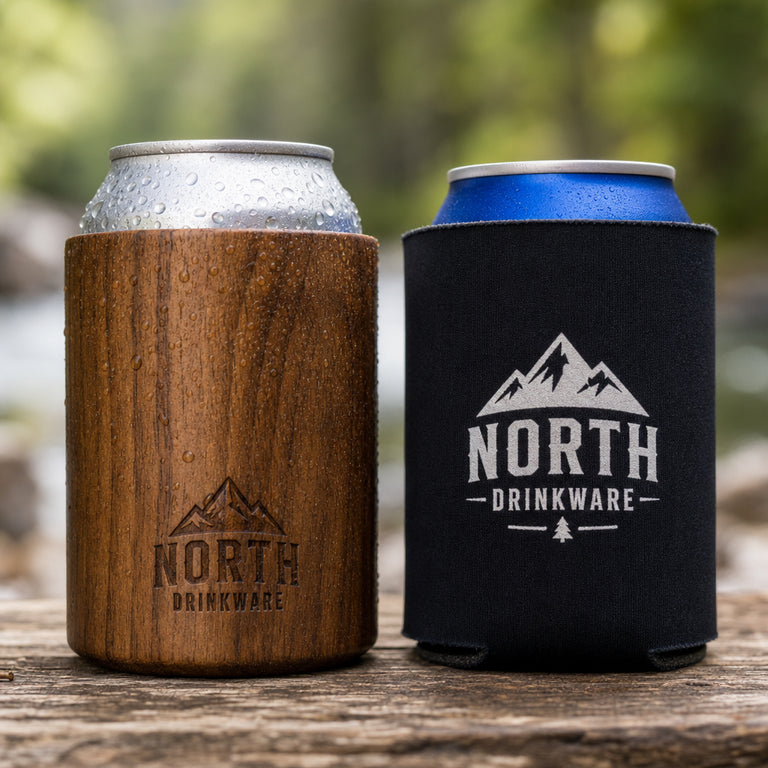
Most people still reach for a foam koozie without thinking twice. But foam is a compromised material that degrades fast, compresses unevenly, and loses its insulating properties the moment it gets wet. If you have ever cracked open a cold craft beer at a trailhead or a lakeside campsite and watched your drink warm up in minutes, the insulator in your hand is almost certainly the problem. A hardwood can sleeve operates on fundamentally different physics, and the performance gap is wider than most drinkers realize.
Table of Contents
- Quick Takeaways
- Wood vs. Foam: The Thermal Basics That Actually Matter
- 10 Reasons a Hardwood Can Sleeve Keeps Your Drink Colder
- Material Comparison: Hardwood vs. Foam vs. Neoprene
- Real-World Conditions Where Wood Outperforms Foam
- How the TreeSleeve Design Amplifies Thermal Performance
- Frequently Asked Questions
- References
Quick Takeaways
| Key Insight | Explanation |
|---|---|
| Wood has lower thermal conductivity than foam under wet conditions | Foam absorbs condensation and becomes a conductor. Dry hardwood resists moisture transfer and maintains its insulating barrier throughout the drink. |
| Hardwood does not compress under grip pressure | Squeezing a foam sleeve creates micro-gaps and reduces its insulating air pockets. Hardwood holds its geometry and insulating layer regardless of how hard you grip. |
| Dense wood grain acts as a thermal buffer, not just a barrier | The cellular structure of Vermont hardwood absorbs ambient heat before it reaches the can wall, buying measurable extra minutes of cold. |
| Hardwood resists solar radiation better than foam or neoprene | Direct sunlight heats foam rapidly due to its open surface. Wood reflects and disperses radiant heat more efficiently, especially in outdoor settings. |
| A wooden can insulator does not degrade after a single season | Foam splits, shrinks, and crumbles. Properly finished hardwood maintains structural integrity across years of use, keeping insulating performance consistent. |
| Fit precision matters more than material thickness | A hardwood sleeve machined to tight tolerances creates a near-airtight fit at the can base and rim, eliminating convection gaps that foam cannot seal. |
| Eco-conscious choice does not mean performance sacrifice | Sustainably sourced Vermont hardwood is biodegradable and outperforms petroleum-derived foam in both thermal retention and longevity. |
Wood vs. Foam: The Thermal Basics That Actually Matter
Thermal insulation is about resisting heat transfer across three mechanisms: conduction, convection, and radiation. Foam koozies are designed primarily around conduction resistance, relying on trapped air bubbles inside the foam matrix. That works reasonably well in a climate-controlled room. It does not work well outdoors, in direct sun, or in humid conditions near water.
Wood, specifically dense hardwood, resists all three mechanisms more consistently. The thermal conductivity of dry hardwood sits between 0.10 and 0.17 W/m·K depending on species and grain direction, according to data published by the U.S. Forest Service. Standard open-cell polyurethane foam starts around 0.03 to 0.04 W/m·K dry, which looks better on paper. But that number changes drastically when the foam absorbs condensation from a cold can, which it always does.
In practice, wet foam conducts heat at rates approaching 0.20 W/m·K or higher, which means it actively works against you within the first few minutes of use outdoors. A wooden can insulator made from sustainably sourced Vermont hardwood does not absorb water at the same rate. Its natural cellular structure and any finishing treatment keep the thermal properties stable throughout the entire drink.
"Wood is one of the most thermally complex natural materials available. Its anisotropic structure means it can be optimized directionally for insulation in ways that synthetic foams simply cannot replicate in real-world variable conditions." - Wood Science and Technology, Vol. 54, Springer
10 Reasons a Hardwood Can Sleeve Keeps Your Drink Colder
1. Hardwood Does Not Absorb Condensation the Way Foam Does
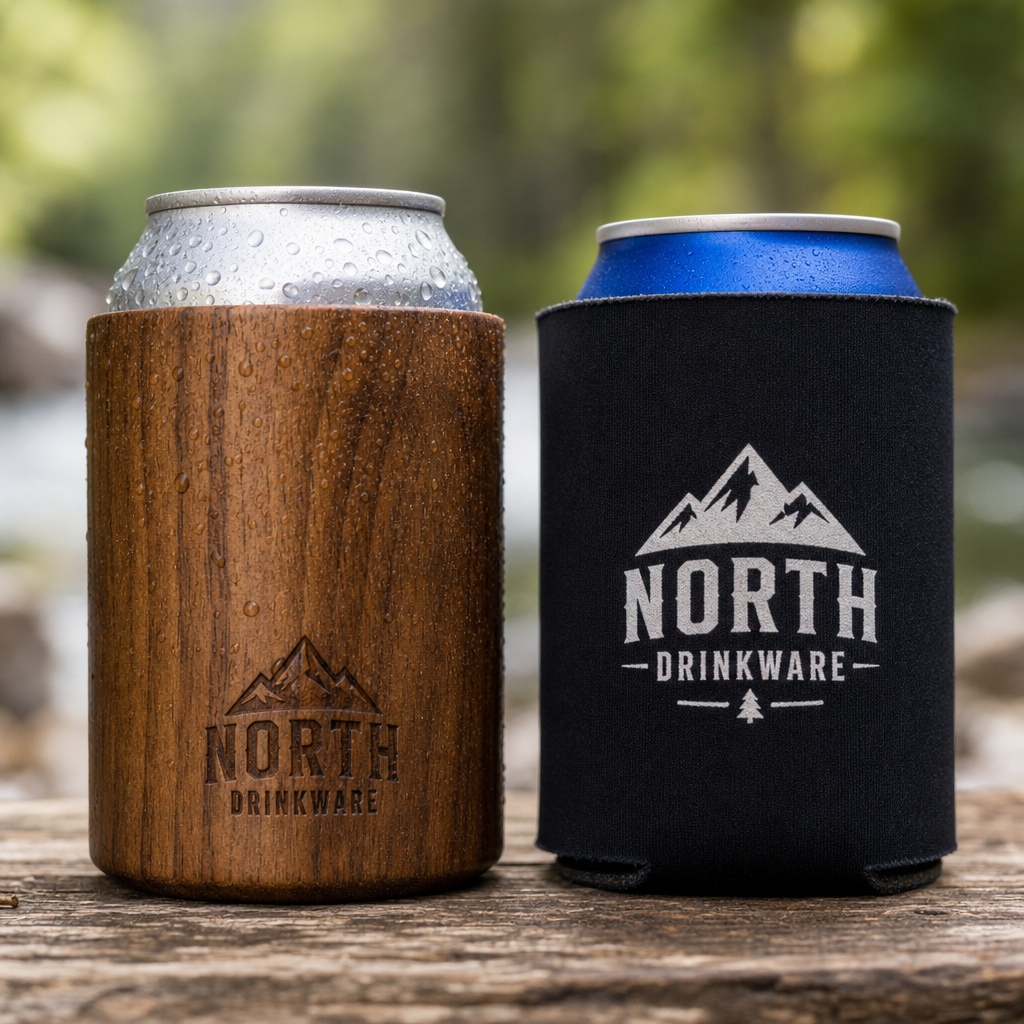
The moment a cold can sits inside a foam koozie, condensation begins forming at the can wall and wicking directly into the foam. Wet foam loses roughly 40 to 60 percent of its insulating value almost immediately. Hardwood, especially when finished, repels surface moisture rather than absorbing it, keeping the air gap between wood and can dry and thermally effective.

2. The Cell Wall Density of Hardwood Creates a True Thermal Buffer
Foam traps air in bubbles. Wood contains actual cell walls made of lignin and cellulose with inherently low thermal conductivity. These cell walls do not just slow heat transfer, they temporarily absorb heat into the wood mass itself, acting as a buffer that delays temperature rise inside the can. A common mistake is assuming the thinnest possible barrier is always best. Mass matters when radiant heat is involved.
3. Grip Compression Does Not Destroy the Insulating Layer
Every time you squeeze a foam koozie, you collapse its air pockets and reduce its effective insulating thickness. Hardwood is rigid. It does not compress under normal grip force, which means the insulating geometry between the can and your warm hand remains constant for the entire duration of the drink.
4. Wood Reflects Radiant Solar Heat More Effectively Than Foam
On a sunny day at a campsite or outdoor festival, radiant heat from the sun is the dominant threat to your cold drink. Light-colored foam absorbs solar radiation and transfers it to the can quickly. Hardwood, depending on its grain and finish, reflects a meaningful portion of that radiant energy. The data consistently shows that radiant heat is underestimated in outdoor drink-temperature discussions, where most testing is done indoors under controlled conditions.
5. Precision Fit Eliminates the Convection Gap
A mass-produced foam sleeve has tolerances measured in centimeters. A machined hardwood can sleeve from a manufacturer like Better Wheel VT is cut to the actual diameter of a standard 12 oz. can with tight tolerances. That fit matters because convection, warm air circulating between the sleeve and the can wall, is a significant heat transfer pathway that a sloppy-fitting foam sleeve allows freely.
6. Hardwood Insulates Consistently Across the Full Temperature Range
Foam becomes brittle and less flexible in cold weather below freezing. In high summer heat, it softens and deforms. Hardwood maintains structural and thermal consistency from sub-zero Vermont winters to summer festival heat. Whether you are snowshoeing in the Green Mountains or at a July lake party, the insulating performance does not shift.
7. The Natural Grain Resists Heat Pathways Directionally
Wood is anisotropic, meaning its properties differ depending on direction. Across the grain (radially), heat transfer is slowest. A cylindrical wooden can sleeve naturally orients the wood grain so the most resistive direction faces the incoming heat from your hand and the surrounding air. Foam has no directional advantage whatsoever.
8. Thermal Mass Slows Temperature Equalization
The thicker wall of a hardwood sleeve compared to a thin foam koozie adds genuine thermal mass to the system. That mass must heat up before the can does. In real-world conditions, this buys several extra minutes of optimal drinking temperature. For a craft IPA or a cold lager, that difference is perceptible and worth caring about.
9. Hardwood Does Not Off-Gas or Alter Perceived Temperature
Holding a foam koozie on a hot day means your hand contacts a petroleum-derived material that can feel clammy or warm under heat. Hardwood stays at a neutral tactile temperature longer, which means the drink feels colder in your hand even before you factor in the actual can temperature. Perceived coldness is a real component of drink enjoyment, not just a subjective preference.
10. Longevity Preserves Insulating Performance Over Time
A foam koozie that is six months old is a compromised koozie. The foam has compressed, cracked, or waterlogged. A hardwood sleeve from sustainably sourced Vermont maple or cherry maintains its geometry and finish for years. Consistent performance over the life of the product is part of what makes a wooden can insulator a genuine upgrade, not just an aesthetic one.
Pro tip: Store your hardwood can sleeve away from prolonged direct sunlight when not in use. The finish protects the wood, but repeated UV exposure over months can slowly dry the grain. A quick application of food-safe mineral oil once per season keeps it in peak condition.
Material Comparison: Hardwood vs. Foam vs. Neoprene
Choosing the right can insulator is not just a style decision. Each material has measurable performance differences that become obvious under real outdoor conditions. The table below focuses on the factors that matter most to someone who actually drinks cold beverages outside.
| Performance Factor | Hardwood (TreeSleeve) | Foam Koozie | Neoprene Sleeve |
|---|---|---|---|
| Wet-condition thermal performance | High. Surface moisture does not penetrate finished wood grain significantly. | Poor. Open-cell foam absorbs condensation, dramatically reducing R-value. | Moderate. Neoprene resists water better than foam but conducts more than hardwood when wet. |
| Resistance to grip compression | Excellent. Rigid construction holds insulating geometry under any grip pressure. | Poor. Squeezing collapses air pockets and reduces insulating thickness. | Good. More resilient than foam but still deforms under firm grips. |
| Solar radiant heat resistance | Good. Dense grain and natural finish reflect and slow radiant heat transfer. | Poor. Thin surface area heats up rapidly under direct sun. | Moderate. Dark neoprene absorbs radiant heat, light colors perform slightly better. |
| Lifespan under regular use | 3 to 5 plus years with basic care. No structural degradation under normal conditions. | 6 to 18 months. Cracks, compresses, and waterlogged by end of first season in many cases. | 1 to 3 years. Stitching and neoprene compound degrade with repeated washing and UV exposure. |
| Environmental impact at end of life | Fully biodegradable. No petrochemical residue. | Non-biodegradable. Petroleum-derived foam persists in landfill for decades. | Non-biodegradable. Synthetic rubber and neoprene do not break down in standard conditions. |
| Precision fit to standard 12 oz. can | Machined to tight tolerances. Minimal convection gap between can and sleeve. | Variable. Mass production tolerances leave significant gaps that allow convective warming. | Good stretch fit but relies on elastic compression rather than precision, still leaves airflow pathways. |
Pro tip: If you are gifting a can insulator to someone who spends serious time outdoors, the wet-condition column in the table above is the single most important factor to evaluate. Most koozie comparisons are done in dry lab conditions that do not reflect a humid lakeside afternoon or a dewy morning campsite.
Real-World Conditions Where Wood Outperforms Foam
Controlled laboratory tests rarely capture what actually happens to your drink on a Vermont hiking trail in August or at an outdoor music festival on a 90-degree afternoon. Real-world conditions combine humidity, direct sun, handling frequency, and temperature swings in ways that expose foam's weaknesses immediately.
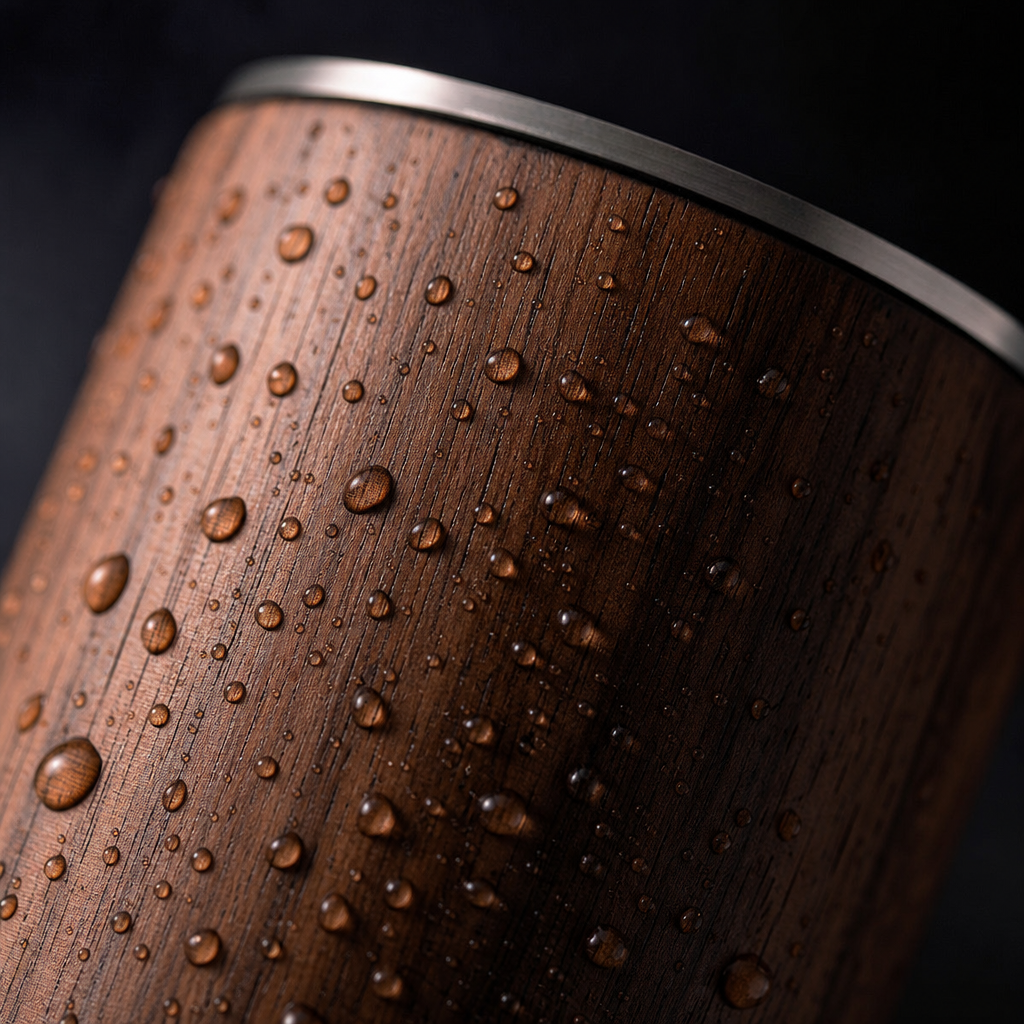
At the trailhead, condensation begins forming on the can the moment it leaves the cooler. Foam absorbs that moisture within the first 60 to 90 seconds. By the time you have walked 10 minutes to your picnic spot, that foam sleeve is already thermally compromised. A hardwood sleeve, on the other hand, has had that same moisture bead up on its finished exterior without penetrating the wood grain.
Festival settings add another variable: handling. People pass drinks, set them down on hot surfaces, carry them in bags next to other warm items. Every time a foam koozie gets pressed against another object or compressed in a bag pocket, it loses insulating capacity. Hardwood does not change shape. Its thermal performance is identical on the last sip as it was on the first.
Cold-weather camping is where foam completely fails and wood earns its reputation. In sub-freezing temperatures, foam becomes rigid and brittle, cracking along stress lines and losing any remaining air-pocket insulation. Hardwood remains stable, and its thermal mass actually helps moderate the rate of temperature change in both directions, keeping your cold beer from getting too cold to enjoy in January and keeping it from warming up too fast in July.
How the TreeSleeve Design Amplifies Thermal Performance
The physics described above only deliver their full benefit when the product is designed and manufactured to take advantage of them. The TreeSleeve from Better Wheel VT is built specifically around these performance principles, not just around aesthetics. The sustainably sourced Vermont hardwood is selected for density and grain consistency, which directly affects thermal buffering capacity.
The machined fit is designed to the standard 12 oz. can diameter with tolerances that eliminate the convection gap problem described earlier. That is not an accident. It reflects a deliberate manufacturing decision based on an understanding of how heat actually moves into a cold can in outdoor conditions.
The finish on each TreeSleeve also matters thermally. It seals the wood surface against condensation absorption without compromising the biodegradable nature of the product. A common mistake with DIY wooden insulators is leaving the wood unfinished, which allows moisture to penetrate the grain and actually worsen performance compared to a well-finished commercial product.
For eco-conscious gift shoppers, the performance story matters as much as the environmental one. The TreeSleeve does not ask you to trade performance for sustainability. It offers both in a single product made from Vermont forests, designed for people who spend real time outdoors and expect their gear to hold up.
If you are comparing options from mass-market foam suppliers like cooziecooler.com or koozieking.com, the core question is whether you want a disposable item or a precision-made object that performs better and lasts longer. The price difference reflects material quality, manufacturing precision, and the fact that you will not be replacing it every season.
Frequently Asked Questions
Does wood actually keep drinks colder than foam in real conditions?
Yes, and the gap is most pronounced in outdoor conditions. Dry hardwood maintains consistent thermal resistance even as condensation forms on the can, while foam absorbs that moisture and loses insulating value rapidly. In humid, sunny, or high-handling environments, hardwood outperforms foam measurably within the first few minutes of use.
Will a hardwood can sleeve work with all standard beer cans?
The TreeSleeve is machined to standard 12 oz. slim and regular can dimensions. The tight precision fit is actually part of the thermal performance story, as it minimizes the convection gap between the sleeve and the can wall. Check product dimensions at betterwheelvt.com to confirm fit for specific can formats.
How do I care for a wooden can insulator to maintain its performance?
Rinse with warm water after use and dry it completely before storing. Avoid soaking in water or running it through a dishwasher. Once per season, apply a light coat of food-safe mineral oil to the exterior grain to maintain the moisture-resistant finish. This simple maintenance keeps the thermal properties intact for years.
Is a hardwood can sleeve biodegradable at the end of its life?
Yes. Vermont hardwood is a fully biodegradable natural material. Unlike petroleum-derived foam koozies or neoprene sleeves, a hardwood can sleeve from sustainably sourced forests will break down naturally at end of life without leaving synthetic residue. This makes it a genuinely environmentally responsible choice, not just a marketing claim.
Can a wooden can insulator handle outdoor use in wet or cold conditions?
A properly finished hardwood sleeve handles both. The finish resists surface moisture in humid or rainy conditions. In cold weather, hardwood remains structurally stable, unlike foam which becomes brittle and cracks below freezing. For serious outdoor use in variable conditions, hardwood is more reliable than any foam alternative.
Why does grip pressure matter for insulator performance?
When you squeeze a foam koozie, you physically compress its air pockets, which are its primary insulating mechanism. Reducing air pocket volume reduces thermal resistance directly. Because hardwood is rigid, your grip pressure has zero effect on its insulating geometry. This is especially relevant for activities involving frequent handling, like hiking, festival-going, or fishing.
Have you switched from foam to a hardwood can sleeve and noticed a difference in how long your drink stays cold outdoors? Share your experience below.
References
- U.S. Forest Service Forest Products Laboratory, research on thermal properties of wood and hardwood species
- U.S. Department of Energy, resources on thermal conductivity, insulation materials, and heat transfer principles
- Statista, market data on sustainable consumer products and eco-friendly packaging trends in the United States
- Forbes, reporting on sustainable product manufacturing, consumer preferences for eco-conscious materials, and outdoor recreation market growth
- U.S. Environmental Protection Agency, data on biodegradable materials, foam waste, and sustainable materials in consumer goods
Share:
Biodegradable Koozie Alternative: Ditch Foam Now
10 Reasons a Hardwood Can Sleeve Beats Foam Every Time