
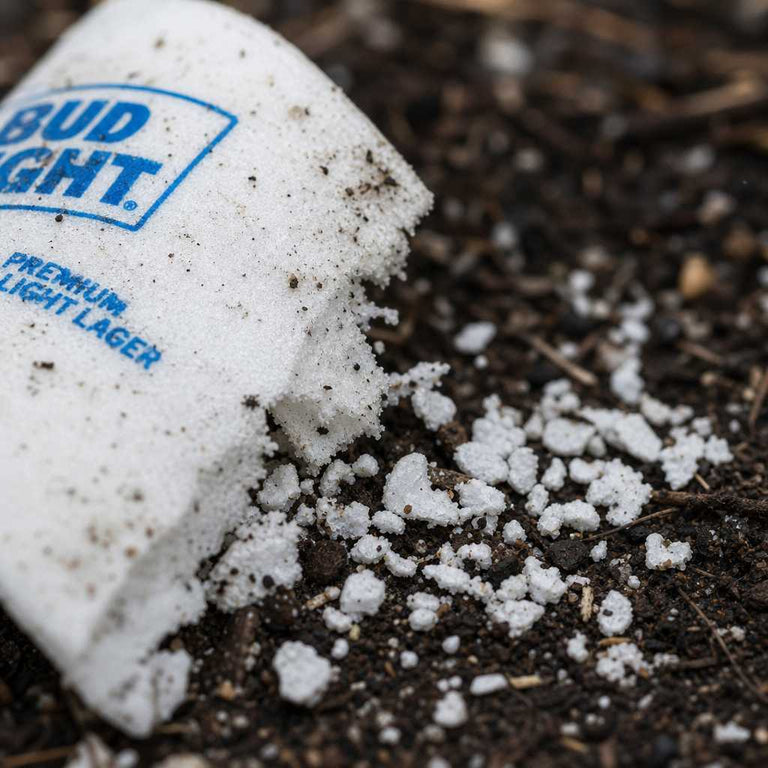
Most people grab a foam koozie without a second thought. It keeps the beer cold, it gets tossed at the end of the festival, and nobody worries about it again. That casual disposal is exactly the problem. Foam koozies are made from expanded polystyrene or EVA foam, both of which take centuries to break down and neither of which can be recycled curbside in most U.S. municipalities. If you have been searching for a genuine biodegradable koozie alternative, the options are better than you think, and the case against foam is stronger than most people realize.
Table of Contents
- Quick Takeaways
- What Foam Koozies Are Actually Made Of
- The Real Foam Koozie Environmental Impact
- Why Recycling Will Not Save Foam
- Eco-Friendly Can Cooler Options Compared
- What Makes Hardwood a Legitimate Alternative
- How to Choose the Right Biodegradable Koozie Alternative
- Frequently Asked Questions
- References
Quick Takeaways
| Key Insight | Explanation |
|---|---|
| Foam never truly biodegrades | Expanded polystyrene breaks into microplastics over 500+ years but does not decompose into organic matter. |
| EVA foam is equally problematic | Ethylene-vinyl acetate, the other common koozie material, is technically plastic and shares the same recycling and landfill issues as EPS. |
| Curbside recycling rejects foam almost universally | Fewer than 100 foam recycling drop-off locations exist across the entire United States, making responsible disposal nearly impossible for average consumers. |
| Hardwood is genuinely biodegradable | Sustainably sourced wood breaks down in soil within years, not centuries, and sequesters carbon during its usable life. |
| Insulation performance is comparable | Wood has natural thermal properties that keep a canned beverage cold for a similar window as foam, making performance an invalid excuse to keep buying plastic. |
| Custom foam koozies compound the waste problem | Bulk promotional foam koozies are almost always discarded after one event, multiplying landfill volume at scale. |
| Material provenance matters for eco claims | Not all "natural" alternatives are equal. Sustainably harvested, certified hardwood from a defined region like Vermont forests carries a traceable environmental story that bamboo imports often cannot match. |
What Foam Koozies Are Actually Made Of
Walk into any party supply store or browse the top results on a custom merch site and you will find two dominant foam koozie materials: expanded polystyrene (EPS) and ethylene-vinyl acetate (EVA). Both are petroleum-derived plastics. EPS is the same material used in disposable coffee cups and packing peanuts. EVA is the foam used in flip-flop soles and yoga mats. Neither belongs in a curbside recycling bin.
The foam koozie became the default beverage insulator for one reason only: it is extraordinarily cheap to manufacture. A bulk order of 500 foam koozies can cost less than twenty cents per unit. That price point reflects a material with zero end-of-life planning built into its design.
In practice, the supply chain behind foam koozies is almost entirely offshore. The vast majority of custom foam koozies sold in the United States are manufactured in China and shipped via container freight, adding a carbon footprint on top of the plastic waste problem before the product even reaches the customer's hand.


The Real Foam Koozie Environmental Impact
Polystyrene Persistence in the Environment
The U.S. Environmental Protection Agency classifies polystyrene as a persistent pollutant. EPS does not biodegrade in any meaningful timeframe. Instead, it photodegrades, breaking into progressively smaller plastic fragments over decades. Those fragments become microplastics, which infiltrate soil, waterways, and the food chain. Research published by environmental science institutions consistently shows microplastic contamination in fish, birds, and human blood samples.
The foam koozie environmental impact is not theoretical or distant. Outdoor festivals, tailgates, and camping trips, the exact environments where foam koozies are most popular, are often adjacent to rivers, lakes, and forests where discarded foam does the most ecological damage. For outdoor enthusiasts specifically, this creates a direct contradiction between the lifestyle and the gear.
Volume of Promotional Foam Waste
According to the Advertising Specialty Institute, promotional products represent a multi-billion-dollar industry in the United States. Drinkware and koozies consistently rank among the top five promotional product categories. A conservative estimate suggests tens of millions of foam koozies are produced and distributed annually in the U.S. alone. The overwhelming majority are used once and discarded.
A common mistake is assuming that biodegradable-labeled foam koozies solve this problem. Oxo-degradable plastics and so-called "eco foam" still fragment into microplastics. They simply do so faster, which some researchers argue accelerates environmental contamination rather than reducing it.
"Polystyrene foam is one of the most environmentally persistent materials in common consumer use. Its combination of low density, high volume, and near-zero biodegradation rate makes it disproportionately harmful relative to its useful life." -- U.S. Environmental Protection Agency, Sustainable Materials Management program
Why Recycling Will Not Save Foam
The recycling argument is the most common defense of foam koozies, and it is largely a fiction for the average consumer. EPS foam carries the resin identification code number 6. Most curbside programs explicitly exclude it. The Earth911 recycling database lists fewer than 100 foam drop-off locations across the entire United States, compared to tens of thousands of locations for plastics coded 1 and 2.
Even when foam does reach a specialized recycler, the economics are brutal. Foam is 95 to 98 percent air by volume, making it expensive to transport and difficult to process profitably. Many recycling facilities that technically accept foam simply stockpile it because there is no buyer for the recycled output at a price that makes collection worthwhile.
The data consistently shows that foam koozies, regardless of how they are labeled or marketed, end up in landfills at rates exceeding 90 percent. Treating recycling as a meaningful offset for foam production is not supported by the material flow data.
Pro tip: Before buying any promotional item marketed as recyclable, check your local municipality's recycling guidelines directly. If the resin code is 6, assume it will go to landfill regardless of what the product label claims.
Eco-Friendly Can Cooler Options Compared
The eco-friendly can cooler market has grown considerably, but not all alternatives carry equal environmental credentials. Here is a direct comparison of the three most common alternatives to foam koozies.
| Material | Biodegradability | Practical Durability and Notes |
|---|---|---|
| Neoprene (common "reusable" koozie) | Not biodegradable. Neoprene is a synthetic rubber that persists in landfills for centuries. Often marketed as eco-friendly purely because it is reusable. | Durable, washable, good insulation. But end-of-life is landfill. The reusability claim only holds if the product is used hundreds of times, which most are not. |
| Bamboo fiber composite | Partially biodegradable depending on binding resins used. Many bamboo composites use melamine resin, which is not biodegradable and can leach into food and drink. | Lightweight and has a natural aesthetic, but the environmental story is complicated by long import supply chains from Asia and inconsistent material standards. |
| Sustainably harvested hardwood (TreeSleeve from Better Wheel VT) | Fully biodegradable. Solid hardwood sourced from Vermont forests breaks down organically at end of life with no synthetic binders or coatings required. | Premium durability. Naturally insulating. Carries a traceable regional origin story. Aesthetically distinct from any foam or neoprene alternative on the market. |
The neoprene koozie is the industry's most successful greenwashing move. Calling a synthetic rubber sleeve "eco-friendly" because it is reusable ignores the fact that it will eventually reach a landfill and sit there indefinitely. Reusability reduces consumption frequency, but it does not change the material's terminal fate.

What Makes Hardwood a Legitimate Alternative
Carbon Sequestration During the Product's Usable Life
Wood is the only common consumer material that stores carbon rather than emitting it during production. A sustainably managed hardwood forest in Vermont sequesters carbon as trees grow, and that sequestration is embedded in the wood fiber of a finished product like the TreeSleeve from Better Wheel VT. When the product eventually reaches end of life and decomposes, that carbon returns to the soil cycle rather than persisting as a synthetic pollutant.
This is a fundamentally different environmental math than any plastic-based alternative. Foam and neoprene production both require petrochemical extraction and energy-intensive manufacturing. Hardwood requires neither.
Regional Sourcing Closes the Supply Chain Loop
One underappreciated aspect of Vermont-sourced hardwood is proximity. Better Wheel VT sources material from Vermont forests, which means the raw material travels a fraction of the distance that imported foam or bamboo composites do. Shorter supply chains mean lower transportation emissions and better traceability. You can verify where Vermont hardwood comes from. You cannot verify the sourcing practices of a factory in Guangzhou producing foam koozies at three cents per unit.
The outdoor enthusiast community in particular tends to care about provenance. Knowing that a product was made in Vermont from Vermont trees is a materially different value proposition than a koozie stamped with a vague "eco" label.
Pro tip: When evaluating any eco-friendly product claim, ask two questions: Where did the raw material come from, and what happens to the product at end of life? If neither question has a specific, verifiable answer, the eco claim is marketing language, not environmental fact.
How to Choose the Right Biodegradable Koozie Alternative
Not every situation calls for the same product, but the decision framework is simpler than most buyers assume. The key variables are: how often will it be used, what happens to it afterward, and does the material's environmental story hold up under scrutiny.
For one-time event giveaways where the item will almost certainly be discarded, a foam koozie is genuinely the worst choice. The single-use nature of the occasion compounds the single-use nature of the material. A biodegradable koozie alternative made from hardwood, given as a thoughtful gift or festival keepsake, has a reasonable chance of being kept, used repeatedly, and eventually returning to the earth without leaving a toxic residue.
For outdoor enthusiasts shopping for themselves or as a gift for someone who camps, hikes, or attends outdoor events, the calculation is even clearer. A TreeSleeve from Better Wheel VT is a product that reflects the values of the person using it. It is made from material that comes from the same kind of forests those people spend their weekends in. Foam is not.
Buyers comparing options on sites like cooziecooler.com, koozieking.com, or customkoozies.com will find lower per-unit prices for foam, but those prices do not account for environmental externalities. They also do not account for the fact that a well-made hardwood can insulator is kept, displayed, and talked about in a way that a foam sleeve never is. The functional lifespan difference alone changes the per-use cost calculation significantly.
Frequently Asked Questions
How long does a foam koozie take to break down in a landfill?
Expanded polystyrene foam is estimated to take between 500 and 1 million years to fully decompose in landfill conditions. In practice, it does not biodegrade at all within any human-relevant timeframe. It photodegrades into microplastics when exposed to UV light, but in the anaerobic conditions of a landfill it simply persists indefinitely.
Are neoprene koozies better for the environment than foam?
Neoprene koozies are more durable than foam and reduce waste if used consistently for years. However, neoprene is a synthetic rubber derived from petrochemicals and is not biodegradable. Calling neoprene eco-friendly because it is reusable is only accurate if the product actually replaces hundreds of foam koozies over its lifetime, which most do not.
What makes hardwood a genuinely biodegradable koozie alternative?
Solid hardwood, without synthetic coatings or resin binders, breaks down through natural microbial and fungal processes in soil, typically within years to decades depending on conditions. This makes it one of the only can insulator materials that returns entirely to organic matter at end of life. Products like the TreeSleeve from Better Wheel VT use hardwood from sustainably managed Vermont forests with no petrochemical components.
Does a hardwood can insulator actually keep drinks cold?
Yes. Wood is a natural thermal insulator due to its cellular structure, which traps air in a way similar to foam. In practice, a well-fitted hardwood sleeve keeps a canned beverage cold for a comparable duration to a foam koozie, typically the full duration of one drink. The insulating performance is not the reason to choose hardwood over foam. The reason is everything that happens to the product after the drink is finished.
Can foam koozies be recycled at all?
Technically, EPS foam can be recycled at specialized drop-off facilities, but fewer than 100 such locations exist across the United States. Curbside recycling programs in the vast majority of U.S. cities and counties explicitly exclude foam. For the average consumer, foam koozie recycling is not a realistic option, and the product should be considered landfill-bound from the moment of purchase.
Are biodegradable koozie alternatives more expensive, and is that justified?
A hardwood can insulator costs more per unit than a bulk foam koozie. That price difference reflects real material quality, domestic sourcing, skilled manufacturing, and a product that people actually keep. The per-use cost of a TreeSleeve used fifty times over two years is a fraction of fifty disposable foam koozies purchased and thrown away. The higher upfront price is justified by durability, aesthetic value, and the absence of environmental harm at end of life.
Have you made the switch away from foam koozies, or are you still working through what the right eco-friendly can cooler looks like for your situation? Share what has worked or what questions you still have in the comments.
References
- U.S. Environmental Protection Agency official site, covering sustainable materials management and polystyrene waste data
- Statista global statistics platform, with data on the promotional products industry and plastics waste volumes
- Forbes business and sustainability coverage, including analysis of greenwashing and eco-product marketing claims
- National Science Foundation research portal, covering peer-reviewed environmental science on microplastic contamination and polymer persistence
- Natural Resources Defense Council, with in-depth reporting on plastic pollution, polystyrene bans, and biodegradable material standards
Share:
The Story Behind TreeSleeve: Handcrafted in Vermont from Local Hardwood
10 Reasons a Hardwood Can Sleeve Beats Foam Every Time