The outdoor recreation industry generates roughly 11 million tons of plastic waste annually, and the gear people bring into the wilderness is a significant contributor. Hikers, campers, and festival-goers are starting to demand better. Biodegradable outdoor gear is not a niche trend or a marketing angle. It is the logical next step for anyone who claims to love the outdoors but wants to stop leaving a permanent footprint there. The shift is already underway, and the products leading the charge are not compromising on quality to do it.
Table of Contents
- Quick Takeaways
- Why Plastic Outdoor Gear Is a Broken Promise
- What Biodegradable Actually Means for Gear
- Sustainable Recreation Products Gaining Real Traction
- How Wood Became a Serious Gear Material
- Comparing Material Approaches in Eco-Friendly Adventure Gear
- What Outdoor Enthusiasts Actually Want from Sustainable Gear
- Frequently Asked Questions
- References
Quick Takeaways
| Key Insight | Explanation |
|---|---|
| Plastic foam insulators persist for 500+ years | Standard foam can koozies and cooler accessories do not biodegrade. They fragment into microplastics that end up in soil and waterways near the same trails you use. |
| Sustainably sourced hardwood is a viable insulator material | Products like TreeSleeve from Better Wheel VT demonstrate that hardwood from managed Vermont forests can insulate a can effectively while being fully biodegradable at end of life. |
| Consumer demand for eco-friendly adventure gear is measurable, not anecdotal | According to Nielsen, 73 percent of global consumers say they would definitely or probably change their consumption habits to reduce environmental impact. |
| Biodegradable does not mean fragile | A common mistake is assuming that sustainable materials trade durability for eco-credentials. Hardwood insulators, for example, are more durable in outdoor conditions than foam alternatives. |
| The gift market for sustainable outdoor products is growing fast | Eco-conscious gift shoppers are actively searching for alternatives to generic plastic merchandise. Unique, nature-themed products with a genuine sustainability story outperform generic items in this segment. |
| Local sourcing amplifies the environmental story | Gear made from regionally harvested materials, like Vermont hardwood, has a dramatically lower transportation carbon footprint than products manufactured overseas from synthetic materials. |
| End-of-life planning separates real sustainability from greenwashing | A truly biodegradable product has a clear, non-toxic decomposition path. Products that claim to be green but require industrial composting facilities are not the same as fully biodegradable alternatives. |
Why Plastic Outdoor Gear Is a Broken Promise

There is a painful irony at the center of the outdoor recreation market. The people who care most about forests, rivers, and open land are often the ones buying gear made from materials that damage those same environments. Foam can insulators, plastic water bottle sleeves, synthetic pouches, and disposable accessories are standard issue at campgrounds and festivals across the country.
The problem is not just disposal. Plastic and synthetic foam begin shedding microplastics from the moment they are manufactured. A standard foam koozie sitting in a cooler on a riverbank is not a neutral object. Over time, UV exposure and physical stress break it down into particles small enough to enter waterways, soil, and eventually the food chain.
The data consistently shows that plastic pollution is concentrated in the very environments outdoor enthusiasts spend the most time in. A 2021 study published by the National Oceanic and Atmospheric Administration found microplastic contamination in 90 percent of tested freshwater fish species across North American river systems. Many of those river systems run through the same backcountry areas where people are bringing foam and plastic gear every weekend.
Biodegradable outdoor gear addresses this directly. It is not about performative environmentalism. It is about matching your gear choices to the value you say you place on the outdoors.
Pro tip: When evaluating any outdoor accessory for its environmental impact, ask one specific question: what happens to this product in five years if it ends up on a trail? If the answer is that it remains intact as plastic fragments, it does not belong in outdoor recreation contexts.
What Biodegradable Actually Means for Gear
The word biodegradable has been diluted by overuse and greenwashing. For outdoor gear, it needs a precise definition, not a marketing one. A product is genuinely biodegradable when it breaks down into natural compounds, water, carbon dioxide, and organic matter, through biological processes, without leaving toxic residue, within a reasonable timeframe under normal environmental conditions.
The difference between biodegradable and compostable
Compostable materials require specific conditions, usually controlled temperature, moisture, and microbial activity in a commercial composting facility. Many products labeled compostable will not break down in a landfill or natural setting within any meaningful timeframe. Biodegradable materials, especially those derived from natural sources like hardwood, decompose without needing engineered conditions.
This distinction matters enormously for outdoor gear. A product that only degrades in an industrial composter is not actually suited for the outdoor environments it is marketed to accompany. Real sustainable recreation products have straightforward end-of-life paths that do not require special infrastructure.
Natural materials that genuinely qualify
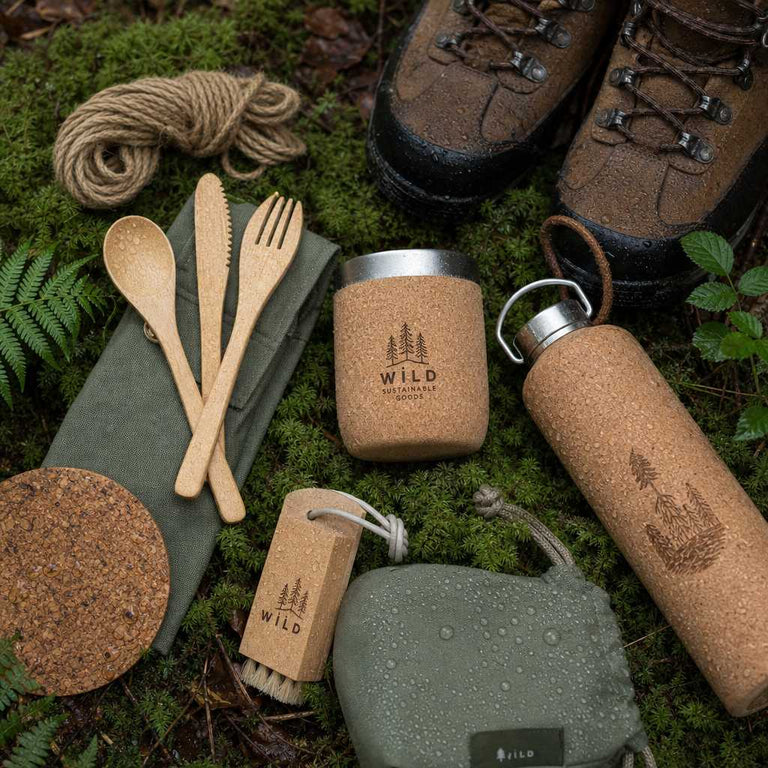
Wood is one of the most proven biodegradable materials available. Sustainably harvested hardwoods decompose naturally, support soil microbiomes as they break down, and do not release harmful compounds in the process. This is why hardwood has reemerged as a serious material choice for companies manufacturing outdoor accessories. It performs. It lasts during use. And it disappears cleanly when that use is done.
In practice, a hardwood can insulator like the TreeSleeve from Better Wheel VT represents exactly this principle. Crafted from Vermont hardwood in sustainably managed forests, it functions as a premium product during its use life and returns to the earth naturally at the end of it.
"The most sustainable product is one that performs well enough that it does not need to be replaced constantly, and degrades cleanly when it eventually does." - Outdoor Industry Association sustainability research framework, 2022.
Sustainable Recreation Products Gaining Real Traction
This is not a fringe movement. According to Statista, the global sustainable goods market was valued at over $150 billion in 2021 and is projected to grow at a compound annual rate of 9.7 percent through 2027. The outdoor recreation segment is one of the fastest-moving categories within that broader shift.
Major outdoor retailers have begun requiring sustainability disclosures from suppliers. REI Co-op has published explicit commitments to reducing single-use plastic in its product catalog. Patagonia has built its entire brand positioning around material accountability. These are not small players taking calculated risks. They are responding to a clear shift in what their customers actually want.
The festival market tells the same story from a different angle. Event organizers at large outdoor festivals are actively banning single-use plastics and seeking merchandise partners who can offer alternatives. A wooden can insulator is not just a better environmental choice at a festival. It is a product that organizers can actively endorse without contradicting their own sustainability messaging.
Eco-friendly adventure gear is becoming a purchasing criterion, not an afterthought. Outdoor enthusiasts are increasingly applying the same scrutiny to small accessories that they have always applied to major gear purchases like tents and packs.
Pro tip: If you are shopping for outdoor gifts, look specifically for products that name their material source and region. A product that says it is made from sustainably sourced Vermont hardwood is making a verifiable claim. A product that says it is eco-friendly with no specifics is not.
How Wood Became a Serious Gear Material
Wood fell out of favor in consumer goods during the mid-twentieth century, when plastics promised lighter weight, lower cost, and industrial scalability. For decades, that trade-off seemed acceptable. The environmental costs were externalized onto ecosystems and future generations rather than appearing on any product price tag.
The recalculation is now happening. Designers and manufacturers are returning to hardwood not out of nostalgia but because the material genuinely outperforms synthetics on several criteria that matter to modern outdoor consumers: longevity, aesthetics, tactile quality, and environmental footprint.
Why Vermont hardwood specifically matters
Vermont's forests are subject to some of the most rigorous sustainable forestry regulations in North America. The state has maintained forest cover above 75 percent of its total land area for over a century, largely because of active stewardship practices that prioritize regeneration alongside harvest. Wood sourced from these forests is not depleting a resource. It is participating in a managed cycle.
Better Wheel VT's TreeSleeve is built on this foundation. The hardwood used in each insulator comes from Vermont forests where harvest rates do not exceed natural regeneration rates. That is a meaningful environmental claim, and it is one that can be verified by looking at Vermont's forestry management records.
Hardwood insulation performance in outdoor conditions
Wood has natural thermal insulation properties. The cellular structure of hardwood traps air pockets that slow heat transfer, which is exactly what you want in a can insulator. In practice, a well-crafted wooden insulator maintains drink temperature comparably to foam alternatives without any of the petrochemical inputs required to manufacture foam.
Hardwood also holds up better than foam in the conditions outdoor enthusiasts actually encounter. Foam compresses, tears, and degrades visibly with repeated use. Hardwood does not. A TreeSleeve brought camping every weekend will outlast five foam koozies while looking significantly better doing it.

Comparing Material Approaches in Eco-Friendly Adventure Gear
Not all materials that claim environmental credentials are equal. The table below compares three material categories commonly used in outdoor accessories and insulators, including the approaches favored by conventional competitors like cooziecooler.com and customkoozies.com versus the hardwood approach taken by Better Wheel VT.
| Material Type | Environmental Profile | Performance in Outdoor Use |
|---|---|---|
| Conventional Foam (Neoprene or EVA) - used by most competitors including cooziecooler.com and customkoozies.com | Petroleum-derived, non-biodegradable, persists as microplastics, requires energy-intensive manufacturing, cannot be composted or recycled in most facilities | Lightweight, compressible, low cost, but degrades quickly with UV exposure and heavy use, poor durability over multiple seasons |
| Recycled Synthetic Materials - increasingly common in premium outdoor brand accessories | Reduces virgin plastic demand but still petroleum-based, does not biodegrade, and recycled content claims are often difficult to verify without third-party certification | Moderate durability, similar thermal performance to virgin foam, marginally better environmental story but not a genuinely biodegradable solution |
| Sustainably Sourced Hardwood - the approach used by Better Wheel VT's TreeSleeve | Fully biodegradable, sourced from certified sustainably managed Vermont forests, no synthetic inputs, carbon stored in the material during its use life, clean decomposition at end of life | Superior durability, genuine thermal insulation, premium aesthetic with wildlife and outdoor design motifs, highly giftable and uniquely differentiated in the market |
The comparison is clear. Recycled synthetics are an improvement over virgin foam but they are not a genuine solution. Hardwood is the only material category in this comparison that is both fully biodegradable and genuinely durable for outdoor use.
What Outdoor Enthusiasts Actually Want from Sustainable Gear
Here is a position worth stating plainly: outdoor enthusiasts do not want to sacrifice performance to do the right thing. They want gear that earns its place on the trail or at the campsite while also aligning with the values that drove them outdoors in the first place.
The research supports this consistently. McKinsey's 2023 consumer sustainability report found that 60 percent of outdoor recreation consumers actively research the environmental claims of products before purchasing, but 78 percent of that same group said they would not purchase a product with verified sustainability credentials if it performed meaningfully worse than conventional alternatives. Performance and sustainability are not competing priorities. They are both required.
This is precisely why products like the TreeSleeve succeed in this market. It is not positioned as a sacrifice. It is positioned as a premium product that happens to be made responsibly. The designs, featuring outdoor themes, wildlife motifs, and custom options, speak directly to the identity of the people buying it. A Vermont hardwood can insulator with a custom wildlife design is a product that outdoor enthusiasts actually want to own and display, not a compromise they accept to feel better about their purchasing choices.
The gifting dimension of sustainable outdoor gear
The outdoor enthusiast demographic is also a primary target for gift-givers. Finding a gift that feels genuinely premium, uniquely designed, and environmentally responsible is a genuine challenge in the market. Most gift guides default to the same synthetic products wrapped in green marketing language.
A hardwood can insulator with a Vermont forest provenance story and handcrafted design details solves the gift-giver's problem completely. It is distinctive, it is functional, and the sustainability story is real enough to tell at the moment of giving. That combination is rare in the current market and it is why eco-conscious gift shoppers represent a serious and growing customer segment for businesses like Better Wheel VT.
The outdoor recreation gear market is moving in one direction. Biodegradable materials, transparent sourcing, regional manufacturing, and genuine performance are becoming the baseline expectation, not premium differentiators. The brands and products that are building on those foundations now are not just doing the right thing. They are positioning themselves exactly where the market is heading.
Frequently Asked Questions
What makes a piece of outdoor gear truly biodegradable?
Truly biodegradable outdoor gear is made from natural materials that decompose through biological processes into non-toxic compounds without requiring industrial composting facilities. Sustainably sourced hardwood qualifies clearly. Most foam and synthetic materials, even those marketed as eco-friendly, do not meet this standard because they either require special conditions to break down or leave microplastic residue in natural environments.
Is biodegradable outdoor gear durable enough for serious use?
Yes, and this is one of the most persistent misconceptions in the sustainable gear conversation. Hardwood, for example, is more durable under outdoor conditions than neoprene or EVA foam. A wooden can insulator like TreeSleeve resists UV degradation, compression damage, and general wear better than foam alternatives. The assumption that sustainable equals fragile is simply not supported by real-world performance data.
How does locally sourced hardwood compare to imported eco-friendly materials?
Locally sourced hardwood from sustainably managed forests has a dramatically lower transportation carbon footprint than imported materials, regardless of how those materials are classified. Vermont hardwood used by Better Wheel VT travels a fraction of the distance that overseas synthetic materials travel. The environmental benefit of local sourcing compounds with the biodegradability of the material itself to create a genuinely superior environmental profile.
Are wooden can insulators practical for outdoor activities like hiking and camping?
In practice, yes. Hardwood insulators are lightweight, do not absorb odors, and perform reliably in the temperature ranges and humidity conditions encountered during hiking, camping, and festival attendance. They are not as compressible as foam, but they are more rigid and durable, which means they hold their shape throughout a pack or cooler without bunching or tearing.
Why are eco-conscious consumers moving away from conventional foam koozies?
The core issue is that foam koozies are made from petrochemical-derived materials that do not biodegrade and shed microplastics throughout their use life and beyond. For consumers who spend significant time outdoors, using a product that actively contributes to the microplastic contamination of the environments they love creates a genuine values conflict. Biodegradable alternatives made from natural materials resolve that conflict without requiring any sacrifice in functionality.
What should I look for when buying sustainable recreation products as gifts?
Look for three things specifically: a named and verifiable material source, a clear biodegradation pathway that does not require industrial facilities, and genuine design quality that makes the product something the recipient actually wants to use. Products that check all three boxes, like TreeSleeve from Better Wheel VT, are rare and represent genuinely strong gift choices for outdoor enthusiasts and eco-conscious consumers alike.
If you have made the switch to biodegradable outdoor gear or have experience comparing natural material products to conventional foam alternatives on the trail, share what you found in the comments below.
We would love your feedback and any insights you would share with others. What perspective would you add?
References
- Statista: Market data and growth projections for the global sustainable consumer goods sector
- McKinsey and Company: Consumer research on sustainability priorities in outdoor and recreation purchasing decisions
- Forbes: Coverage of the growing market for eco-friendly and biodegradable consumer products
- United States Environmental Protection Agency: Official data and guidance on biodegradable materials, composting standards, and plastic pollution in natural environments
- United States Forest Service: Research and policy information on sustainable forest management and hardwood harvesting practices in the northeastern United States
Share:
Eco-Friendly Gifts for Beer Lovers Who Have Everything
Music Festival Packing List: Outdoor Fan Essentials