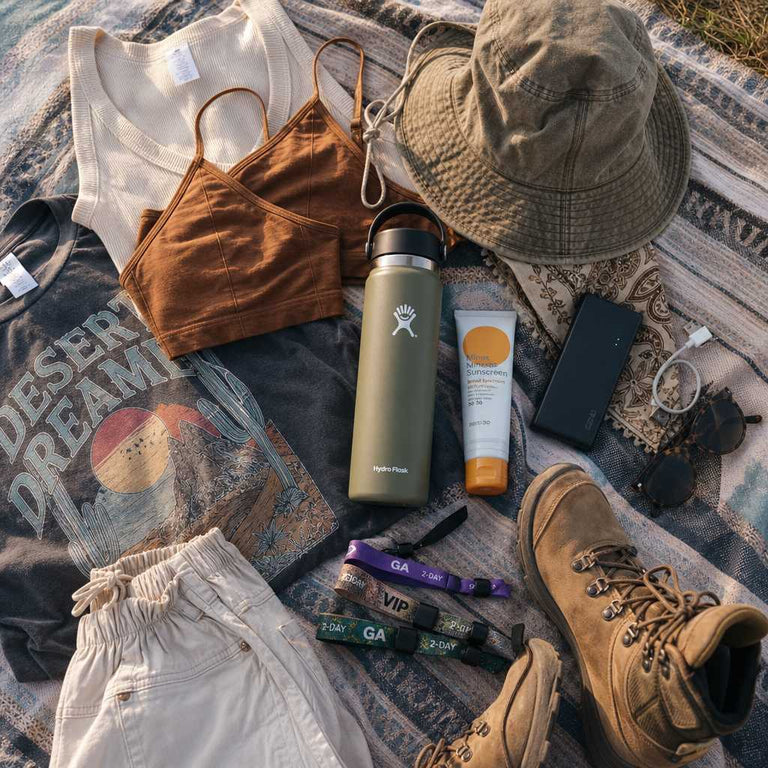
Most people show up to a multi-day outdoor music festival underprepared, and they pay for it in blistered feet, warm drinks, and dead phone batteries by Saturday afternoon. A solid music festival packing list is not about bringing everything you own. It is about bringing the right things, in the right form, so you spend your energy on the music instead of hunting for shade or a cold sip of something. This guide covers the outdoor festival gear that actually makes a difference, including one category most packing lists completely overlook: what you drink from.
Table of Contents
- Quick Takeaways
- Shelter and Sleep Gear
- Clothing and Footwear
- Festival Drinkware and Hydration
- Food and Snack Supplies
- Power and Navigation
- Health and First Aid
- Eco-Conscious Packing
- Drinkware Comparison: Which Format Wins at a Festival
- Frequently Asked Questions
- References
Quick Takeaways
| Key Insight | Explanation |
|---|---|
| Pack in layers, not outfits | Outdoor festival temperatures swing 30 degrees or more between noon and midnight. Layering is more practical than packing full outfit changes. |
| Your drinkware choice matters more than you think | A warm beer at 2 PM in a field is a miserable experience. A quality can insulator keeps your drink cold through long sets and long walks. |
| Biodegradable and sustainable gear is no longer a compromise | Products like the TreeSleeve from Better Wheel VT prove you can have premium function without contributing to the plastic waste that plagues festival grounds. |
| Footwear is the single most consequential packing decision | Wrong shoes cause blisters that end festivals early. Bring broken-in shoes with ankle support and a backup pair. |
| Battery backup is non-negotiable | A dead phone at a multi-stage festival means missed sets, lost friends, and no map. Bring a 20,000 mAh power bank at minimum. |
| Cash still wins at smaller festivals | Many independent vendor stalls, especially craft beer and food trucks, operate cash-only. Arriving with none means missing out on the best food at the event. |
| Leave-no-trace thinking improves your experience | Eco-conscious gear, reusable containers, and sustainable products reduce your load-out work and protect the outdoor spaces that make these festivals worth attending. |
Shelter and Sleep Gear

The worst sleep of your life will happen in a tent you borrowed from someone who has not used it in seven years. Before any festival, test your tent in your backyard. A real field test costs you nothing and saves you a disaster on night one.
For most three-season outdoor music festivals, a two-person tent for solo use is the practical standard. The extra space holds your gear inside, keeps things dry, and gives you room to change without performing circus acts. Freestanding dome tents in the 2 to 3 pound range hit the sweet spot between portability and livability.
Sleeping Setup Essentials
A sleeping bag rated to at least 40 degrees Fahrenheit handles the majority of North American summer festival conditions, but pack a light fleece liner as insurance. A self-inflating sleeping pad does double duty as insulation from cold ground and cushion for sore legs.
A headlamp with a red-light mode is critical. Red light preserves night vision and avoids blinding your camping neighbors at 2 AM. Bring two sets of batteries or a rechargeable model.
Pro tip: Stake your tent before it gets dark on arrival day. Finding your plot, reading instructions, and driving stakes in low light is the kind of unnecessary frustration that burns your energy for day two.
Clothing and Footwear
The golden rule for festival clothing is function before fashion, but the two are not mutually exclusive. Start with a base of moisture-wicking shirts, two pairs of quick-dry shorts or pants, and one full warm layer for nights. Vermont festival-goers know this better than anyone: summer evenings in New England can drop fast.
The Footwear Decision
In practice, footwear breaks more festivals than any other single gear decision. Sandals look right but destroy your feet over four miles of walking per day across uneven ground. Trail runners or broken-in hiking shoes with ankle support are the correct answer for most multi-day outdoor events.
Bring a second pair of shoes. This is not optional if there is any chance of rain. Wet shoes that cannot dry overnight turn Saturday into a misery exercise.
What to Skip
Leave the heavy denim, the full-length rain boots unless the forecast demands them, and anything you would be heartbroken to lose or damage. Festival grounds are hard on gear.
Pro tip: Pack a lightweight packable rain poncho, not an umbrella. Umbrellas block sightlines, annoy the crowd around you, and create a genuine hazard in dense festival spaces.
Festival Drinkware and Hydration
This is the category that separates people who enjoy outdoor festivals from people who merely endure them. Hydration is not just water. It is everything you drink across a twelve-hour day in the sun, and how you drink it shapes the entire experience.
The Case Against Plastic and Styrofoam
A common mistake is grabbing the cheapest foam koozie from a merch table and calling it a day. Foam koozies compress, lose their insulation within a festival or two, and contribute directly to the waste problem that outdoor festivals struggle to manage. According to the EPA, Americans generate roughly 35.7 million tons of plastic waste annually, and event grounds are a concentrated source of single-use plastic.
"The average festival-goer generates 2.5 kg of waste per day, with plastic cups and single-use drinkware making up a significant share." Source: Julie's Bicycle, environmental touring and events research
TreeSleeve: A Functional Upgrade for Outdoor Music Fans
The TreeSleeve from Better Wheel VT is the outdoor festival drinkware answer that foam and plastic simply cannot match. Crafted from sustainably sourced hardwood from Vermont forests, it keeps cans cold through long sets, holds up to field conditions, and fully biodegrades at end of life. No microplastic shedding. No guilt when it finally retires.
For outdoor enthusiasts who take their environment as seriously as their music, the TreeSleeve also doubles as a conversation piece. The wildlife motifs and outdoor-themed designs make it recognizable on a crowded festival lawn in a way that a generic foam sleeve never could. It is premium outdoor festival gear that reflects a values system, not just a function.
A hydration bladder or a large reusable water bottle handles your water needs, but your beer or canned beverage deserves the same attention. Pair your TreeSleeve with a 32-ounce insulated water bottle and you have covered every drinkware need without adding significant pack weight.

Food and Snack Supplies
Festival food is part of the experience, and you should absolutely buy food from vendors. But relying entirely on vendor food across four days is expensive and inconsistent. A smart snack strategy reduces your food spend and keeps your energy stable between sets.
What to Bring
Focus on calorie-dense, heat-stable foods that do not require refrigeration. Mixed nuts, protein bars, jerky, peanut butter packets, and trail mix cover energy needs without any cooling requirement. A soft-sided cooler with a single bag of ice handles perishables for two days if you manage it correctly: keep it in shade, minimize openings, and pack it tight.
Electrolyte tablets or packets are underrated and underused. After a full day of walking in the sun, plain water is not enough to restore what you lose. Brands like Nuun or Liquid I.V. pack flat and weigh almost nothing.
What to Skip
Do not pack foods that require preparation, real refrigeration, or create significant waste. A camping stove setup is appropriate for a backcountry trip, not a music festival where space and time are limited.
Power and Navigation
A dead phone at a festival with multiple stages is a genuine problem. You need it for the schedule, for the map, for meeting points with your group, and for capturing the moments worth keeping.
A 20,000 mAh power bank is the practical minimum for a three-to-four day event. At typical smartphone discharge rates with GPS and screen use, you will burn through roughly 80 percent of a full charge per day. That math makes a high-capacity bank essential, not optional.
Download the festival app and a local map offline before you lose signal in the festival crowd. Many major events see cellular networks completely saturated during peak attendance hours, making data connections unreliable precisely when you need them most.
Pro tip: Designate a specific physical landmark as your group's emergency meeting point at the start of the first day. When phones die and signal fails, a pre-agreed landmark solves the problem instantly.
Health and First Aid
A music festival first-aid kit does not need to be a field hospital. It needs to address the six things that actually go wrong: blisters, sunburn, headaches, stomach upset, minor cuts, and allergic reactions.
Pack moleskin blister pads, SPF 50 sunscreen (the spray format is faster to apply but the stick format does not spill), ibuprofen, antacid tablets, adhesive bandages in multiple sizes, and one antihistamine. If you take any prescription medication, pack three extra days worth in your carry bag, not your checked gear.
Ear protection is worth adding here. A common mistake among regular festival-goers is ignoring cumulative noise exposure. High-fidelity earplugs from brands like Eargasm or Loop reduce decibels without muddying sound quality, and they protect hearing you will want intact for the next fifty years of live music.
Eco-Conscious Packing
Outdoor music festivals exist in outdoor spaces, and those spaces are actively degraded when attendees treat them as disposable. The leave-no-trace ethic that governs backcountry travel applies directly to festival grounds, and the gear choices you make before you arrive determine the impact you leave behind.
The principle is simple: every single-use item in your bag is a potential piece of litter. Replacing single-use items with reusable, durable, or biodegradable alternatives is not idealism. It is practical thinking that also reduces your pack weight and your post-festival cleanup work.
Sustainable Swaps That Actually Work
Replace foam can sleeves with the TreeSleeve from Better Wheel VT. Replace plastic cutlery with a lightweight titanium spork. Replace paper napkins with a small pack of reusable cloths. Replace single-use shopping bags with a packable tote for vendor purchases. These are not sacrifices. They are straightforward upgrades.
Sustainably sourced hardwood products like the TreeSleeve represent a broader shift in how outdoor enthusiasts are thinking about gear. The question is no longer just "does it work?" but "what does it do to the place I love being in?" Both questions have the same answer when the product is made thoughtfully.
Drinkware Comparison: Which Format Wins at a Festival
| Drinkware Type | Performance at a Festival | Environmental Impact |
|---|---|---|
| Foam Koozie (standard) | Weak insulation that degrades quickly, compresses in bags, and loses effectiveness after minimal use. Functional for about 30 minutes in direct sun. | Non-biodegradable, contributes to microplastic contamination, typically ends up in festival waste streams. |
| Neoprene Sleeve (customkoozies.com style) | Better insulation than foam, more durable, but synthetic material does not biodegrade. Prone to odor retention after extended festival use. | Synthetic petroleum-based material. Not biodegradable. Functional lifespan is longer than foam but disposal is equally problematic. |
| TreeSleeve (Better Wheel VT hardwood) | Solid insulation from natural wood material, rigid structure protects cans from crushing in a bag, and distinctive design is recognizable in a crowd. Does not compress or degrade mid-festival. | Made from sustainably sourced Vermont hardwood. Fully biodegradable at end of life. Zero synthetic material. Aligns with leave-no-trace values. |
Frequently Asked Questions
What is the most important item on a music festival packing list?
Footwear is the single most consequential decision on your festival packing list. The right broken-in trail runners or hiking shoes prevent blisters that end festivals prematurely. Everything else can be improvised or purchased on-site. Shoes cannot.
What outdoor festival gear is worth spending money on versus skipping?
Spend on footwear, a quality power bank, a reliable tent, and a premium can insulator like the TreeSleeve. Skip expensive festival-branded merchandise, fancy coolers that exceed your campsite size, and any gear you have not tested before arrival. Untested gear at a festival is a liability, not an asset.
Why does festival drinkware matter for outdoor music events?
You are going to be holding a drink for hours across a full day in the sun. A warm, flat beer at hour three of a set is a genuinely bad experience. Quality festival drinkware like the TreeSleeve keeps canned beverages cold significantly longer than bare hands or foam sleeves, and it does it without contributing plastic waste to an outdoor space that is already under stress from high attendance.
How do I pack sustainably for an outdoor music festival?
Start by auditing your single-use items and replacing each one with a reusable or biodegradable alternative. Swap foam koozies for a hardwood TreeSleeve, bring a reusable water bottle, pack a lightweight tote for vendor purchases, and bring a small trash bag for your own campsite. Sustainable packing is not a checklist. It is a habit of asking what happens to each item after you are done with it.
Can I bring a can insulator into a music festival?
In most cases, yes. Can insulators do not violate standard festival prohibited items policies. Check the specific festival's policy regarding outside food and beverages, since many festivals permit outside snacks and non-alcoholic drinks. If outside canned beverages are allowed, a TreeSleeve is an ideal companion that you carry in and walk out with. Always review the specific festival's entry rules before packing anything you depend on.
What do outdoor enthusiasts pack for festival hydration?
A 32-ounce insulated water bottle for water, electrolyte tablets or packets, and a quality can insulator for cold canned beverages covers the full hydration picture. The mistake most outdoor festival-goers make is treating water as their only hydration need. Electrolyte replacement is equally important after a full day of physical activity in the sun, and keeping your canned drinks cold is a quality-of-life factor that is easy to solve with the right gear.
Have a festival packing lesson you learned the hard way, or a piece of gear that changed your outdoor music experience? Share it in the comments below.
References
- U.S. Environmental Protection Agency data on plastic waste generation and management
- Statista statistics on music festival attendance and outdoor event trends in North America
- Forbes coverage of sustainable consumer products and eco-conscious outdoor gear trends
- Recreation.gov resources on leave-no-trace principles and outdoor event stewardship
Share:
Biodegradable Outdoor Gear: The Future of Recreation
Wood vs Foam vs Stainless: Best Can Insulator Guide