Most outdoor shoppers care about the planet. That care is exactly what greenwashing exploits. Scroll any product page in the gear or accessories space and you will find words like "natural," "eco-friendly," and "sustainably sourced" used with no certification, no supply chain data, and no accountability. Research from the European Commission found that more than half of examined environmental claims were vague, misleading, or unfounded. For someone buying greenwashing outdoor products, the challenge is not finding options that claim to be green. It is finding the ones that actually are. This guide gives you the practical tools to tell the difference before you spend a dollar.
Table of Contents
- What Greenwashing Actually Looks Like in Outdoor Products
- The Language Trap: Words That Sound Green But Mean Nothing
- Certifications That Actually Matter for Outdoor and Wood-Based Products
- Comparing Three Approaches to Evaluating Eco-Friendly Products
- What Truly Eco-Friendly Products Actually Look Like
- Sustainable Shopping Tips You Can Use Right Now
- Frequently Asked Questions
- References
What Greenwashing Actually Looks Like in Outdoor Products
Greenwashing is not always a lie. Often it is a selective truth. A brand highlights one plant-based ingredient while burying the synthetic binders. A coozie brand calls its product "eco-conscious" while manufacturing it with petroleum-derived foam in an overseas factory with no disclosed emissions data. These are not edge cases. They are the industry norm.
The outdoor product category is especially vulnerable because consumers already associate campfires, hiking trails, and rivers with environmental values. Brands know this. Nature imagery, earth-tone packaging, and wildlife logos do enormous work to imply sustainability without any product actually being sustainable. A leaf on the label costs nothing. Rebuilding a supply chain around genuinely renewable materials costs years and serious investment.
Major fashion and goods brands have already faced legal consequences for exactly these tactics. In 2024, Shein was fined by an Italian court over environmental messaging that regulators described as "vague, generic, overly emphatic, and in some cases misleading." The FTC's Green Guides make the standard clear: environmental claims must be specific, substantiated, and not misleading. Most outdoor product claims you encounter today fail that test on at least one count.
"Companies spend more time and money marketing themselves as green than actually minimizing their environmental impact." The gap between the claim and the reality is where shoppers consistently lose money and trust.
If you buy outdoor accessories regularly, the odds are good that you have already purchased something marketed as sustainable that was not. The goal from here is to not let it happen again.
The Language Trap: Words That Sound Green But Mean Nothing
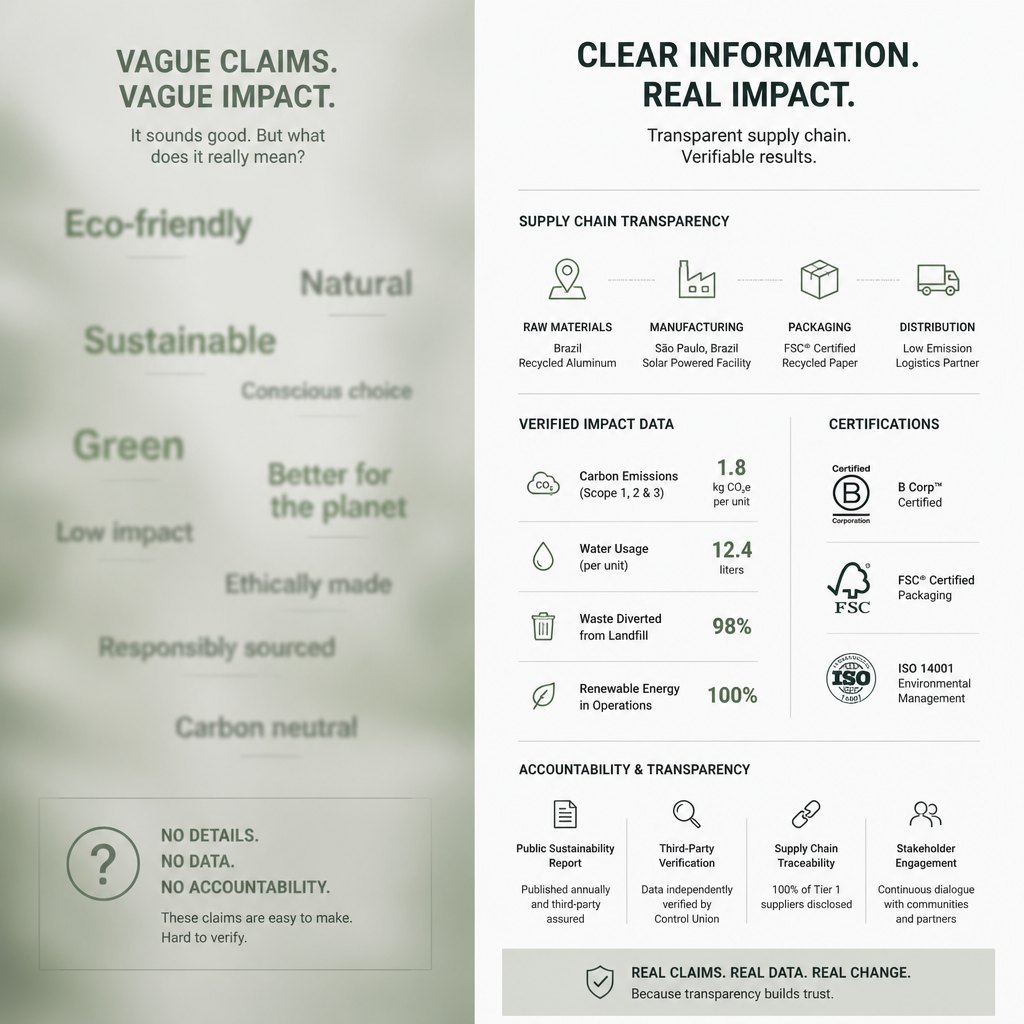
The single most reliable red flag in eco-product marketing is the presence of green buzzwords with zero substantiation. Words like "eco-friendly," "green," "natural," and "sustainable" have no universal legal definition. Companies can apply them to any product with no oversight and no proof required. Recognizing this language trap is the first sustainable shopping skill worth developing.
The Most Abused Terms in Outdoor Product Marketing
"Biodegradable" is one of the most misused labels in the space. Under the FTC Green Guides, a biodegradable claim requires that the product will completely break down within a reasonably short time in the environment where it is disposed. "Bioplastic" products, for example, often require industrial composting conditions that most consumers never access. If a product is labeled biodegradable, ask: how long, under what conditions, and verified by whom?
"Natural" and "plant-based" are equally slippery. Rayon and viscose fabrics are made from plant cellulose, but their chemical processing makes the resulting material functionally synthetic. Bamboo, celebrated endlessly in outdoor product marketing, requires heavy chemical treatment in most manufacturing pipelines. The front of the label and the back of the label frequently tell two completely different stories.
"Sustainably sourced" without a third-party certification is a self-declared claim. There is no industry body monitoring it. Any company can print it. This is especially relevant for wood-based and natural fiber products, where supply chain transparency genuinely matters and can be verified through independent schemes.
Pro tip: When you see a green term on a product, immediately look for what verifies it. A certification mark from a recognized third party, a specific material origin, or a disclosed manufacturing process. If the only evidence is the word itself, treat it as unverified marketing.
Certifications That Actually Matter for Outdoor and Wood-Based Products
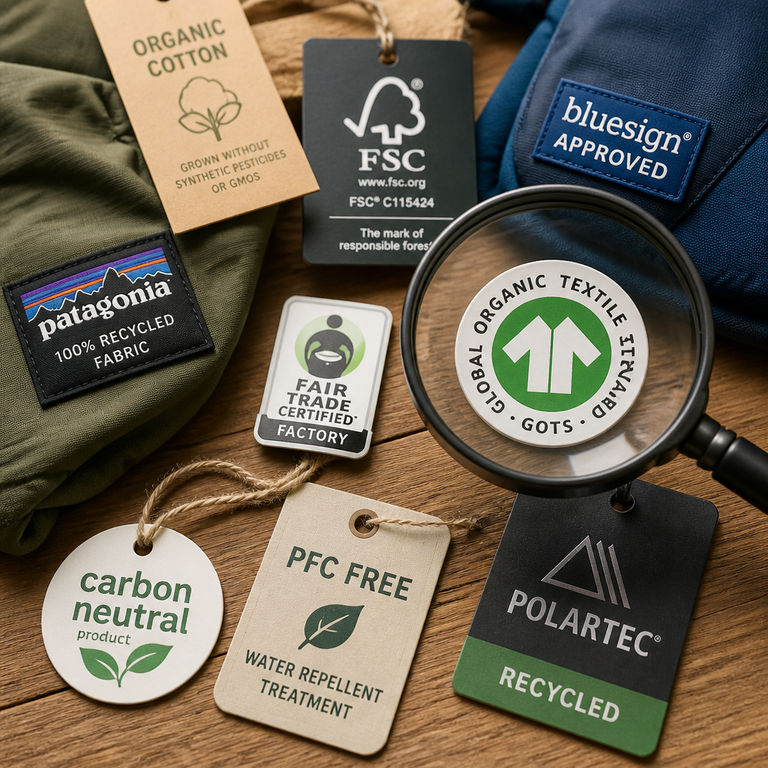
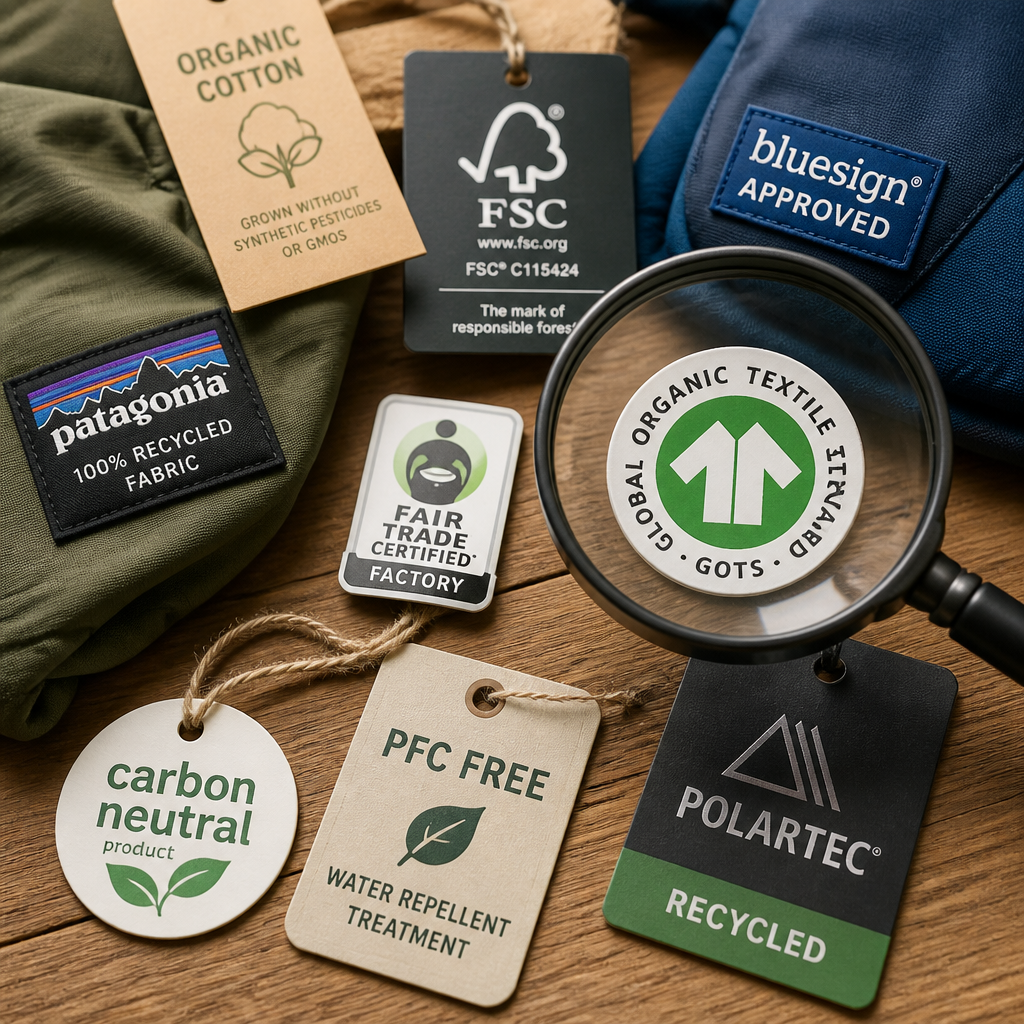
Not all certifications are equal, but the right ones genuinely protect you. The key distinction is between self-declared labels, which any manufacturer can create and apply, and third-party verified standards, which require independent audits and documented chain-of-custody tracking from raw material to finished product.
FSC Certification: The Most Rigorous Standard for Wood Products
For anything made from wood or wood fiber, the Forest Stewardship Council (FSC) certification is the benchmark worth trusting. Launched in 1993, FSC manages an international standard for well-managed forests and requires documented chain-of-custody certification at every stage, from the forest where a tree is harvested to the final consumer product. FSC certification also requires companies using the FSC label to be truthful and clear about sustainability claims, providing a structural defense against greenwashing from within the supply chain.
You can verify any FSC claim independently. If a brand provides a certificate code, enter it into the FSC's public certificate database and confirm whether it is current, which products it covers, and who issued it. If a brand cannot provide that code, or the code returns no results, the FSC claim is invalid regardless of how prominently the logo appears on the product.
For wood-based outdoor products and accessories, including products like wooden can insulators and carved outdoor gear, FSC or PEFC (Programme for the Endorsement of Forest Certification) certification is the minimum standard that separates a credible claim from a marketing exercise. The terms "sustainably sourced" or "responsibly harvested" without an FSC certificate number are self-declared claims with no standing in verified sustainability.
Other Certifications Worth Recognizing
Beyond wood, look for GREENGUARD or GREENGUARD Gold for chemical emissions in products used in enclosed spaces. For materials and product health claims, the Cradle to Cradle certification evaluates material health and circularity across the product lifecycle. These are not perfect, but they require external review, which self-declared labels never do.
Pro tip: Search the certifying body's public database, not the brand's website, to verify any certification claim. FSC, PEFC, and Cradle to Cradle all maintain searchable registries. A real certification survives a search. A fake one does not.
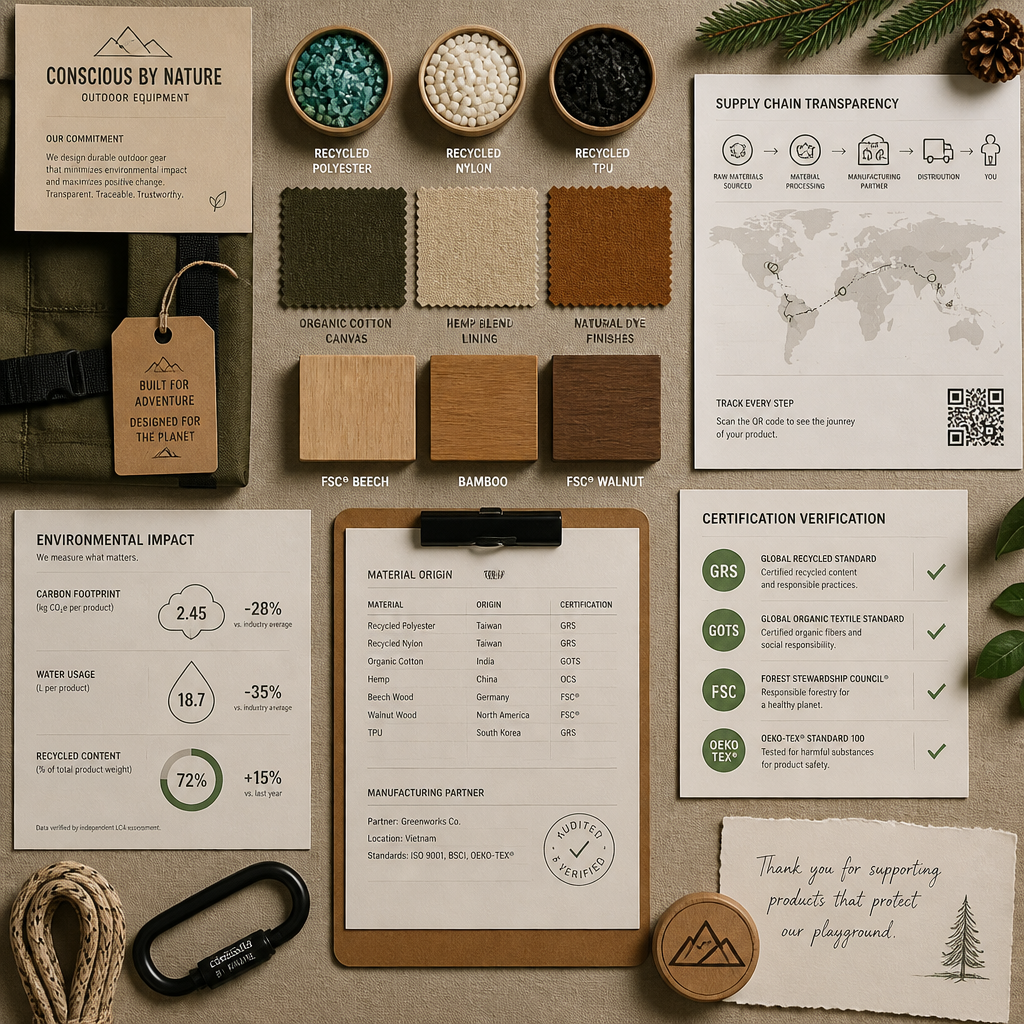
Comparing Three Approaches to Evaluating Eco-Friendly Products
Shoppers tend to fall into one of three evaluation modes when assessing sustainability claims. Each has a different success rate at catching greenwashing before purchase.
| Evaluation Approach | What It Involves | Effectiveness at Catching Greenwashing |
|---|---|---|
| Label-Only Trust | Buying based on green words and nature imagery on packaging with no further research | Low. Most greenwashed products pass this filter because the language is designed precisely to do so. This approach catches nothing. |
| Certification Verification | Checking for third-party standards (FSC, PEFC, Cradle to Cradle) and confirming them in public databases before purchasing | High for material and sourcing claims. Catches the most common forms of greenwashing in wood, fiber, and chemical-content products. Takes 3-5 minutes per product. |
| Supply Chain Transparency Review | Reviewing disclosed origin of materials, manufacturing location, energy source, and end-of-life options on brand website or documentation | Very high when information is genuinely disclosed. A brand that shares specific data (not percentages without context) on sourcing, manufacturing, and disposal earns significant trust. A brand that cannot answer these questions specifically is a red flag. |
In practice, combining certification verification with a quick supply chain transparency check takes under ten minutes and catches the vast majority of greenwashed outdoor products before you buy. Label-only trust is the default mode most shoppers operate in, which is exactly why greenwashing is so profitable for the brands that practice it.
What Truly Eco-Friendly Products Actually Look Like
The most honest signal of genuine sustainability is specificity. Truly eco-friendly products do not speak in generalities. They tell you exactly what the material is, where it came from, how it was processed, and what happens to it at end of life. That level of transparency is genuinely difficult to fake, because faking it requires providing details that can be checked.
Take a wooden can insulator as an example. A greenwashed version might say "made from natural materials" or "eco-conscious design" with no further detail. A genuinely sustainable version tells you the species of hardwood used, the specific region or forest it was sourced from, whether it carries FSC or equivalent certification, how it was finished (water-based versus chemical finishes), and whether it is fully biodegradable at end of life without requiring industrial composting conditions. Every one of those details can be independently verified or disproven.
The TreeSleeve from Better Wheel VT is an example of what that specificity looks like in practice. It is crafted from sustainably sourced Vermont hardwood, it is fully biodegradable, and the sourcing is traceable to Vermont forests rather than an unnamed "sustainable supplier." When a product can tell you its origin at that level of geographic specificity, it is a fundamentally different claim from a badge that says "earth-friendly."
Longevity and material quality are also markers of real sustainability. Research from forestry and materials science consistently shows that wood from well-managed, sustainably harvested forests is often structurally superior to alternatives produced from lower-quality or old-growth sources. Sustainability and quality, in the case of responsibly grown hardwood, reinforce each other rather than trade off against each other. A product that lasts significantly longer than its competitors and is fully biodegradable at end of life has a dramatically lower lifecycle environmental impact than a cheaper synthetic alternative, regardless of what marketing claims that cheaper product makes.
Sustainable Shopping Tips You Can Use Right Now
Being an informed buyer in this space does not require becoming an expert in supply chain management. It requires asking a small set of targeted questions and knowing which answers are acceptable and which are not.
Ask the Questions Most Shoppers Skip
Before purchasing any outdoor product with an environmental claim, ask: What exactly is this made from? Where was that material sourced? Is that sourcing claim verified by a third party I can look up independently? What happens to this product at end of life, and does that outcome require special facilities or conditions? If any of these questions produce vague answers or no answer at all, that is meaningful information about the product's actual sustainability credentials.
Check What the Brand Does, Not Just What It Says
A common mistake is focusing entirely on product-level claims while ignoring brand-level practices. A product made from recycled materials produced in a high-emitting factory that pollutes nearby waterways is not a net win for the environment. Genuine sustainability requires looking at the full picture: origin, manufacturing, shipping, packaging, and end of life. Brands that are genuinely committed to sustainability make this information available without being asked. Brands that are not tend to highlight one flattering data point and keep everything else opaque.
Reward Specificity, Not Imagery
Green packaging, woodland graphics, and earthy tones cost nothing extra to print. Specific disclosures, third-party audits, and traceable supply chains cost real money and effort. When evaluating outdoor products, shift your mental model from "does this look sustainable?" to "what verifiable, specific information supports the sustainability claim?" That shift alone will change most of your purchasing decisions in the category.
For outdoor enthusiasts who want gifts or personal accessories that reflect their actual values, products like the TreeSleeve collection from Better Wheel VT represent what specificity looks like: locally sourced Vermont hardwood, regional manufacturing, no synthetic materials, and complete biodegradability. Comparing that to a neoprene or foam can insulator marketed as "eco-friendly" based on earth-tone packaging makes the contrast unmistakable.
Frequently Asked Questions
What is greenwashing and why is it so common in outdoor products?
Greenwashing is the practice of making misleading or unsubstantiated environmental claims to appeal to eco-conscious consumers. It is especially common in outdoor products because the target audience already holds strong environmental values, and words like "natural" or "sustainable" resonate strongly enough to drive purchase decisions without needing proof behind them. Since these terms have no universal legal definition, companies face minimal barrier to using them, and enforcement has historically been inconsistent, though regulators in the US and EU are tightening standards.
How can I tell if a biodegradable claim is real?
A credible biodegradable claim should specify how long breakdown takes, under what environmental conditions, and what testing or standard supports that timeline. The FTC Green Guides state that biodegradable claims require evidence that a product will completely decompose within a reasonably short time under typical disposal conditions. Products labeled biodegradable that require industrial composting facilities to actually break down are not biodegradable in any meaningful everyday sense. Ask the brand for the specific breakdown timeline and conditions, and verify whether those conditions match how you will actually dispose of the product.
Is FSC certification always reliable for wood products?
FSC is the most rigorous and widely trusted third-party certification for wood sourcing, requiring documented chain-of-custody tracking from forest to finished product. It is not perfect, and no certification system is, but it is independently verified and publicly searchable. The right move is not to trust the FSC logo on its own, but to use the brand's certificate code in the FSC public database to confirm the certificate is current and covers the specific product you are purchasing. That check takes about two minutes and confirms whether the claim is real.
Are there outdoor accessories that are genuinely sustainable, or is it all marketing?
Genuinely sustainable outdoor accessories do exist, but they require you to look past the marketing language and into the specifics. Products made from traceable natural materials, manufactured with documented low-impact processes, and fully biodegradable at end of life without special conditions are genuinely better than synthetic alternatives, regardless of what those alternatives say on their packaging. Wooden accessories made from verified, regionally sourced hardwood are a strong example. The material is renewable, biodegradable, and when sourced from well-managed forests, its production can be a net positive for forest health over time.
What is the single most effective thing I can do to avoid greenwashing when buying outdoor products?
Demand specificity and verify it independently. Every time a product claims to be eco-friendly, sustainable, or natural, ask what specific material substantiates that claim and whether a named third-party certification can be confirmed in a public database. If the brand can answer both of those questions clearly, you are likely looking at a genuine claim. If either question produces a vague answer or a redirect back to marketing language, that is your signal to look elsewhere. This single habit, applied consistently, catches the overwhelming majority of greenwashed products in any outdoor category.
How do wooden can insulators compare to foam or neoprene koozies on environmental impact?
The comparison is not close. Foam and neoprene are petroleum-derived synthetic materials. They do not biodegrade in any meaningful timeframe and carry a significant manufacturing carbon footprint. A wooden can insulator made from sustainably sourced hardwood is fully biodegradable, produced from a renewable resource, and when sourced locally, avoids the long-distance shipping emissions associated with offshore manufacturing. The key is verifying that the wood is genuinely sustainably sourced, not just labeled as such, which is exactly where certifications and specific regional sourcing claims become important.
Have you recently discovered a product you thought was sustainable turned out to be greenwashed, or found one that genuinely delivered on its eco-friendly claims? Share your experience in the comments so other outdoor shoppers can learn from it.
References
- United Nations overview of greenwashing tactics and how consumers can recognize misleading environmental claims
- Analysis of sustainability messaging pitfalls in outdoor ecommerce and the cost of greenwashing for brands
- Practical guide to identifying greenwashing red flags across product categories including outdoor and lifestyle goods
- How to identify sustainably sourced wood products using FSC certification and chain-of-custody verification
- Explanation of FTC Green Guides and EU Green Claims Directive requirements for biodegradable and eco-friendly product claims
Share:
Tailgate Accessories: Best Handcrafted Gear for Football
10 Last-Minute Summer Gifts for Nature Lovers