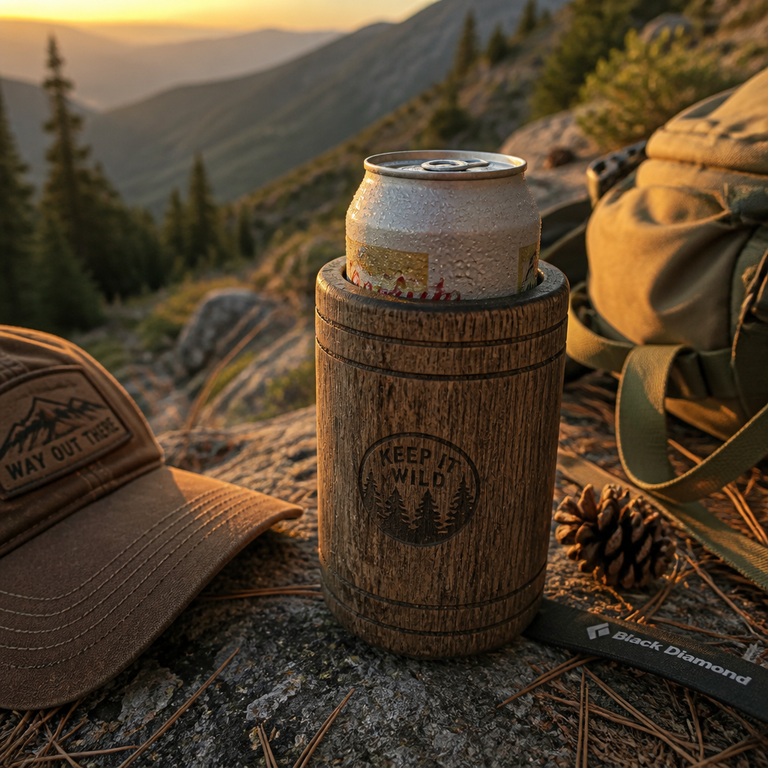
Most can insulators are an afterthought. You grab a foam sleeve at the checkout counter, it falls apart after two camping trips, and ends up in a landfill before the season is over. If you spend real time outdoors, that cycle gets old fast. A hardwood can insulator changes the equation entirely. It keeps your drink colder longer, holds up through actual trail conditions, and does not leave a pile of microplastics behind when it finally wears out. For outdoor enthusiasts who care about what they carry and what they leave behind, this is the upgrade that makes sense.
Table of Contents
- Quick Takeaways
- Why Foam Fails Outdoors
- What Makes Hardwood Different
- TreeSleeve and Vermont Hardwood
- Insulation Performance Compared
- Eco Credentials That Actually Hold Up
- Who This Is Really For
- Gifting a Hardwood Can Insulator
- Frequently Asked Questions
- References
Quick Takeaways
| Key Insight | Explanation |
|---|---|
| Hardwood insulates through natural thermal resistance | Wood has low thermal conductivity compared to foam or plastic, meaning heat transfer from your hand to the can is significantly slower. |
| TreeSleeve is fully biodegradable | Unlike neoprene or foam koozies, a hardwood can insulator from Better Wheel VT breaks down naturally at end of life, leaving no microplastic residue. |
| Vermont-sourced hardwood ensures sustainability | Better Wheel VT uses sustainably harvested hardwood from Vermont forests, meaning the supply chain is local, traceable, and forest-positive. |
| Durability outperforms foam over multiple seasons | Foam degrades after repeated exposure to moisture and UV light. Hardwood handles trail conditions and outdoor humidity without warping or cracking when properly finished. |
| Custom designs make it a standout gift | TreeSleeve is available in wildlife motifs, outdoor themes, and custom engravings, making it a specific, personal gift rather than a generic accessory. |
| It works with standard 12 oz cans | The TreeSleeve fits the most common beer and seltzer can size, so it is practical at festivals, campsites, and backyard gatherings without any adapters. |
| Eco-conscious consumers are a growing and vocal market | According to Statista, over 60 percent of global consumers say they actively try to purchase environmentally friendly products. A hardwood can insulator speaks directly to that priority. |
Why Foam Fails Outdoors
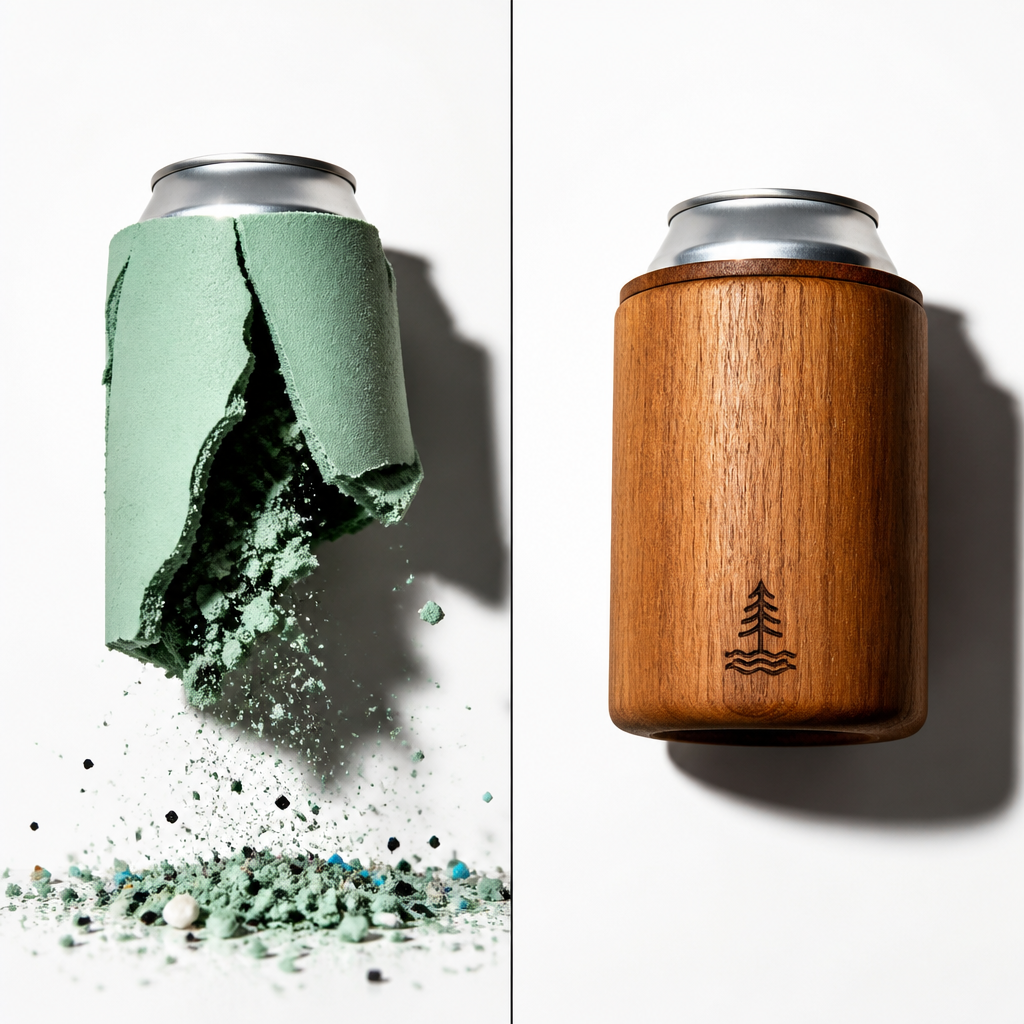
Foam and neoprene koozies were designed for convenience, not for people who actually spend time outside. In practice, the problems become obvious fast. Moisture gets trapped inside the sleeve, foam compresses and loses its insulating air pockets, and the material starts to smell after a weekend of use in a pack or cooler bag.
UV exposure accelerates the breakdown. A neoprene koozie left in a dry box or a sun-exposed truck bed starts to crack and peel within one season. That means you are replacing it regularly, generating waste each time, and never really owning something worth keeping.
A common mistake is assuming the foam sleeve that came free at a beer festival is good enough for the trail. It is not. The insulation is marginal, the fit is loose, and it contributes to the roughly 8 million metric tons of plastic that enter the ocean annually, according to data from the National Oceanic and Atmospheric Administration. Outdoor enthusiasts, of all people, should not be adding to that number.
What Makes Hardwood Different
Wood is a natural insulator. Its cellular structure traps air in a way that resists heat transfer far better than most people expect. Hardwoods specifically, such as maple and birch, have a denser grain that adds structural integrity without making the insulator heavy or bulky.
The thermal conductivity of wood ranges from roughly 0.10 to 0.20 W/(m.K) depending on species, compared to aluminum at 205 W/(m.K). That difference is enormous in practical terms. When you hold a cold can in a hardwood sleeve, the wood is not pulling heat from your hand into the can the way metal would. It is acting as a buffer.
How the Grip Changes the Experience
There is a tactile difference that matters more than people expect. Wood feels warm in the hand, which sounds counterintuitive for a product meant to keep drinks cold. But that warmth is surface comfort, not heat transfer. You can hold a cold can for longer without your hand going numb, which is a real advantage on winter camping trips or early-season hikes where temperatures are still low.
Foam compresses under grip pressure, reducing its effective insulation over time. Hardwood does not compress. The insulation properties of a TreeSleeve after two years of use are essentially the same as on day one.
Pro tip: If you are choosing between hardwood species, denser hardwoods like maple hold their finish better in wet outdoor conditions than lighter woods. Better Wheel VT selects Vermont hardwood with exactly this durability consideration in mind.
TreeSleeve and Vermont Hardwood
Better Wheel VT built the TreeSleeve around a specific material philosophy. Vermont forests are among the most carefully managed in the country. The state has over 4.5 million acres of forested land, and private and public forestry programs maintain strict harvesting standards. That is the supply chain Better Wheel VT works within.
This matters for one simple reason: a product marketed as eco-friendly that uses hardwood from unclear or unmanaged sources is not actually eco-friendly. Sourcing from Vermont forests with documented sustainable harvesting practices is a verifiable claim, not a marketing slogan.
The Design Language Speaks to Outdoor Culture
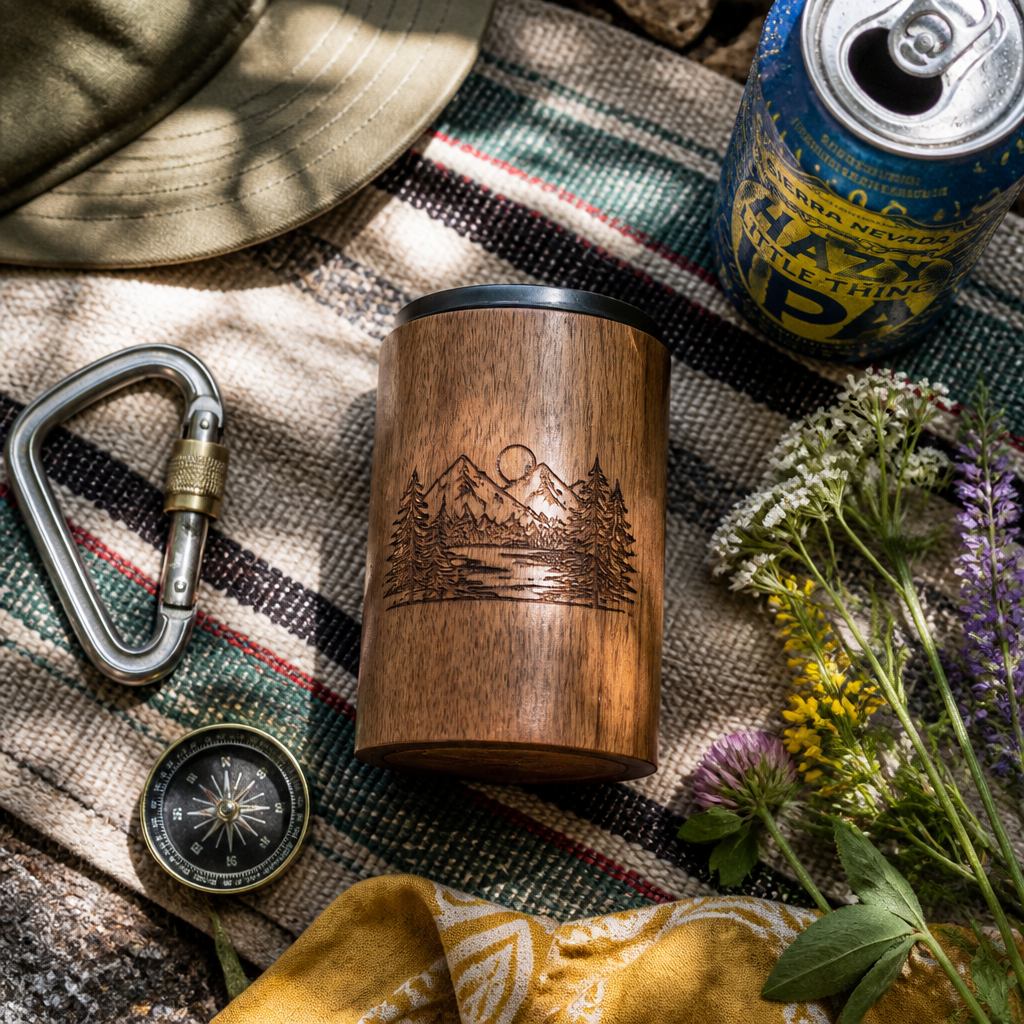
TreeSleeve designs include wildlife motifs, forest and mountain imagery, and outdoor scenes that reflect actual Vermont landscapes. This is not generic nature clipart. These are designs built for people who recognize what a white-tailed deer track looks like or know the difference between a black bear and a brown bear silhouette.
That specificity matters when you are buying gear or giving it as a gift. A product that reflects the culture of the person using it gets used. A generic promotional item gets forgotten in a kitchen drawer.
"Consumers are increasingly seeking products that align with their values, and authenticity of environmental claims is now a major purchasing factor." -- McKinsey and Company, Sustainability Report
Insulation Performance Compared
It is worth being direct about where a hardwood can insulator sits in the performance spectrum. It is not a vacuum-insulated steel tumbler. It does not keep a can cold for six hours in direct sunlight. That is not what it is designed for.
What it does well is maintain the temperature of a cold can during the 20 to 40 minutes you are actually drinking it. That is the realistic use case. And within that window, hardwood outperforms foam because it does not absorb ambient heat from your hand and transfer it into the drink.
| Insulator Type | Effective Cold Retention (Typical Use Window) | Environmental Impact at End of Life |
|---|---|---|
| Foam or Neoprene Koozie | 15 to 25 minutes in moderate conditions | Non-biodegradable, contributes to plastic waste |
| Hardwood Can Insulator (TreeSleeve) | 20 to 35 minutes, with consistent grip insulation | Fully biodegradable, sustainably sourced |
| Stainless Steel Can Cooler | Up to 60 minutes in some conditions | Recyclable but energy-intensive to produce |
The data consistently shows that the difference between foam and hardwood in realistic outdoor drinking conditions is meaningful. Foam loses effectiveness as it gets wet or compressed. Hardwood maintains consistent performance across uses because the material properties do not degrade the same way.
Pro tip: For festival use where you are moving between sun and shade, the TreeSleeve performs better than foam because it does not absorb radiant heat from outdoor surfaces the way dark neoprene does. Keep that in mind if you are buying for someone attending outdoor concerts or summer events.
Eco Credentials That Actually Hold Up
Greenwashing is a real problem in outdoor gear. A product can claim to be sustainable based on a single recycled component while the rest of the manufacturing process is environmentally costly. The TreeSleeve avoids this problem because its core material, hardwood, is inherently biodegradable, and the sourcing from Vermont forests is regional and documented.
When a TreeSleeve reaches end of life, it breaks down the way any natural wood product does. There are no synthetic binders, no petroleum-based coatings, and no composite materials that contaminate the breakdown process. That is a meaningful distinction from nearly every competing product in the can insulator category.
Vermont Forestry Standards Are Among the Strictest in the US
Vermont's Use Value Appraisal Program, known as Current Use, enrolls landowners in sustainable forest management in exchange for reduced property tax assessments. As of recent state data, over 1.4 million acres of private land are enrolled in this program. That means the forests supplying hardwood to manufacturers in Vermont are actively managed for long-term health, not just harvested for short-term yield.
When Better Wheel VT sources from these forests, the environmental claim behind the TreeSleeve has an institutional framework behind it. That is not true of most eco-friendly product claims in this category.
Who This Is Really For
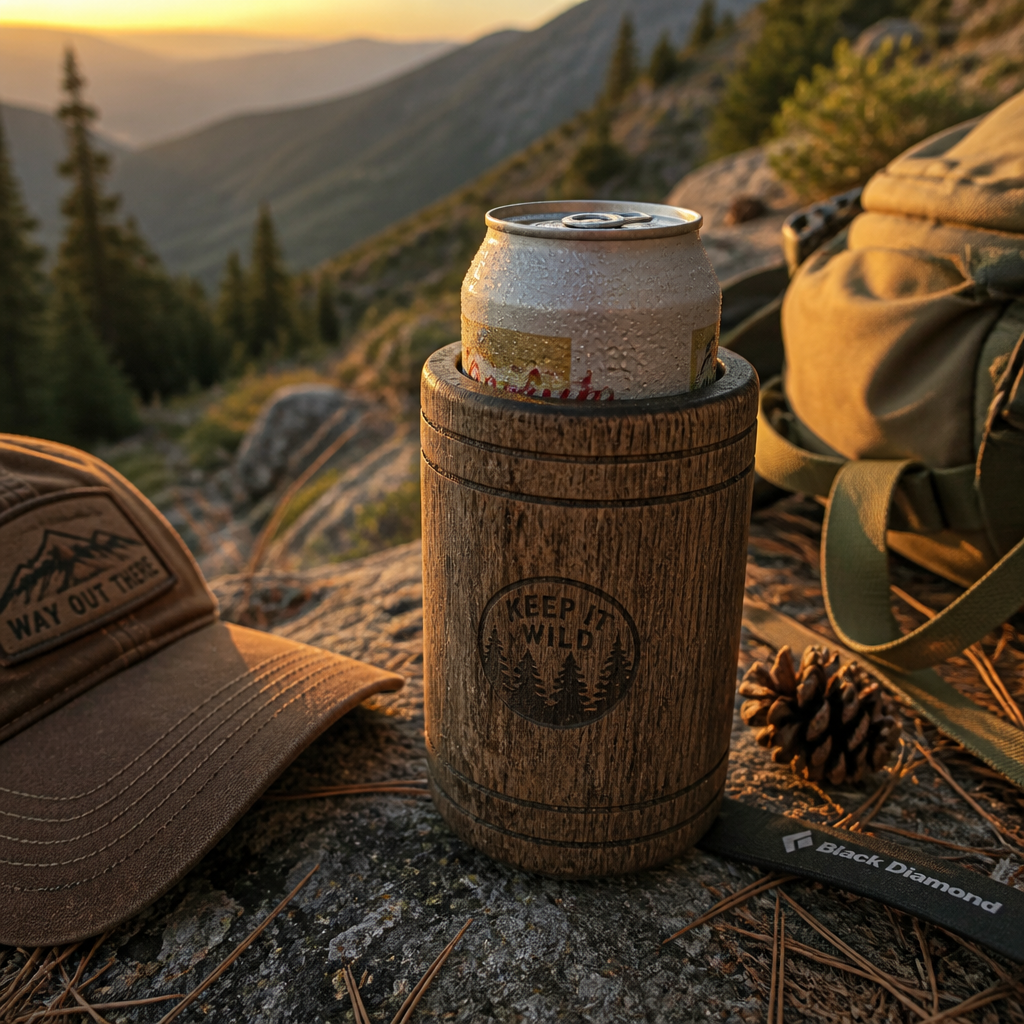
The TreeSleeve is not for everyone, and that is a feature, not a flaw. It is designed for people who spend time outside intentionally. Hikers who pack a cold beer for the summit. Kayakers who want something durable in the bottom of a dry bag. Festival regulars who are tired of carrying disposable accessories.
It is also for people who have started paying attention to what they carry and what happens to it afterward. The outdoor community is increasingly aware of leave-no-trace principles, and those principles extend beyond not littering on the trail. They extend to the gear you buy, where it comes from, and where it ends up.
The Gear Philosophy That Drives This Purchase
Outdoor enthusiasts who have been in the hobby long enough develop a buy-once philosophy. You stop buying cheap gear that needs replacing every season and start investing in things that last and mean something. A hardwood can insulator fits that philosophy. It is not a throwaway item. It develops a patina. It tells a story. A foam koozie does none of that.
The custom engraving option available on TreeSleeve takes this further. A sleeve engraved with a specific trail name, a GPS coordinate, or a wildlife motif that means something to the recipient is not just an accessory. It is a piece of outdoor gear with a personal context attached to it.
Gifting a Hardwood Can Insulator
Gift-giving for outdoor enthusiasts is notoriously difficult. Most gear they already own. Most accessories they are particular about. And most novelty gifts end up unused. A hardwood can insulator solves this because it sits in a category where most people have settled for whatever was available rather than what they actually wanted.
The TreeSleeve works as a gift because it is specific enough to feel considered and practical enough to get used. It is not a piece of wall art. It goes on every camping trip, every tailgate, every post-hike celebration. The person who receives it will use it in exactly the contexts they care most about.
For gift shoppers comparing options, the TreeSleeve differentiates clearly from mass-produced foam or neoprene options available at competitors like cooziecooler.com, koozieking.com, and customkoozies.com. Those products offer low cost and high volume. The TreeSleeve offers material quality, ecological responsibility, and a design language that speaks to outdoor culture rather than generic branding.
In practice, a gift that aligns with someone's values and their daily activities lands differently than something chosen for convenience. The TreeSleeve is built to be that gift.
Frequently Asked Questions
How long does a hardwood can insulator actually last?
With normal outdoor use, a properly finished hardwood can insulator will last several years without significant degradation. Unlike foam, which compresses and loses insulating properties after repeated use, hardwood maintains its structure. The finish may show wear over time, which many users consider part of the appeal rather than a flaw.
Can the TreeSleeve handle moisture from condensation and outdoor conditions?
Yes. Better Wheel VT finishes the TreeSleeve to handle the moisture produced by a cold can. Condensation is one of the first conditions any can insulator faces, and the hardwood construction handles it consistently without the warping or cracking that untreated wood would show.
Is the TreeSleeve compatible with standard beer and seltzer cans?
The TreeSleeve is designed to fit standard 12 oz cans, which covers the vast majority of beer, hard seltzer, and canned beverage formats available in the US. It works at festivals, campsites, and any outdoor setting where canned drinks are the format of choice.
How does a hardwood can insulator compare to a stainless steel can cooler for cold retention?
A stainless steel can cooler with vacuum insulation will outperform hardwood for extended cold retention, often keeping a drink cold for 45 to 60 minutes. However, steel coolers are heavier, more expensive, and environmentally costly to produce. A hardwood insulator offers meaningful cold retention for the 20 to 35 minute window most people are actively drinking, with the added benefit of biodegradability and a significantly lower production footprint.
What makes the TreeSleeve different from a standard koozie bought at a competitor?
The primary differences are material, durability, and environmental impact. Competitors like cooziecooler.com and customkoozies.com sell foam or neoprene sleeves that are inexpensive, interchangeable, and non-biodegradable. The TreeSleeve uses sustainably sourced Vermont hardwood that is fully biodegradable, holds up to extended outdoor use, and features designs specific to outdoor culture rather than generic promotional graphics.
Can I get a TreeSleeve with a custom design for a gift?
Yes. Better Wheel VT offers custom engraving options on the TreeSleeve, making it possible to personalize the insulator with specific imagery, coordinates, or text. This option is particularly popular for gifts tied to specific outdoor experiences, trails, or wildlife themes that are meaningful to the recipient.
If you have used a TreeSleeve on a trail, at a festival, or as a gift for someone in your life, share what made the experience different from what you expected.
We would love your feedback and any insights you would share with others. What perspective would you add?
References
- Global consumer data and environmental purchasing behavior statistics from Statista
- McKinsey and Company research on sustainability preferences and consumer decision-making
- NOAA Ocean Service data on plastic waste and marine environmental impact
- US Forest Service resources on sustainable hardwood harvesting and forest management standards
- Forbes coverage of eco-conscious consumer trends and sustainable product markets
Share:
Best Summer Festivals and the One Accessory You Need
Vermont Hardwood and Your Beer: The TreeSleeve™ Story