Most people grab a neoprene koozie at a festival, use it a dozen times, and eventually toss it. What happens after that? It sits in a landfill for over a century without breaking down. That is not a minor inconvenience. That is a structural problem with the material itself. A hardwood can insulator is a fundamentally different category of product, not just a stylistic swap. This article makes the case for why sustainably sourced wood beats petroleum-based neoprene across every dimension that actually matters to anyone who spends time outdoors and thinks even occasionally about what they leave behind.
Table of Contents
- Quick Takeaways
- The Neoprene Problem Nobody Talks About
- What Makes Hardwood a Legitimate Insulator
- Biodegradable vs. Non-Biodegradable: Why End-of-Life Matters
- Hardwood vs. Neoprene vs. Foam: A Direct Comparison
- The Eco-Friendly Koozie Alternative That Actually Holds Up
- Why Sustainable Drinkware Makes a Better Gift
- Frequently Asked Questions
- References
Quick Takeaways
| Key Insight | Explanation |
|---|---|
| Neoprene is not biodegradable | Because it contains artificial polymers, neoprene cannot break down naturally in landfills or compost environments. It persists for over a century. |
| Neoprene production relies on petroleum | Nearly all neoprene is manufactured using petroleum, a non-renewable resource. The process produces CO2 and involves chloroprene, a chemical flagged by health and environmental agencies. |
| Hardwood is fully biodegradable | A sustainably sourced hardwood can sleeve returns to the earth at the end of its life with no toxic residue, no synthetic polymer left behind. |
| Wood from managed forests sequesters carbon | Trees absorb CO2 as they grow. Sourcing hardwood from responsibly managed forests like those in Vermont means the material carries a far lower carbon footprint than petroleum-derived foam. |
| Thermal performance is real, not just marketing | Wood is a proven thermal insulator. Its cellular structure resists heat transfer, keeping a cold drink cold without relying on synthetic closed-cell foam chemistry. |
| Durability beats single-use foam easily | A hardwood can sleeve does not fold, collapse, or absorb odors the way foam does. Used with care, it outlasts every neoprene koozie most people have owned. |
| Design quality reflects actual craft | Engraved or printed hardwood carries detail that neoprene simply cannot match. For gifting, the look signals quality in a way a printed foam sleeve never does. |
The Neoprene Problem Nobody Talks About
Neoprene became the default material for can insulators because it is cheap to produce at scale and soft in the hand. That is essentially the full list of its advantages from an environmental standpoint. It is now clear that neoprene is not sustainable, and it creates environmental problems at each stage of its life cycle: production, use, and disposal.
Start with where the material comes from. The production of neoprene is non-sustainable and poses environmental hazards. It is typically created using petroleum, a non-renewable resource, and the manufacturing process involves high-energy consumption that emits CO2 into the atmosphere.
Then there is the chemical question. A primary chemical involved in creating neoprene is chloroprene. Chloroprene emissions in the air have been linked to severe health risks, especially liver cancer and lung cancer, with repeated exposure. California Proposition 65 has dubbed chloroprene a carcinogen.
What Happens When You Throw a Neoprene Koozie Away
This is where the lifecycle argument really breaks down for neoprene. Because of the artificial polymers in neoprene, the material is non-biodegradable and non-compostable. You are not throwing away a koozie. You are adding a synthetic polymer object to a landfill where it will outlast everyone who ever touched it.
It can take over a century for neoprene to break down in landfills. That is not a statistic about industrial waste. That is the fate of the free promotional koozie someone picked up at a brewery event, used three times, and then left in a kitchen drawer for a year before it got thrown out.
While there are initiatives around the down-cycling of old wetsuits, yoga mats and beer koozies fall short of producing a real solution. The neoprene is non-biodegradable and will still end up in landfill at some point in its lifetime.
A material that takes over a century to break down is not a "durable" product. It is a permanent one. Durability and permanence are not the same thing, and only one of them is a selling point.
What Makes Hardwood a Legitimate Insulator
The skeptic's objection to a wooden can sleeve is always thermal performance. Surely foam keeps drinks colder? In practice, the assumption does not hold up cleanly. Wood is a genuine thermal insulator with properties that have been studied and applied in building science for decades.
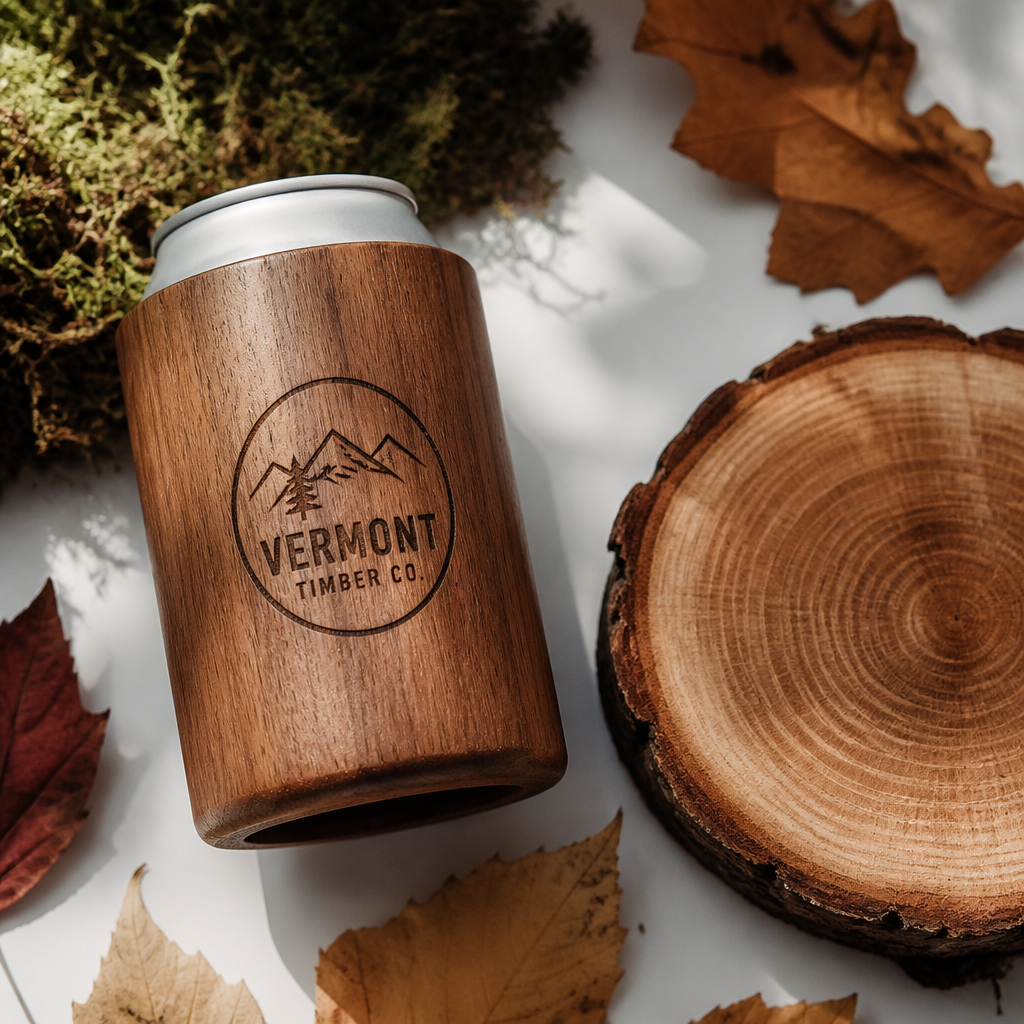
The cellular structure of hardwood creates natural air pockets that resist the movement of heat. This is the same principle at work in wood-fiber insulation used in construction, where researchers have found that wood-based materials achieve low thermal conductivity values while remaining fully natural and non-toxic. That same physics applies at the scale of a can sleeve.
Why Vermont Hardwood Is a Specific Advantage
Not all hardwood is created equal, and not all sourcing is equivalent. Vermont's forests are among the most actively managed in the northeastern United States. Sustainably harvested hardwood from those forests carries a fundamentally different environmental story than material sourced from poorly regulated supply chains.
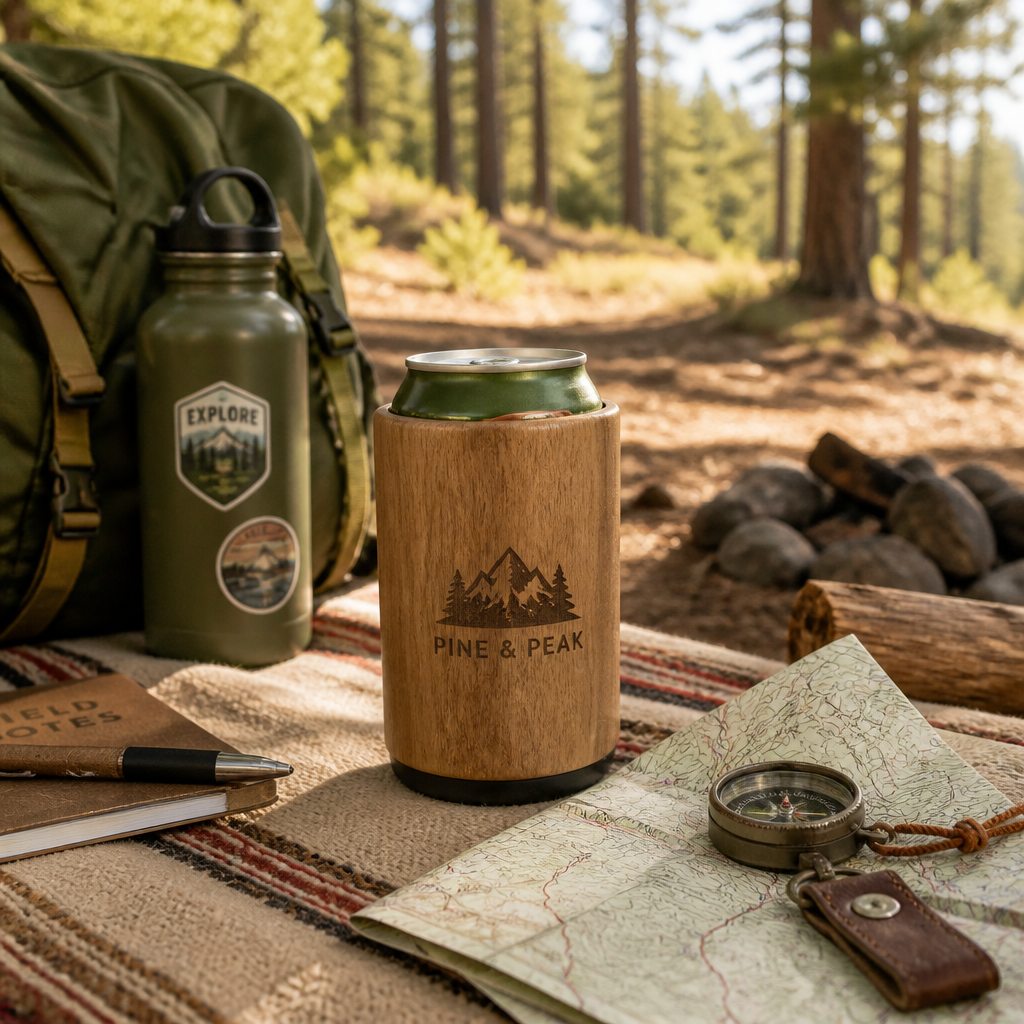
Trees sequester carbon as they grow. When a forest is managed responsibly, the harvesting cycle is designed so that the forest continues to function as a carbon sink. The wood used in a TreeSleeve from Better Wheel VT begins its life pulling CO2 out of the atmosphere. A neoprene koozie begins its life adding CO2 to it. That is a genuine, structural difference in environmental impact, not greenwashing.
Pro tip: When evaluating any "eco-friendly" drinkware product, ask two questions: where does the raw material come from, and what happens to it at the end of its life? A product that fails either question is not genuinely sustainable, regardless of the marketing language on the label.
Hardwood Holds Its Form Under Real Outdoor Conditions
A common failure mode for neoprene koozies in outdoor settings is compression. Stuff one into a pack, sit on it, run it through a camping bag repeatedly, and the foam begins to lose its original shape. The insulating air pockets in the closed-cell foam get crushed and do not fully recover. A hardwood can sleeve does not have this problem. Its rigidity is a feature, not a limitation. It holds its geometry, which means it holds its fit on the can, which means it continues to insulate properly after years of use.
Biodegradable vs. Non-Biodegradable: Why End-of-Life Matters
The outdoor community has spent years getting better at thinking about what products are made of. Biodegradable can sleeves represent a straightforward application of that same thinking. When a product's useful life is genuinely over, what does it leave behind?
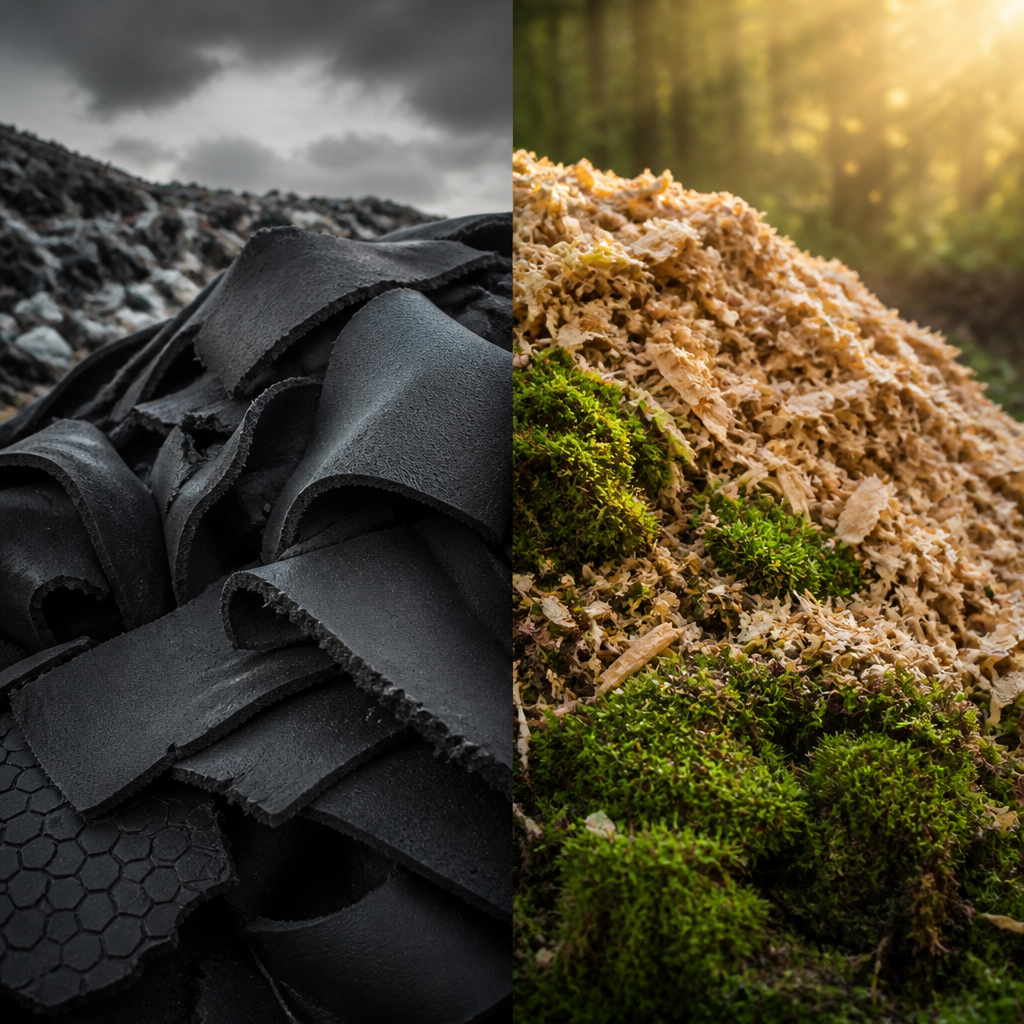
For neoprene, the answer is synthetic rubber polymer that persists in the environment, potentially breaking into microplastics as it degrades on the surface level without actually decomposing. For hardwood, the answer is wood returning to soil. There is no chemical residue, no synthetic polymer, no microplastic fragmentation concern.
The Microplastics Connection
The microplastics issue has grown into a serious area of environmental concern. Synthetic materials that resist biodegradation do not simply stay intact forever. They fragment into progressively smaller pieces. Flexible synthetic foams like neoprene are not exempt from this process. A hardwood product does not fragment into microplastics because it is not a synthetic polymer. It is wood. It breaks down biologically, not just mechanically.
Pro tip: If you are buying a can insulator as a gift for someone who camps, hikes, or spends serious time outdoors, consider whether you want to give them something that will outlast them in a landfill. A hardwood sleeve from Better Wheel VT is a gift that ends its life as cleanly as it began it.
Hardwood vs. Neoprene vs. Foam: A Direct Comparison
These three materials dominate the can insulator market. Here is how they actually compare on the criteria that matter to someone who cares about both performance and environmental impact.
| Attribute | Hardwood (TreeSleeve by Better Wheel VT) | Neoprene (standard koozie) | Polyurethane Foam (single-use sleeve) |
|---|---|---|---|
| Raw material source | Sustainably harvested Vermont hardwood (renewable) | Petroleum (non-renewable) | Petroleum-derived foam (non-renewable) |
| Biodegradable | Yes, fully biodegradable and compostable | No, artificial polymers persist over 100 years in landfill | No, foam fragments into microplastics |
| Thermal insulation | Strong, wood's cellular structure resists heat transfer | Good, closed-cell foam reduces heat transfer effectively | Moderate, degrades quickly with compression |
| Durability over time | High, rigid form holds up for years without deforming | Medium, foam compresses and loses shape with repeated use | Low, typically single or limited use |
| Carbon footprint of production | Low to negative (trees sequester carbon during growth) | High (petroleum extraction and chloroprene manufacturing) | High (petroleum refining and foam manufacturing) |
| Gift or keepsake quality | High, engraved designs, natural grain, premium look | Low, printed graphics on synthetic foam | Very low, disposable appearance and feel |
| Custom design potential | Excellent, laser engraving holds fine detail permanently | Moderate, screen printing fades over time | Limited, inks transfer and rub off quickly |
The Eco-Friendly Koozie Alternative That Actually Holds Up
The phrase eco-friendly koozie alternative gets used loosely. Some brands slap a recycled logo on a product that is still fundamentally a synthetic material with no viable end-of-life path. A hardwood can sleeve is a genuinely different object. It is not an improvement on neoprene. It is a replacement that operates on a different material logic entirely.
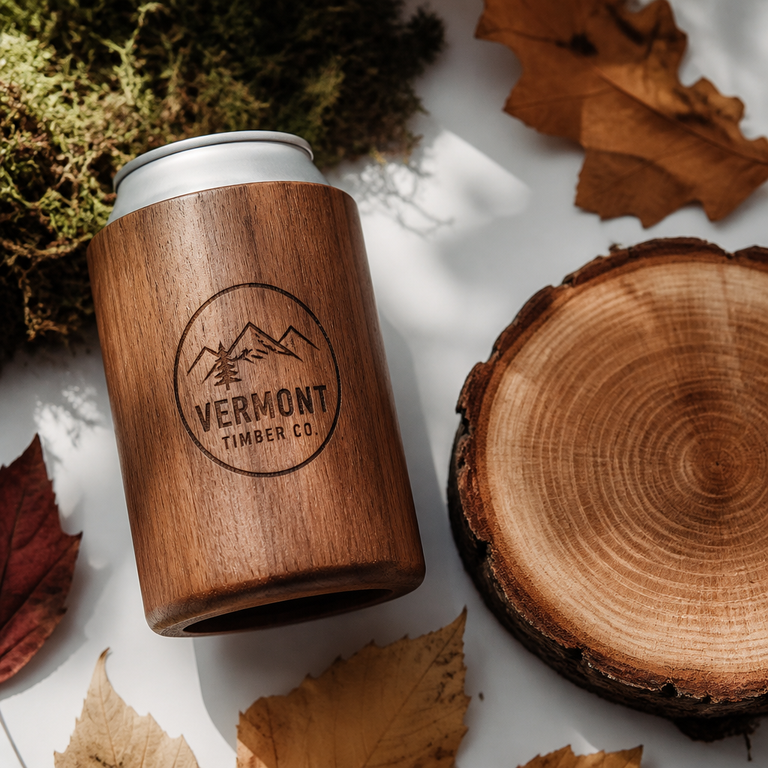
Better Wheel VT's TreeSleeve is built from hardwood sourced from Vermont forests and is fully biodegradable. That means when the product's life is over, it can go back to the earth without ceremony. No special recycling program needed. No hazardous waste concern. No synthetic polymer persisting in a landfill for a century.
How the TreeSleeve Competes on Performance
Performance is where the conversation usually gets defensive when someone advocates for wood over neoprene. Here is the honest answer: for casual outdoor use, the difference in cold retention between a well-fitting hardwood sleeve and a neoprene koozie is minor. The more important performance dimension for most users is long-term usability. A hardwood sleeve does not absorb the smell of spilled beer. It does not deform in a bag. It does not peel or crack the way printed neoprene does after extended UV exposure.
In practice, the users who get the most value from a hardwood can insulator are not people trying to keep a beer cold during a four-hour endurance event. They are people who want a product that lasts, looks genuinely good, can be personalized in a way that feels permanent, and does not contribute to the synthetic waste problem they are already thinking about every time they choose a reusable water bottle over a plastic one.
Why Sustainable Drinkware Makes a Better Gift
The gift market for outdoor and beer-related products is saturated with options that look interesting for about five minutes. A standard neoprene koozie, even a custom one, communicates very little. It is the kind of object people accept politely and then lose track of. A hardwood can sleeve is an entirely different object in the hands of a gift recipient.
Wood carries information. The grain is unique to every piece. An engraved design reads as craft work rather than print run output. When someone gives a TreeSleeve, they are giving an object with a material story attached: sustainably sourced Vermont hardwood, made in a way that does not generate synthetic waste, designed with imagery that reflects the natural world the recipient actually cares about. For an outdoor enthusiast or someone serious about their environmental footprint, that story is part of the gift.
Custom Options as a Gifting Strategy
The custom option matters specifically because it allows the gift to reflect the recipient rather than the giver's convenience. Wildlife motifs, trail themes, and regional outdoor imagery translate beautifully onto hardwood via engraving in ways that simply do not work on foam. The design is permanent, not printed on a surface that will fade with washing. It ages alongside the product.
For festivals, outdoor events, and occasions where you want to give something that signals both thoughtfulness and environmental values, a biodegradable can sleeve with a personalized design is a harder thing to replicate with any competitor product. Companies like cooziecooler.com, koozieking.com, and customkoozies.com offer customizable neoprene and foam options, but none of them offer a product that comes from a forest and returns to one.
Frequently Asked Questions
Does a hardwood can insulator actually keep drinks as cold as neoprene?
For practical outdoor use, a well-fitted hardwood can sleeve performs comparably to neoprene. Wood is a genuine thermal insulator with a cellular structure that resists heat transfer. The difference in cold retention over a typical drinking window, say 20 to 40 minutes in outdoor conditions, is minor. Where hardwood has a clear advantage is long-term performance: it does not compress, deform, or lose its fit over time the way foam does.
Is a hardwood can sleeve difficult to clean?
No. A quick wipe with a damp cloth handles most situations. Unlike neoprene, hardwood does not absorb liquids or hold odors from spills. You do not need to submerge it or machine wash it. For everyday beer or canned beverage use, maintenance is minimal.
Why does it matter if a can insulator is biodegradable?
Because neoprene and foam alternatives are not biodegradable, and they are produced by the hundreds of millions. Each one that gets discarded adds a synthetic polymer object to the waste stream that will persist for generations. A biodegradable option does not carry that legacy. When a hardwood sleeve reaches the end of its useful life, it decomposes without leaving toxic residue, synthetic polymer fragments, or microplastic risk.
What does "sustainably sourced hardwood" actually mean in practice?
It means the wood comes from forests managed so that harvesting does not outpace regrowth and the forest continues to function ecologically. Vermont's forests are among the most carefully managed in the region. Sustainably sourced hardwood from those forests carries a carbon footprint that is fundamentally different from petroleum-derived materials: the trees sequester carbon as they grow, meaning the raw material itself has a net-positive climate story before it is even turned into a product.
How does the TreeSleeve compare to other eco-friendly koozie alternatives on the market?
Most products marketed as eco-friendly koozies are still fundamentally synthetic materials with marginal improvements, such as recycled neoprene or recycled polyester. They address the recycled content question but not the end-of-life question. The TreeSleeve is genuinely biodegradable, made from a renewable material, and produced by a company with a direct connection to the forests it sources from. That is a more complete sustainability story than "made with some recycled content."
Is hardwood a durable enough material for outdoor use?
Yes. Hardwood is used in applications far more demanding than holding a can of beer. Its rigid structure means it does not deform from pressure or compression, which is a real failure mode for foam koozies in packs and gear bags. With reasonable care, a hardwood can sleeve will outlast multiple generations of neoprene alternatives, which means fewer replacements and less overall material waste.
Have you made the switch from neoprene to a more sustainable can insulator? Share what pushed you over the edge in the comments below.
References
- Why neoprene is not sustainable: a full lifecycle analysis of environmental harms from production to disposal
- The case for neoprene-free products: chloroprene health risks and the push toward sustainable alternatives
- Why neoprene koozies and foam products still end up in landfill despite recycling initiatives
- How neoprene's production process and landfill persistence compare to lower-carbon material alternatives
Share:
August Outdoor Adventure Checklist: Pack Your TreeSleeve™
10 Unique Gifts for Outdoor Enthusiasts That Give Back