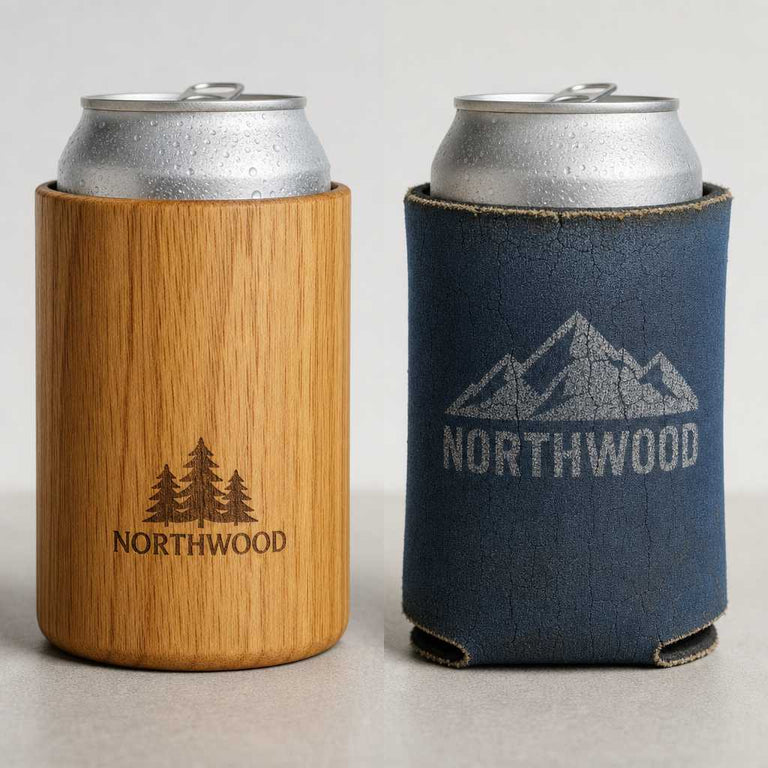
Neoprene koozies have dominated the can insulator market for decades, but the grip is slipping. Consumers are returning products, questioning environmental impact, and actively searching for something better. The hardwood can insulator is not a novelty item. It is a functional, durable, biodegradable replacement that solves every real complaint people have about foam and neoprene alternatives. This article breaks down exactly why the shift is happening, what the material differences mean for real-world use, and why products like the TreeSleeve from Better Wheel VT are landing in gift bags, festival coolers, and camping packs instead of the usual rubber sleeve.
Table of Contents
- The Real Problem with Neoprene Koozies
- Quick Takeaways
- What Makes a Hardwood Can Insulator Different
- Thermal Performance: Wood vs. Neoprene vs. Foam
- The Eco-Friendly Can Cooler Case Is No Longer Debatable
- Gift Value and Personalization: Where Neoprene Loses Every Time
- Who Is Switching and Why
- Frequently Asked Questions
- References
The Real Problem with Neoprene Koozies

Neoprene is a synthetic rubber. It does not biodegrade. It sheds microplastic particles over time, especially when exposed to UV light and mechanical abrasion, which happens constantly when you are hiking, paddling, or sitting around a fire ring with a cold beer in your hand. According to research published through the National Oceanic and Atmospheric Administration, synthetic materials including neoprene contribute significantly to microplastic contamination in freshwater and marine environments.
Beyond environmental harm, neoprene koozies have a practical problem that nobody talks about honestly: they absorb odors, they stain, they retain mildew if stored wet, and the printed graphics crack and peel within a season of regular outdoor use. This is not a manufacturing defect with a single brand. It is a material limitation that applies across every site selling neoprene products, including cooziecooler.com, koozieking.com, and customkoozies.com.
The neoprene koozie alternative market has been growing precisely because outdoor enthusiasts are tired of replacing a product every summer. They want something that lasts, looks good, and does not end up in a landfill after two camping seasons.
Quick Takeaways
| Key Insight | Explanation |
|---|---|
| Hardwood insulates through natural cellular structure | Wood contains air pockets in its cellular matrix that slow heat transfer. This is the same principle behind wooden handles on cast iron pans, and it works just as well around a cold can. |
| Neoprene sheds microplastics in outdoor conditions | UV exposure and abrasion break down synthetic rubber into particles that enter soil and water. Hardwood does not produce microplastics. It breaks down into organic matter. |
| Sustainably sourced hardwood is a fully renewable input | Vermont hardwood forests managed under responsible forestry practices regenerate faster than the timber is harvested. The raw material for TreeSleeve comes from this supply chain. |
| Custom engraving on wood is permanent and premium | Laser engraving on hardwood does not crack, fade, or peel. It is physically part of the material. Printed neoprene graphics are a surface coating that degrades with use. |
| Eco-conscious consumers are actively choosing biodegradable products | Statista data shows sustained growth in consumer spending on sustainable goods. An eco-friendly can cooler made from real wood converts at higher rates among this segment than any neoprene product. |
| Hardwood insulators have significantly higher perceived gift value | Wood feels premium in the hand. It photographs better. It tells a story about origin and craft. Neoprene feels like a free promotional item. |
| Outdoor use cases favor hardwood durability over neoprene flexibility | Neoprene collapses, traps condensation against the can, and retains odors. Hardwood maintains its structure, wicks moisture, and does not absorb smells from coolers or pack bags. |
What Makes a Hardwood Can Insulator Different
The core difference is material science, not marketing. Hardwood is a natural insulator because of how trees grow. The cellular structure of hardwoods like maple and birch, both found in Vermont forests, contains thousands of microscopic air pockets per square centimeter. Air is one of the most effective thermal barriers that exists. This is why wood has been used in construction, cookware, and tool handles for thousands of years to slow heat transfer between surfaces.
When you wrap a cold can in hardwood, those air pockets slow the rate at which ambient heat moves into the liquid inside. The result is a beer that stays colder longer compared to an uninsulated can, without the chemical off-gassing concerns that come with some synthetic foam products.
Why Vermont Hardwood Specifically
Not all wood is equal for this application. Vermont hardwoods, including hard maple, birch, and cherry, have a tight grain density that makes them mechanically stable under repeated temperature cycling. A can insulator goes from a warm shelf to an icy cooler and back again, often dozens of times per season. Tight-grain hardwood handles this stress without warping or cracking. Softwoods like pine would not hold up the same way.
Better Wheel VT sources from Vermont forests specifically because the local hardwood supply chain is both traceable and managed under responsible harvesting guidelines. When you buy a TreeSleeve hardwood can insulator, you are not buying a product made from anonymous imported timber. The origin is known and the supply chain is short.
Pro tip: When evaluating any wood product for outdoor use, ask the seller what species of wood is used and where it was sourced. Generic answers like "natural wood" without a species name or origin are a red flag for low-grade material that will not hold up to real field use.
Thermal Performance: Wood vs. Neoprene vs. Foam
In practice, the thermal performance differences between insulator types come down to three factors: the material's thermal conductivity rating, its ability to handle condensation, and how well it maintains contact with the can surface. All three matter for keeping a drink cold during a hike, a festival set, or an afternoon on the water.
Neoprene has a thermal conductivity of approximately 0.25 W/m·K. Dense hardwoods like maple range from 0.12 to 0.17 W/m·K. Lower numbers mean less heat transfer. On paper and in practice, well-fitted hardwood is a better thermal barrier than neoprene of the same thickness.
| Insulator Type | Thermal Conductivity (W/m·K) | Environmental Impact |
|---|---|---|
| Vermont Hardwood (TreeSleeve) | 0.12 to 0.17 | Fully biodegradable, sustainably sourced, no microplastic shedding |
| Neoprene Koozie | 0.25 | Non-biodegradable synthetic rubber, sheds microplastics under UV and abrasion |
| Standard Foam (EVA/polyurethane) | 0.03 to 0.05 | Lower thermal conductivity than wood but petroleum-based, non-biodegradable, compresses over time |
Foam wins on raw thermal conductivity numbers, but it compresses with use, which reduces its effectiveness over time. A foam koozie that has been through a season of outdoor events is not performing at the same level it was when new. Hardwood does not compress. Its structural integrity remains constant across years of use.
A common mistake is assuming that lower thermal conductivity always means a better insulator in real-world conditions. Material integrity under repeated use matters just as much as the initial spec. This is where hardwood holds a clear advantage over foam long-term.
"The thermal properties of wood make it one of the most effective natural insulators available. Its cellular structure traps air in a way that synthetic materials attempt to replicate but rarely match over the long term." - U.S. Forest Service, Wood as a Sustainable Building Material
The Eco-Friendly Can Cooler Case Is No Longer Debatable
The environmental argument for a wood-based eco-friendly can cooler over neoprene is straightforward and well-supported. Neoprene production relies on chloroprene, a petroleum-derived monomer classified as a possible human carcinogen by the International Agency for Research on Cancer. The manufacturing process generates toxic byproducts. The finished product does not biodegrade at end of life.
Hardwood from a responsibly managed forest operates on an entirely different lifecycle. The tree absorbs carbon during growth. It is harvested, processed, and turned into a functional product with minimal chemical inputs. At end of life, the product breaks down into organic matter that returns to the soil. No persistent polymers, no microplastic contamination, no petrochemical residue.
Why Outdoor Enthusiasts Are Leading This Shift
Outdoor enthusiasts have a direct stake in the health of natural environments that other consumer segments do not. Someone who kayaks on Vermont rivers, hikes the Long Trail, or spends weekends at music festivals in state parks is not abstractly concerned about microplastic pollution. They are seeing it firsthand. This creates a real motivation to make different purchasing decisions, not just to feel good, but because the connection between product choices and environmental outcomes is visible in their daily experience.
The shift toward hardwood can insulators among this demographic is not driven by trend marketing. It is driven by information and direct observation. When outdoor enthusiasts discover that a wood-based product performs as well or better than neoprene and does not contribute to the pollution they are actively trying to avoid, the choice is obvious.
Pro tip: If you are giving a can insulator as a gift to someone who spends significant time outdoors, skip the neoprene options entirely. The person who paddles, hikes, or camps regularly already knows what neoprene does to the environments they care about. A sustainably sourced hardwood option signals that you paid attention to what they actually value.

Gift Value and Personalization: Where Neoprene Loses Every Time
The gift market for can insulators is enormous. Birthdays, holidays, groomsmen gifts, outdoor event giveaways, and festival merchandise all drive significant volume. Neoprene dominates this space currently by default, not by quality. The barrier to entry for neoprene production is low, so it flooded the market. But "cheap to produce" does not mean "what people actually want to receive."
A hardwood can insulator with a laser-engraved wildlife motif or a custom Vermont forest scene carries genuine emotional weight as a gift object. It feels different in the hand. It smells like real wood. It has visual grain variation that makes each piece slightly unique. None of these characteristics apply to a neoprene koozie, regardless of how many colors the print job uses.
The Permanence of Engraving vs. Printed Graphics
Printed graphics on neoprene are a surface treatment. They crack with UV exposure, fade with washing, and peel from mechanical abrasion. This is why custom printed koozies from bulk suppliers often look worn after a single outdoor season. The product itself is telling the recipient that it was cheap.
Laser engraving on hardwood removes material. The design is physically recessed into the wood grain. It cannot peel because it is not a surface coating. It cannot fade because there is no pigment. A laser-engraved TreeSleeve with a moose silhouette or a mountain ridgeline will look identical in ten years to how it looked when it arrived. That permanence is part of the value proposition that no neoprene product can match.
Better Wheel VT's TreeSleeve line includes outdoor themes, wildlife motifs, and custom options, which means a gift buyer can find something specific to the recipient rather than defaulting to a generic promotional item. That specificity is what turns a can insulator from a throwaway trinket into something someone actually keeps.
Who Is Switching and Why
The data consistently shows that consumer spending on sustainable products has grown year-over-year for the past decade. According to Statista, the global sustainable goods market is projected to continue expanding through 2030, with younger outdoor-focused demographics driving a disproportionate share of that growth. These are exactly the buyers who were previously buying neoprene koozies for camping trips, paddling excursions, and outdoor music events.
Three distinct buyer profiles are making the switch to hardwood can insulators at measurable rates. First, the outdoor enthusiast who has become informed about microplastic contamination and is actively auditing their gear for synthetic materials. Second, the eco-conscious gift shopper who wants to give something that reflects genuine values rather than generic sentiment. Third, the festival-goer and event attendee who carries their own gear and wants items that are both functional and conversation-starting.
All three profiles are served directly by what Better Wheel VT produces. The TreeSleeve is not trying to be a mass-market product. It is purpose-built for people who have already decided that the generic neoprene option is not good enough, and who are willing to spend more for something that performs better, lasts longer, and does not compromise the environments they spend time in.
A common mistake in this product category is assuming that buyers who want sustainable products are willing to accept lower performance in exchange for environmental credentials. In practice, this is wrong. The outdoor enthusiast demographic is highly performance-oriented. They buy quality gear precisely because they use it hard. An eco-friendly can cooler that does not keep a drink cold is a non-starter, regardless of its environmental credentials. The TreeSleeve works because it does not ask buyers to make that trade-off.
Frequently Asked Questions
Does a hardwood can insulator actually keep drinks colder than neoprene?
Yes, when properly fitted. Dense hardwoods like Vermont maple have a lower thermal conductivity than neoprene, meaning they slow heat transfer more effectively. The key variable is fit. A well-fitted hardwood sleeve maintains full contact with the can surface, which maximizes the insulating effect. A loose-fitting neoprene koozie with air gaps between the sleeve and can will underperform any well-fitted hardwood insulator.
How long does a hardwood can insulator last compared to a neoprene koozie?
A quality hardwood can insulator from sustainably sourced Vermont hardwood will outlast neoprene significantly. Neoprene degrades with UV exposure, mechanical abrasion, and repeated wetting and drying cycles. Hardwood is dimensionally stable, does not compress, and does not absorb odors. With basic care, a TreeSleeve will remain fully functional and visually intact for many years. Most neoprene koozies show visible degradation within one to two outdoor seasons of regular use.
Is a wood can insulator biodegradable?
A hardwood can insulator made from untreated or minimally treated wood is fully biodegradable. When it reaches end of life, it breaks down into organic matter without releasing synthetic polymers or toxic byproducts. This stands in direct contrast to neoprene, which is a petroleum-derived synthetic rubber that persists in landfills and natural environments indefinitely and sheds microplastic particles throughout its degradation process.
Can hardwood can insulators be customized with names or designs?
Yes, and the customization is significantly more durable on wood than on neoprene. Laser engraving on hardwood physically removes material to create the design, so it cannot peel, fade, or crack. Printed graphics on neoprene are a surface coating that degrades with use. Better Wheel VT offers custom options including outdoor themes, wildlife motifs, and personalized designs on the TreeSleeve, making it a strong choice for gifts, events, and personal use where appearance matters long-term.
Are hardwood can insulators more expensive than neoprene koozies?
The upfront cost is higher, which reflects the material quality, the manufacturing process, and the sourcing standards involved. However, price-per-use over a realistic product lifespan strongly favors hardwood. A neoprene koozie that costs a few dollars and degrades within two seasons is not actually cheaper than a hardwood insulator that lasts a decade. For gift buyers specifically, the perceived value difference is also significant. A handcrafted wood product reads as a premium item. A neoprene koozie reads as a promotional giveaway.
Where does Better Wheel VT source the wood for TreeSleeve?
Better Wheel VT uses sustainably sourced hardwood from Vermont forests. The supply chain is local and traceable, which matters both for environmental accountability and for material quality. Vermont hardwoods including maple and birch are tight-grained species that perform well in the temperature cycling conditions a can insulator experiences regularly. This is not generic imported timber. The origin is specific and the sourcing is responsible.
Have you made the switch from neoprene to a wood-based can insulator? Share what prompted the change and how the experience has compared in practice.
References
- Statista: Consumer spending trends and market size data for sustainable goods and eco-friendly products
- U.S. Environmental Protection Agency: Information on microplastic pollution sources, synthetic material degradation, and environmental persistence of neoprene and other polymers
- U.S. Forest Service: Research and data on hardwood thermal properties, sustainable forestry practices, and wood as a renewable material
- Forbes: Reporting on consumer trends toward sustainable and eco-conscious purchasing decisions in the outdoor and lifestyle product categories
- National Oceanic and Atmospheric Administration: Research on microplastic contamination in freshwater and marine environments from synthetic consumer products
Share:
Wooden Can Insulator vs Plastic Koozie: Choose Hardwood
Wooden Can Insulator vs Plastic Koozie: Choose Hardwood