Most hikers pack out their trash but never think twice about the plastic foam koozie they grab at a gas station before a weekend trip. That single-use piece of polystyrene foam will outlast the forest you are hiking in by several centuries. The Leave No Trace Center for Outdoor Ethics reports that recreationists generate millions of pounds of waste in U.S. wilderness areas annually, and disposable drink insulators are a quietly significant contributor. If you care about sustainable camping gear but still want a cold beer at camp, the choices you make before you hit the trailhead matter just as much as the ones you make on it.
Table of Contents
- Quick Takeaways
- Why Drink Insulators Matter on Trail
- Leave No Trace Principles Applied to Camp Drinking
- Eco-Friendly Hiking Accessories for Beer Lovers
- Comparing Sustainable Drink Insulator Options
- Pack-In, Pack-Out Beer Planning for Backcountry Trips
- Leave No Trace Gear That Doubles as a Gift
- Frequently Asked Questions
- References
Quick Takeaways
Key Insight |
Explanation |
|---|---|
Polystyrene foam koozies are not biodegradable |
Standard foam insulators break into microplastics rather than decomposing, contaminating soil and waterways near campsites and trailheads. |
Wood is a genuinely compostable insulator material |
Hardwood insulators like TreeSleeve sourced from sustainably managed Vermont forests break down naturally and leave no persistent chemical residue. |
Can choice affects your pack-out weight and waste volume |
Aluminum cans crush flat, weigh less when empty, and are infinitely recyclable. Glass bottles are heavier, breakable, and banned in many wilderness areas. |
Leave No Trace Principle 3 directly applies to drink packaging |
Dispose of Waste Properly means every wrapper, bottle cap, and insulator must leave the wilderness with you, not decompose there. |
Reusable eco-friendly hiking accessories reduce trip-over-trip waste |
A single durable insulator used across 50 camping trips eliminates 50 disposable foam koozies from the waste stream. |
Custom leave no trace gear signals community values |
Gear with outdoor and wildlife motifs normalizes eco-conscious behavior among friends and at festivals, creating a visible social signal for sustainability. |
Sourcing provenance matters as much as material |
Not all wood products are equal. Sustainably harvested hardwood from certified Vermont forests has a dramatically lower carbon footprint than imported bamboo alternatives. |
Why Drink Insulators Matter on Trail
The insulator category is almost never discussed in gear reviews focused on sustainability, yet it sits at the intersection of two behaviors every trail drinker practices: keeping a can cold and eventually discarding the wrapper around it. In practice, most people treat a koozie as essentially disposable. They leave them at campsites, forget them on picnic tables, and let them blow into the brush without a second thought.
According to the Leave No Trace Center for Outdoor Ethics, human-generated litter in natural areas is not just an aesthetic problem. It disrupts wildlife feeding patterns, introduces synthetic compounds into soil, and accumulates in waterways. Foam koozies, made from expanded polystyrene, do not biodegrade. They fragment. Every broken piece becomes a microplastic particle that a bird, fish, or mammal can ingest.
The solution is not to stop drinking beer in the woods. The solution is to pick sustainable camping gear that holds its function through hundreds of uses and causes zero harm if it ever does reach the end of its life. That is a standard very few conventional drink insulators meet, and it is the exact standard the TreeSleeve from Better Wheel VT is built around.
Pro tip: Before your next camping trip, check every piece of single-use plastic or foam in your pack. If it has no plan for coming home with you, swap it out for a durable, biodegradable, or reusable alternative before you leave the driveway.
Leave No Trace Principles Applied to Camp Drinking
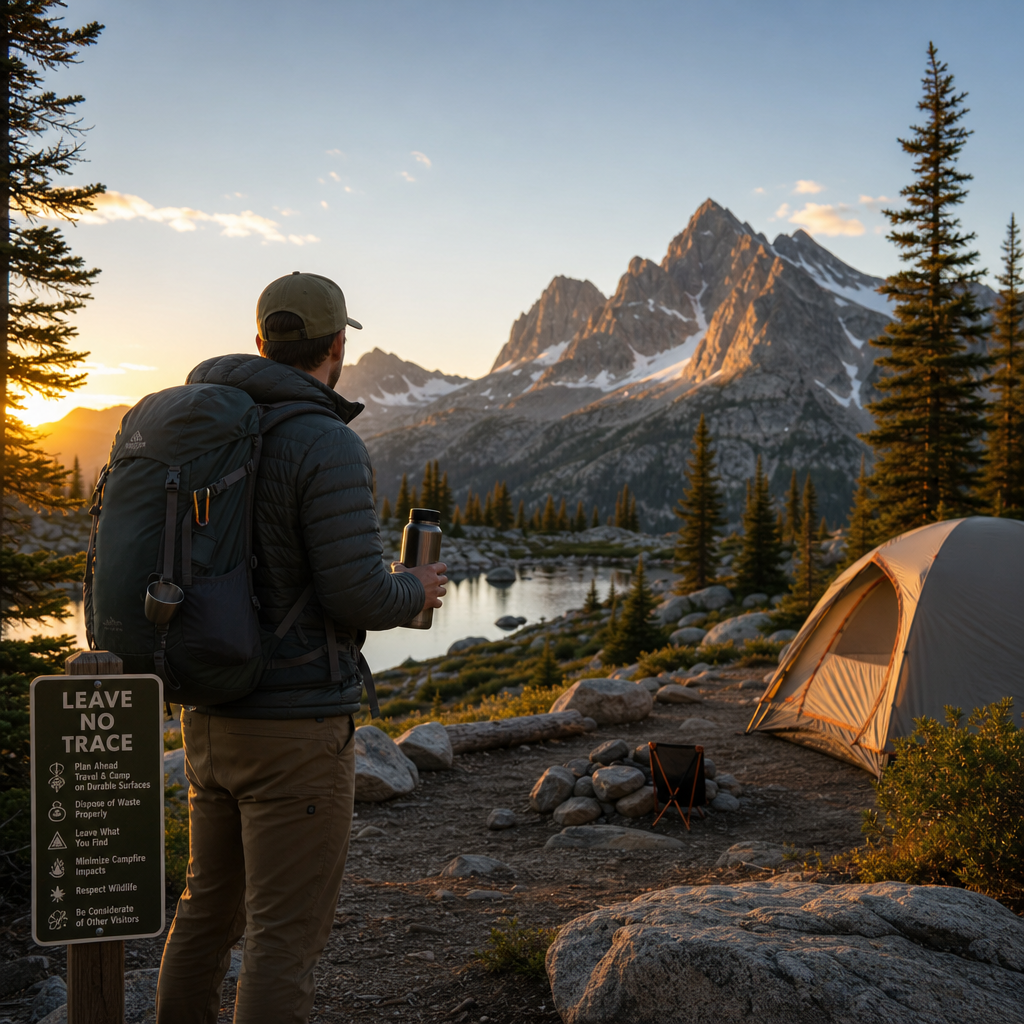
The seven Leave No Trace principles were developed by the Leave No Trace Center for Outdoor Ethics and are widely taught through the U.S. Forest Service, National Park Service, and REI-sponsored training programs. Three of the seven principles apply directly to how you drink at a campsite.
Plan Ahead and Prepare (Principle 1)
This principle is about preventing problems before they start. For drinkers, that means choosing cans over glass, portioning your beverages so you carry zero excess weight out, and selecting packaging that crushes flat. It also means bringing a drink insulator that you actually intend to keep and carry home, not one you picked up at a checkout counter and will abandon at the fire ring.
Dispose of Waste Properly (Principle 3)
Every bottle cap, every can pull tab, every label that peels off a wet can in your bag is waste you are responsible for removing from the backcountry. A common mistake is focusing on the large items, the cans themselves, while ignoring small debris. Caps and pull tabs are small enough to lose in leaf litter and light enough to blow into water sources. Pack a small zip-close bag specifically for metallic micro-trash.
Minimize Campfire Impacts (Principle 5)
Burning trash, including plastic-coated labels and foam insulators, releases toxic compounds. The data consistently shows that burning polystyrene produces styrene vapor and benzene, both recognized carcinogens, according to the U.S. Environmental Protection Agency. Never burn your drink packaging or accessories at camp. Pack them out and recycle appropriately.
Pro tip: A hardwood can insulator like TreeSleeve is technically compostable at end of life, but do not compost it in the field. Bring it home, use it for years, and compost it in your backyard bin when it has genuinely reached the end of its functional life.
Eco-Friendly Hiking Accessories for Beer Lovers
The outdoor gear market has expanded rapidly into sustainability, but the eco-friendly hiking accessories category is still dominated by synthetic materials marketed as green. Recycled plastic bottles turned into fleece is a useful improvement over virgin polyester, but it is not the same as a product that genuinely returns to the earth after use. There is a real difference between less harmful and actually sustainable.
For beer drinkers, the most impactful sustainable swaps are straightforward.
Hardwood Can Insulators
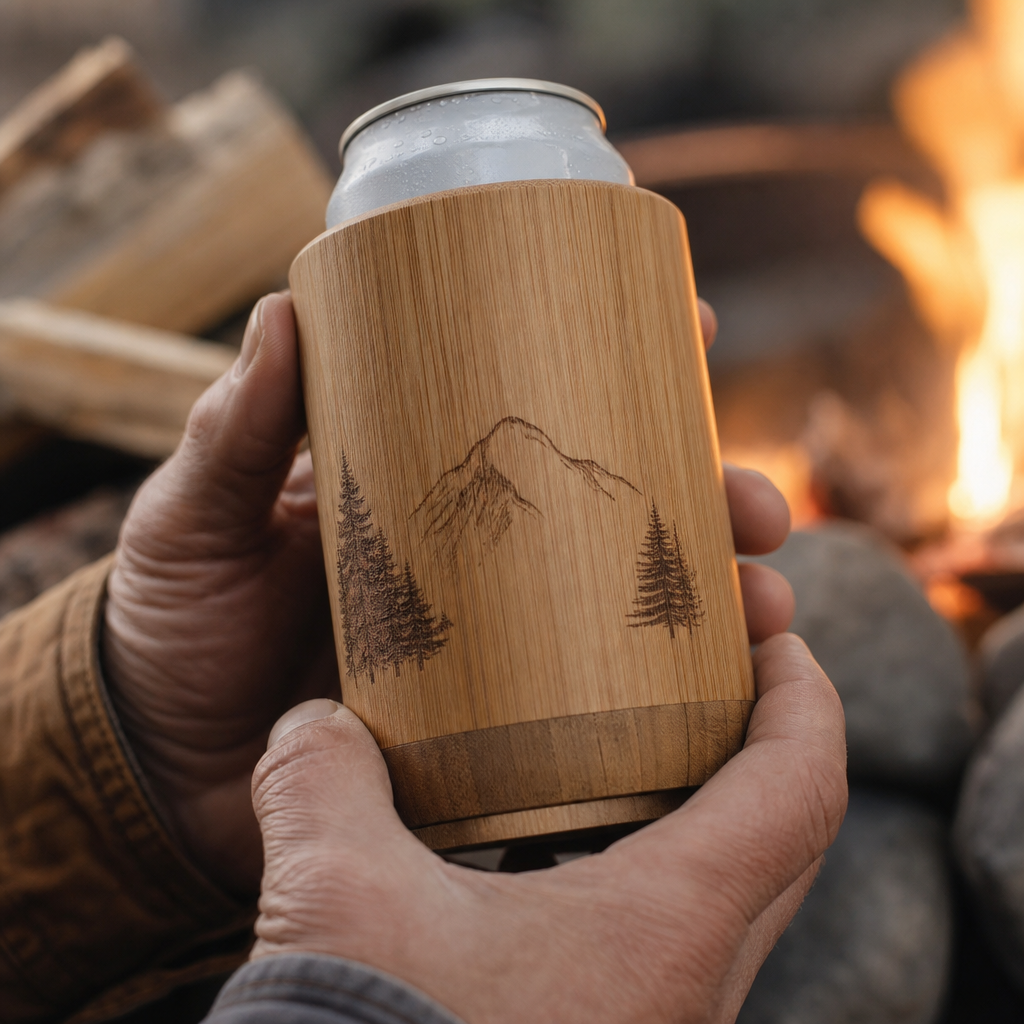
TreeSleeve from Better Wheel VT is made from sustainably sourced hardwood from Vermont forests. Vermont has some of the most rigorously managed forestry regulations in the northeastern United States. The wood is fully biodegradable, requires no synthetic coatings, and is designed to last through years of regular use. The designs include outdoor themes and wildlife motifs that resonate visually with the environments you are actually protecting. This is not a product built for novelty. It is built for the person who takes both their beer and their backcountry ethics seriously.
Reusable Tote Bags and Mesh Carry Bags
Silicone or canvas six-pack carriers replace the plastic rings that regularly appear in waterway cleanup data. Plastic rings are responsible for documented entanglement injuries in marine and freshwater wildlife. A canvas carrier weighs almost nothing, packs flat, and replaces hundreds of plastic rings over its lifespan.
Stainless Steel Can Holders
Double-wall stainless insulators keep cans cold for longer than foam and are nearly indestructible. They are not biodegradable, but their durability means they rarely enter the waste stream at all. The tradeoff is weight, which matters more on backpacking trips than on car camping weekends.
"The best thing you can do for the environment is buy less, but buy better." - Yvon Chouinard, founder of Patagonia, cited in multiple outdoor sustainability forums.
Comparing Sustainable Drink Insulator Options
Not all insulators are created equal, and the marketing language around sustainability is frequently misleading. The table below compares three real categories of drink insulators on the criteria that matter for hikers and campers who take Leave No Trace seriously.
Insulator Type |
Environmental Impact |
Durability and Trail Suitability |
|---|---|---|
Polystyrene Foam Koozie (e.g., products from CoozieCooler or KoozieKing) |
Non-biodegradable, fragments into microplastics, cannot be recycled in standard streams, toxic if burned. |
Tears within one season, compresses and loses insulation value, not suitable for rugged outdoor use. |
Neoprene or Scuba Fabric Koozie (e.g., CustomKoozies standard product) |
Synthetic rubber derived from petroleum, not biodegradable, technically recyclable only through specialty programs that most consumers never access. |
More durable than foam, holds shape longer, but still degrades and sheds microfibers with washing and repeated use. |
Sustainably Sourced Hardwood Insulator (TreeSleeve by Better Wheel VT) |
Fully biodegradable at end of life, sourced from managed Vermont hardwood forests, no synthetic coatings, zero microplastic risk. |
Rigid construction protects cans in a pack, distinctive design stays visible so you never leave it behind, naturally moisture-resistant hardwood surface handles outdoor conditions. |
The data consistently shows that durability and sustainability are not opposing values. Products designed to last longer generate less total waste, period. A foam koozie that costs one dollar and lasts one season generates more environmental cost over five years than a hardwood insulator that costs more upfront but lasts indefinitely.
Pack-In, Pack-Out Beer Planning for Backcountry Trips
The logistics of bringing beer into the backcountry are worth planning deliberately. Weight, volume, and waste are the three variables that determine whether your beer adds to the experience or to your problems on the way out.
Choosing the Right Container Format
Aluminum cans are the clear choice for backcountry beer. A standard 12-ounce can weighs roughly 14.9 grams empty, crushes to about one-fifth its original volume, and is made from the most recycled material in the world. The aluminum recycling rate in the United States was approximately 45 percent in recent years, according to the Aluminum Association, which is higher than any other beverage container. Glass bottles add unnecessary weight, break under pack compression, and are explicitly prohibited in many wilderness areas and national parks.
Volume Planning to Eliminate Carry-Out Waste
A common mistake is over-packing beverages and then making the Leave No Trace-violating decision to bury or cache the extra cans rather than carry them out. Plan exactly how many cans your group will drink and bring that number. Empty cans weigh almost nothing and crush flat. There is no rational justification for leaving them in the field.
The Role of a Quality Can Insulator
A leave no trace gear philosophy applied to your insulator means choosing one you will not lose, abandon, or replace annually. The TreeSleeve's rigid construction and distinctive hardwood aesthetic make it the kind of object you notice and track. That is not a coincidence. Gear you value, you keep. Gear you do not value, you leave behind.
Leave No Trace Gear That Doubles as a Gift
The gift angle for eco-friendly hiking accessories is more significant than it might first appear. When you give someone a sustainably made product, you are not just reducing one person's environmental footprint. You are communicating a value set and normalizing a standard. Gifts that replace disposable habits have a multiplying effect.
TreeSleeve works particularly well as a gift for outdoor enthusiasts because it solves a real problem, keeping a can cold on the trail, while making a visible statement about sourcing and materials. The wildlife and outdoor motif designs give it a personal and place-specific quality that generic neoprene koozies simply do not have. Gifting a TreeSleeve engraved with a Vermont forest scene to someone who just completed their first Appalachian Trail section hike is a categorically different gesture than a foam koozie from a gas station rack.
For festival-goers and event attendees, the custom options available through Better Wheel VT mean that organizations, events, and outdoor clubs can distribute branded gear that participants will actually keep and use repeatedly. That is a direct reduction in single-use waste generated at events. The data from the outdoor recreation sector supports this: according to Outdoor Retailer research data cited by the Outdoor Industry Association, eco-conscious gear purchases have grown steadily year over year as consumers increasingly align their purchasing with their trail ethics.
Frequently Asked Questions
Can I actually compost a hardwood can insulator after it wears out?
Yes, a hardwood insulator made from sustainably sourced wood without synthetic coatings or lacquers is fully compostable in a standard home compost bin. The wood will break down just as wood chips or untreated lumber does. Verify with the manufacturer that no synthetic sealants have been applied, which Better Wheel VT confirms for the TreeSleeve line.
Why does it matter which koozie I use if I pack it out anyway?
Pack-out behavior is important, but it is only part of the picture. Even packed-out foam and neoprene insulators end up in landfills where they will persist for decades or longer. A biodegradable hardwood insulator, at end of its multi-year life, can return to the earth completely. The downstream waste footprint of the product you choose is a real environmental variable even when you handle it responsibly.
Are cans allowed everywhere you can hike or camp?
Most backcountry areas, national forests, and wilderness designations allow aluminum cans. However, some specific locations, particularly heavily used day-use areas and certain state parks, restrict glass bottles explicitly while saying nothing about cans. Always check the specific regulations for your destination before you pack. The Leave No Trace Center's website provides general guidance, and land management agency websites publish specific rules for individual areas.
What Leave No Trace principles are most commonly violated by campers who drink outdoors?
In practice, Principle 3 (Dispose of Waste Properly) and Principle 1 (Plan Ahead and Prepare) are the most frequently violated by drinkers in the field. People forget bottle caps and pull tabs, leave insulators at the site, and fail to plan for the weight and volume of empty containers. These are all preventable with five minutes of pre-trip planning.
How does buying locally sourced Vermont hardwood gear reduce my environmental footprint?
Transportation is a major component of a product's carbon footprint. A hardwood insulator sourced and manufactured in Vermont travels far fewer miles from forest to consumer, particularly for buyers in the northeastern United States, than a bamboo product shipped from Southeast Asia or a neoprene item manufactured overseas. Local sourcing also supports forest management practices under U.S. environmental regulations, which are among the most rigorous globally.
Is a wooden can insulator durable enough for real outdoor use?
Hardwood is one of the most structurally resilient natural materials available. Properly finished hardwood resists moisture, does not compress or deform under pack pressure, and handles the temperature swings typical of outdoor use without cracking or warping. In practice, a TreeSleeve will outlast multiple seasons of aggressive outdoor use without any meaningful degradation in function or appearance.
What sustainable swaps have you made to your camping drink setup, and which ones have actually stuck through multiple seasons of use?
Share:
Sustainable Camping Gear for Leave No Trace Beer Drinkers
Biodegradable Gifts 2026: The New Eco-Conscious Standard