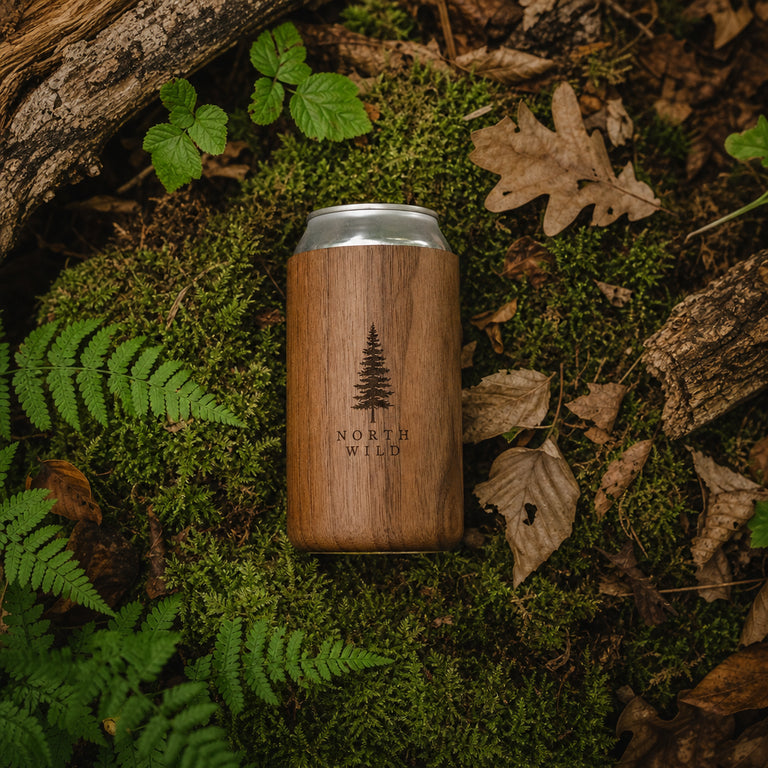
Most can insulators end up in a landfill within months of purchase. Foam breaks down poorly, plastic lingers for centuries, and neoprene sits somewhere in between. The sustainably crafted hardwood products coming out of Vermont take a different path entirely. TreeSleeve™ by Better Wheel VT starts its life in a managed Vermont forest and ends it in the soil, leaving nothing behind. This article traces that complete journey, from the moment a tree is selected through the hands of craftspeople to the moment a TreeSleeve™ keeps your cold drink cold at a trailhead, festival, or backyard fire.
Table of Contents
- Quick Takeaways
- Why Hardwood Matters for Eco-Friendly Manufacturing
- Vermont Forest Sourcing: What Sustainable Actually Means Here
- The Manufacturing Process: Precision Over Mass Production
- How TreeSleeve™ Compares to Other Can Insulators
- Who This Product Is Really Built For
- Custom Designs and the Gift That Actually Means Something
- Frequently Asked Questions
- References
Quick Takeaways
| Key Insight | Explanation |
|---|---|
| Vermont hardwood is a renewable resource when managed correctly | Better Wheel VT sources from forests where harvest rates stay below regrowth rates, maintaining long-term forest health rather than depleting it. |
| TreeSleeve™ is fully biodegradable at end of life | Unlike foam or neoprene koozies that persist in landfills, a TreeSleeve™ returns to the soil through natural decomposition once its useful life is over. |
| Eco-friendly manufacturing in Vermont keeps the supply chain short | Localized sourcing and production reduces transportation emissions significantly compared to overseas-manufactured alternatives. |
| Hardwood provides genuine insulation without synthetic materials | The natural cellular structure of hardwood creates air pockets that slow heat transfer, keeping drinks cold without foam or plastic inserts. |
| Custom engraving replaces single-use packaging | Personalized designs are burned or engraved directly into the wood, eliminating the need for adhesive labels or printed sleeves that add waste. |
| Outdoor and wildlife motifs are regionally authentic | Designs reflect actual Vermont landscapes and native species, making TreeSleeve™ a culturally grounded product rather than a generic outdoor brand aesthetic. |
| The TreeSleeve™ origin story is a direct differentiator from foam competitors | Knowing exactly where a product comes from and how it is made is increasingly important to eco-conscious buyers, and TreeSleeve™ can provide that full chain of custody. |
Why Hardwood Matters for Eco-Friendly Manufacturing
There is a meaningful difference between calling a product "natural" and being able to demonstrate it. Hardwood is one of the few raw materials that passes both tests. It is genuinely natural in origin, and when sourced from managed forests, it is genuinely renewable. That combination is rare in consumer product manufacturing.
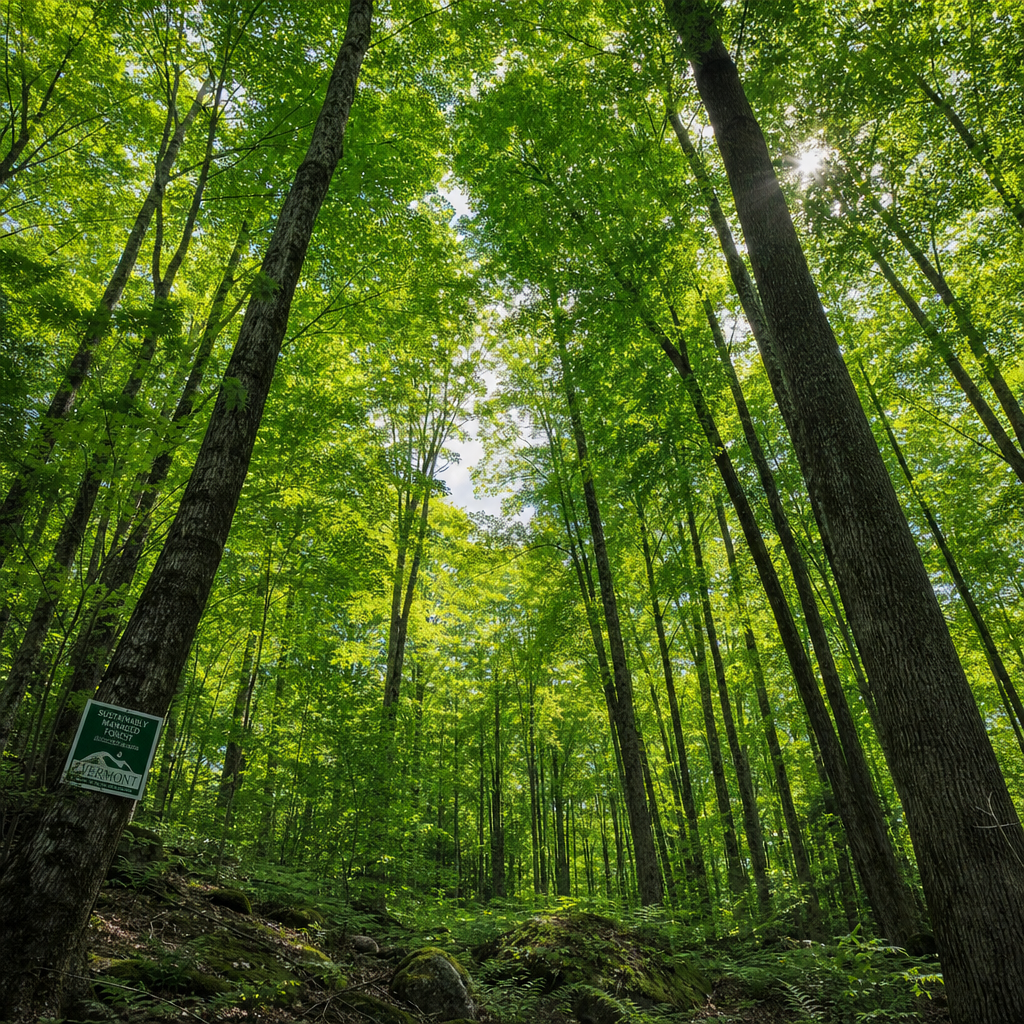
Vermont's hardwood forests, primarily maple, birch, and ash, are among the most studied and carefully managed in North America. The Vermont Department of Forests, Parks and Recreation reports that Vermont has more forested land today than it did 100 years ago, a direct result of responsible land stewardship practices. That context matters when you are buying a product made from that wood.
Hardwood has a cellular structure that foam simply cannot replicate. The interlocking grain, natural density, and moisture resistance of species like hard maple make it a functionally superior insulator in ways that are not immediately obvious. In practice, the wood acts as a thermal buffer that slows heat transfer from the surrounding air to the can. This is physics, not marketing language.
Pro tip: When evaluating any product marketed as eco-friendly, ask for the material's origin, not just its end-of-life story. TreeSleeve™ can answer both questions because Vermont forest sourcing is documented and local.
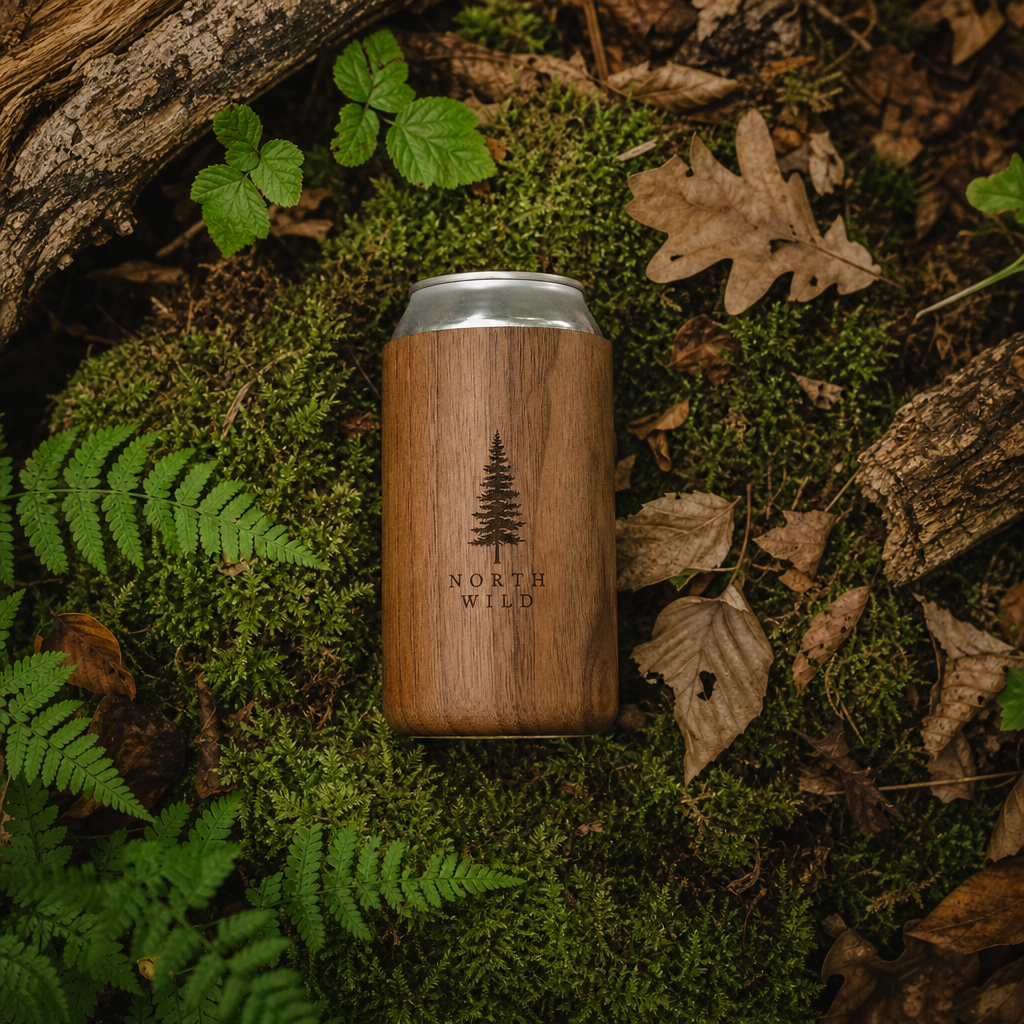
A common mistake among consumers shopping for sustainable gifts is equating recyclability with sustainability. A neoprene koozie may technically be recyclable in certain facilities, but the energy cost of production, the chemical inputs, and the practical reality that most consumers never recycle them correctly makes the comparison unfavorable. TreeSleeve™ skips that calculation entirely. It composts.
Vermont Forest Sourcing: What Sustainable Actually Means Here
The phrase "sustainably sourced" gets applied to products with very little rigor. Vague certifications, unverifiable claims, and geographic ambiguity make it hard for buyers to trust. Better Wheel VT's approach to eco-friendly manufacturing in Vermont is grounded in geographic specificity that cuts through that noise.
What Managed Harvesting Looks Like in Practice
Sustainable forest management is not about never cutting trees. It is about cutting fewer trees than grow back each year and selecting which trees to harvest in ways that improve overall forest health. Loggers working in certified Vermont forests identify trees that are crowding younger growth, diseased, or past their productive lifespan. Removing those specific trees allows sunlight to reach the forest floor and promotes the next generation of growth.
The data consistently shows that selectively managed forests sequester more carbon over time than unmanaged forests because tree density is optimized for growth rather than competition. According to research supported by the USDA Forest Service, well-managed hardwood forests in the northeastern United States continue to be net carbon sinks even after accounting for harvest activity.
Short Supply Chains Reduce Hidden Emissions
When a TreeSleeve™ is made in Vermont from Vermont wood, the transportation footprint shrinks dramatically. Compare that to a foam koozie manufactured in a facility overseas, shipped across an ocean in a container, warehoused in a regional distribution center, and then shipped again to its final retailer. Every leg of that journey adds carbon emissions that never appear on the product's marketing materials.
The TreeSleeve™ origin story is, at its core, a story about proximity. Forest to workshop to customer, all within a geography that most buyers can drive to on a weekend.
"Forests are the largest terrestrial carbon sink on Earth. Managing them thoughtfully is one of the most direct tools we have for climate mitigation." -- U.S. Forest Service, Northeastern Area State and Private Forestry
The Manufacturing Process: Precision Over Mass Production
The manufacturing step is where many so-called eco-friendly products quietly fall apart. A material can be sustainably sourced and then processed using energy-intensive, chemically dependent methods that undo the environmental benefit. TreeSleeve™ avoids this by keeping the process as close to the material as possible.
From Raw Timber to Finished Sleeve
Hardwood blanks are cut to specification using dimensional saws calibrated for minimal waste. In wood manufacturing, kerf waste, the material lost during each cut, is a real efficiency metric. Precision cutting tools reduce that waste to a fraction of what older, less calibrated equipment produces. The offcuts that do result are usable as fuel or compostable material rather than landfill inputs.
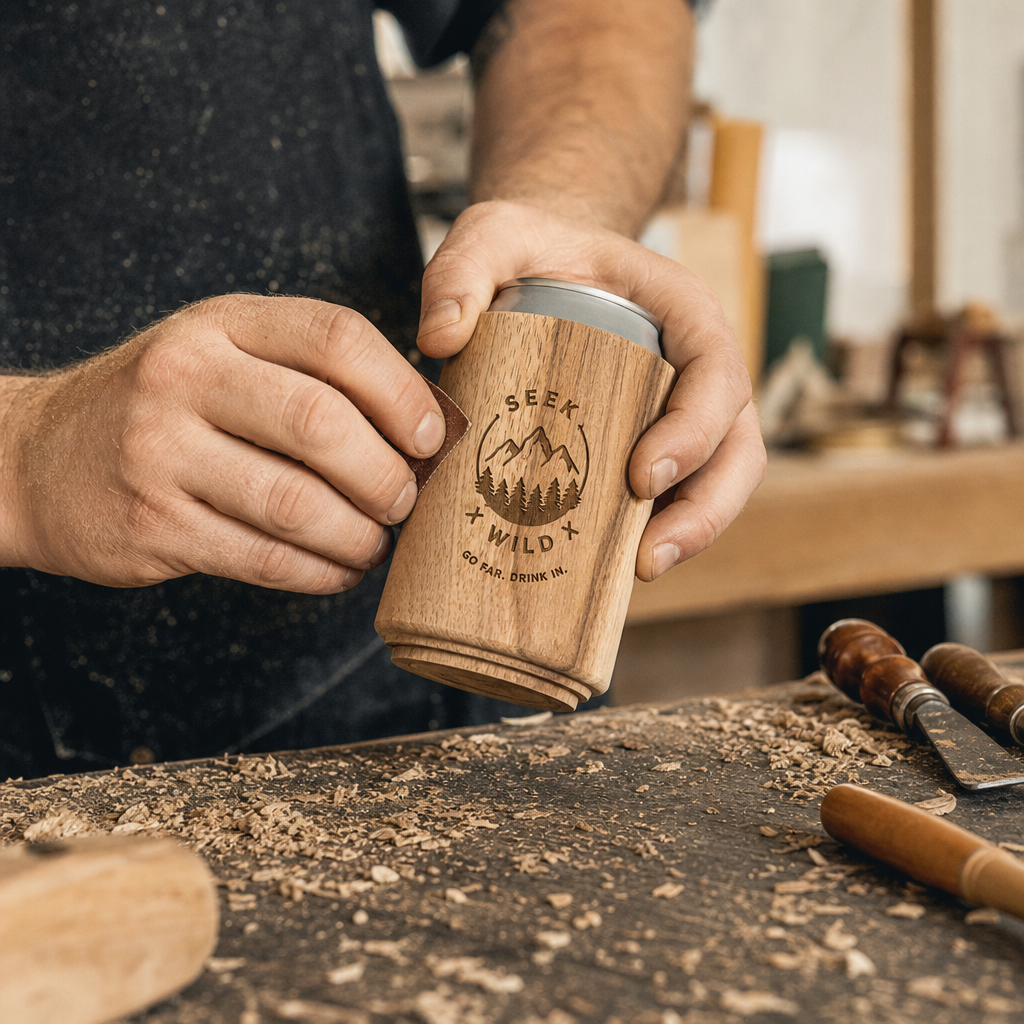
The shaping process uses CNC routing and hand finishing to bring each sleeve to its final form. The goal is a sleeve that fits a standard can consistently, insulates well, and holds up to outdoor use including moisture, UV exposure, and the general abuse that comes with camping and festival environments.
Engraving Instead of Printing
Laser engraving and hand carving replace ink printing entirely. This matters for two reasons. First, it eliminates the chemical inputs associated with inks, dyes, and adhesives. Second, it makes the design a permanent part of the material rather than a surface application that can chip, fade, or peel into the environment. The wildlife motifs and outdoor scenes on a TreeSleeve™ are not applied on top of the wood. They are part of it.
Pro tip: If you are ordering a custom TreeSleeve™ as a gift, the engraving process means your personalization will not wear off after a few camping trips. That durability is a direct result of how the design is made, not a feature added on top of it.
How TreeSleeve™ Compares to Other Can Insulators
The can insulator market is dominated by foam and neoprene. Both materials have real disadvantages that do not show up in their price tags. The comparison below addresses the full lifecycle, not just the point-of-sale experience.
| Feature | TreeSleeve™ (Hardwood) | Standard Foam Koozie | Neoprene Koozie |
|---|---|---|---|
| Material origin | Sustainably managed Vermont hardwood forests | Petrochemical-derived polyurethane foam | Synthetic rubber, petroleum-based |
| End-of-life disposal | Fully biodegradable, composts naturally | Non-biodegradable, landfill bound | Non-biodegradable, difficult to recycle |
| Insulation method | Natural wood cellular structure | Trapped air in foam cells | Closed-cell synthetic foam |
| Customization | Laser engraving, hand carving, permanent | Ink printing, prone to fading | Heat transfer printing, surface level |
| Supply chain transparency | Vermont sourced, Vermont made, fully traceable | Typically overseas manufacture, limited traceability | Typically overseas manufacture, limited traceability |
| Durability for outdoor use | High, resistant to UV, moisture, and physical wear | Low, degrades quickly with UV and compression | Moderate, holds shape but surface wears |
The data consistently shows that consumers who prioritize environmental impact over unit cost choose products with verifiable origin stories. According to Statista, the global sustainable packaging market was valued at over 280 billion USD in 2022 and is projected to grow at a compound annual rate above 6 percent through 2030. That growth reflects a real shift in buyer priorities, not just marketing noise.
Who This Product Is Really Built For
TreeSleeve™ is not a product for everyone, and Better Wheel VT does not try to make it one. The product is built for two overlapping audiences: outdoor enthusiasts who carry their values into the woods with them, and eco-conscious gift shoppers who are tired of giving presents that end up in a drawer or a landfill within a year.
The Outdoor Enthusiast Who Reads Labels
This buyer already chooses gear made from recycled materials, carries a reusable water bottle, and packs out their trash. They are not looking for permission to care about the environment. They are looking for products that meet the standard they already hold. A foam koozie fails that standard. A hardwood sleeve made 50 miles from a Vermont trailhead passes it.
In practice, the outdoor enthusiast audience responds more to provenance than to price. Knowing that a TreeSleeve™ came from a Vermont maple tree managed by a local forester, shaped by a local craftsperson, and designed with native wildlife in mind creates a connection that a screen-printed foam tube from an overseas warehouse cannot replicate.
The Gift Shopper Who Wants to Give Something That Lasts
The gift economy has a quality problem. Most gifts in the under-50-dollar range are forgettable. Eco-conscious gift shoppers, particularly those shopping for beer lovers, hikers, and festival-goers, are actively searching for something with a story. TreeSleeve™ gives the gift recipient something to explain to other people, which extends the gift's social life far beyond the moment of unwrapping.
Custom options with outdoor themes, wildlife motifs, or personalized engravings turn a can insulator into a keepsake. That is a category upgrade that foam koozies from competitors like cooziecooler.com or customkoozies.com simply cannot offer, because their material does not allow for the same permanence or tactile quality.
Custom Designs and the Gift That Actually Means Something
The design catalog at Better Wheel VT is not incidental. It reflects the specific geography and ecology of Vermont: moose, black bears, maple leaves, mountain ridgelines, river scenes. These are not generic outdoor images pulled from a stock library. They are representations of the environment the wood itself came from, which creates a coherence between material and design that is unusual in this product category.
Why Engraved Design Beats Printed Design for Gift Longevity
A printed koozie from a competitor looks sharp on day one. By the end of a summer camping season, the print is cracked, faded, or peeling. The ink that once formed a graphic has now partially separated into the environment. That is not a hypothetical. Anyone who has owned a foam koozie for more than a year has seen this happen.
An engraved TreeSleeve™ looks the same after three years of use as it did the day it arrived. The design is below the wood's surface, protected by the material itself. For a gift meant to mark a milestone, a trip, a friendship, or an occasion, that durability is the point.
Pro tip: For corporate gifting or group events like brewery tours or mountain festivals, custom TreeSleeve™ orders with a specific design or logo create a cohesive branded experience that guests actually keep rather than discard at the end of the day.
Designs That Connect to the Material's Origin
The wildlife and landscape motifs available through Better Wheel VT are not aesthetic choices made in isolation. They are deliberate references to the Vermont forests where the hardwood originates. A moose engraved into a maple sleeve is a product that carries its own ecosystem within it. That is a storytelling device that resonates with both outdoor enthusiasts and the people who give gifts to them.
Frequently Asked Questions
What kind of hardwood is used to make TreeSleeve™?
TreeSleeve™ is crafted from sustainably sourced Vermont hardwoods, primarily species like hard maple and birch that are native to the region and managed through selective harvesting practices. The specific wood used may vary by batch, but all sourcing stays within Vermont's managed forest system.
How long does a TreeSleeve™ take to biodegrade at end of life?
Untreated hardwood typically biodegrades within a few years in a compost or natural soil environment, depending on moisture and temperature conditions. This is dramatically faster than foam, which can persist in landfills for hundreds of years, and neoprene, which does not biodegrade at all under standard conditions.
Is TreeSleeve™ as effective as foam at keeping drinks cold?
Yes. The natural cellular structure of hardwood creates genuine thermal resistance by slowing heat transfer between the surrounding air and the can. In practice, a properly fitted TreeSleeve™ performs comparably to standard foam insulators for the typical duration of a drink session, which is 20 to 45 minutes outdoors.
Can I get a custom design on a TreeSleeve™ for a gift or event?
Custom options are available through Better Wheel VT. Designs are laser engraved or hand carved directly into the wood, making them permanent and wear-resistant. This is particularly popular for weddings, corporate events, brewery tours, and outdoor festivals where a branded or personalized item adds real value as a keepsake.
How does TreeSleeve™ differ from the foam koozies sold by competitors like customkoozies.com or koozieking.com?
The core difference is material and lifecycle. Competitors in the foam and neoprene koozie space sell products made from petrochemical-derived materials that are manufactured overseas and end up in landfills. TreeSleeve™ is made from Vermont hardwood, manufactured locally, and fully biodegradable. The design quality is also categorically different: engraved wood holds its design permanently, while printed foam surfaces degrade with use.
Is TreeSleeve™ appropriate for people who are not beer drinkers?
Absolutely. TreeSleeve™ fits standard 12-ounce cans, which includes sparkling water, canned coffee, soda, and a wide range of canned beverages beyond beer. The product's appeal is as much about the material and the gift experience as it is about any specific drink category.
What has been your experience with eco-friendly products that actually live up to their sustainability claims? Share your thoughts below.
References
- USDA Forest Service: research and data on sustainable hardwood forest management in the northeastern United States
- Statista: global market data and growth projections for the sustainable packaging and eco-friendly consumer products sector
- U.S. Environmental Protection Agency: material lifecycle data and biodegradability benchmarks for consumer product materials
- Forbes: reporting on consumer trends toward sustainably sourced and locally manufactured products
- McKinsey and Company: analysis of eco-conscious consumer behavior and purchasing decisions in the gift and outdoor product categories
Share:
Biodegradable Gifts 2026: The New Eco-Conscious Standard
End of Summer Gifts: Eco-Friendly Picks for Outdoor Lovers