Most people plan a Vermont fall day around the foliage and forget everything else. That is a mistake. The best Vermont fall activities stack naturally on top of each other: an apple orchard in the morning, a foliage drive through the hills at midday, and a cold hard cider cracked open at the tailgate before the sun drops. Each piece makes the next one better. This guide is built for outdoor enthusiasts who want a full day, not just a photo op, and for anyone looking to bring a gift or a piece of Vermont's forests home with them.
Table of Contents
- Quick Takeaways
- When to Go: Timing Your Vermont Fall Day
- Apple Picking in Vermont: What You Actually Need to Know
- Leaf Peeping Vermont: Where to Go and How to Read the Colors
- Vermont Hard Cider: The Logical End to a Fall Day
- Keeping Your Cider Cold Outdoors: Why It Matters More Than You Think
- Planning a Full-Day Itinerary: A Practical Framework
- Frequently Asked Questions When is the best time to go apple picking in Vermont? Mid-September through early October is the strongest pick-your-own window for most Vermont orchards. Early varieties like McIntosh come in first, with mid and late varieties following through October. Always check with the specific orchard before visiting, since availability depends on that season's crop and what has already been picked. Where is the best place to see fall foliage in Vermont? There is no single best place, because different parts of the state peak at different times. The Northeast Kingdom peaks earliest, around late September. Central Vermont around Stowe and Woodstock peaks in the second week of October. Southern Vermont peaks in the third week of October. For the most concentrated color in a single drive, the mountain gap roads in Central Vermont during the second week of October are hard to beat. What Vermont orchards offer pick-your-own apples and cider? Vermont has a wide network of pick-your-own orchards. Many also sell fresh-pressed sweet cider and hard cider on site or from nearby producers. The Vermont Apple Association publishes an orchard listing organized by county and updated by season, which is the most reliable place to find current options. Some orchards also carry hard cider from local cideries at their farm stands. How do I keep a canned hard cider cold on a Vermont fall day outdoors? A quality insulated can sleeve is the practical answer. For outdoor use over several hours, a hardwood sleeve like the TreeSleeve from Better Wheel VT outperforms standard foam options in both insulation duration and durability. It keeps a 12 oz or 16 oz can cold for up to 40 minutes and holds up to repeated outdoor use without compressing or degrading. It also connects to Vermont's material culture in a way that foam never does. What makes Vermont hard cider different from other ciders? Vermont cider is built on a deep base of local apple growing. Several Vermont cideries source directly from orchards they own or have long relationships with, which means the terroir of specific Vermont apple varieties comes through in the product. Vermont is also one of the few states with a developed ice cider tradition, using cold winters to concentrate juice into a dessert-style product. The craft cider scene here tends toward variety and experimentation on top of that local foundation. What is a good eco-friendly gift for someone who loves Vermont and the outdoors? A handcrafted hardwood can insulator is one of the most practical and personal options available. The TreeSleeve from Better Wheel VT is made from sustainably sourced Vermont hardwood, fully biodegradable, and available in outdoor and wildlife designs as well as custom options. It is a gift that connects directly to the fall activities Vermont is known for, gets used rather than stored, and does not add plastic or foam to the environment. Is leaf peeping in Vermont worth it on a cloudy day? Yes, with conditions. Overcast days actually reduce glare and can bring out the reds and oranges in the foliage more vividly than direct sun in some cases. The bigger issue on cloudy days is rain, which can knock leaves off trees quickly if it is heavy. A light overcast is no reason to cancel a foliage day. Check the forecast for rain specifically rather than simply sun versus clouds. If you have a favorite Vermont fall spot or a cidery that belongs on this list, share it in the comments. The best local knowledge rarely makes it into any published guide. We would love your feedback and any insights you would share with others. What perspective would you add? References
Quick Takeaways
| Key Insight | Explanation |
|---|---|
| Peak foliage in most of Vermont lands around October 4 to 9 | Higher elevations and the Northeast Kingdom turn first, southern Vermont peaks into mid-October. Plan accordingly rather than assuming one date fits the whole state. |
| Apple picking season opens around Labor Day and runs to mid-October | The best pick-your-own window is mid-September through early October. Call ahead or check orchard websites, as available varieties change week to week. |
| Hard cider tastes best cold, but Vermont weather in October is unpredictable | A proper insulator is not optional on a fall day that swings between 40°F mornings and warmer afternoons. The right sleeve keeps your can at drinking temperature longer. |
| Stacking activities in one region beats driving between regions | Vermont's orchards, foliage roads, and cideries are often within the same county. A focused day in one valley beats a scattered three-hour drive chasing different spots. |
| An eco-friendly can sleeve is one of the most practical fall gifts | It pairs directly with the cider and beer culture built into Vermont's fall scene. A handcrafted hardwood sleeve from locally sourced Vermont wood means the gift connects to the place. |
| Foliage color runs down elevation at roughly a day per 100 meters | If you missed peak color on a ridge, drive to the valley below. The same county can have peak color at two different times depending on altitude. |
| Weekday visits to orchards and foliage roads are dramatically better | Fall weekends in Vermont are crowded. A Tuesday at a Champlain Valley orchard feels completely different from the same orchard on Columbus Day weekend. |
When to Go: Timing Your Vermont Fall Day
Vermont's fall season is not a single moment. It is a wave that moves from north to south and from high elevation down to the valley floor over the course of six to eight weeks. Getting the timing right is the single biggest lever you have for a great day.
The Northeast Kingdom, including areas like Lake Willoughby and Jay Peak, typically hits peak foliage in late September to early October. Central Vermont, including Stowe and Woodstock, lands around the second week of October. Southern Vermont around Manchester and Bennington tends to peak in the third week of October. If you want to hit one date that works for most of the state, the second week of October covers the most ground.
Apple picking overlaps cleanly with the foliage window. Most pick-your-own orchards open around Labor Day weekend and run through mid-October, with the prime picking happening in mid-September through early October. That overlap is not a coincidence. It is the reason a combined orchard-and-foliage day works so well. You are doing both things at the right time, not compromising on either.
Pro tip: Check the Vermont Department of Forests, Parks and Recreation foliage report in the week before your trip. It updates weekly during the season and gives county-by-county color status, which is far more useful than any general prediction.
Apple Picking in Vermont: What You Actually Need to Know
Vermont has a deep network of working orchards, and apple picking Vermont is not a tourist gimmick here. These are real farms selling real product, and the pick-your-own model is part of how they operate. Treat it that way and you will have a better experience than visitors who treat it like a theme park.
What to Bring and What to Expect
Bring layers. Vermont orchard mornings in September and October can be cold enough to see your breath. By midday the sun can push temperatures into the mid-60s. Boots are a good idea because the ground between rows gets muddy fast after rain. Bring a reusable bag or basket in addition to anything the orchard provides.
Most orchards offer more than just apples. Fresh-pressed sweet cider, cider donuts, maple syrup, and farm stand produce are standard. Some offer hard cider as well, either made on site or from local producers. Do not skip the cider donut. It is one of those things that simply does not translate outside of context.
Varieties and What to Pick When
Early-season varieties like McIntosh come in first, around early September. Mid-season varieties including Cortland and Macoun peak through late September. Late varieties like Fuji, Mutsu, and Empire carry through October. The variety roster at any given orchard changes week by week, so calling ahead or checking the orchard's social media before driving out is worth the 30 seconds it takes.
Vermont has orchards across the state, from family-run operations in the Champlain Valley to working farms in Central Vermont and smaller pick-your-own spots in the Northeast Kingdom. The Vermont Apple Association maintains a current listing of member orchards organized by county, which is the most reliable way to find what is open and what is available near your planned route.
Pro tip: Go in the morning. Orchard crowds build fast on clear fall weekends, and the first two hours after opening offer the best row access, the freshest donuts, and the most relaxed atmosphere. The drive back through the foliage afterward is a natural reward for starting early.
Leaf Peeping Vermont: Where to Go and How to Read the Colors
Leaf peeping Vermont is genuinely one of the best versions of this activity anywhere in the northeastern United States. The combination of maple-heavy forest, rolling terrain, small farm roads, and no significant urban sprawl means the color surrounds you rather than appearing in isolated pockets. But knowing where to look and when makes a real difference.
Reading the Landscape: Elevation First
The most useful piece of information for planning a leaf peeping day is elevation. Color changes at roughly a day per 100 meters of altitude. That means a ridge you can see from a valley road can be at peak color a full week before the farmland below it. This works in your favor. If you arrive on a day when the mountaintops are already past peak, drive down to the valleys. The color will still be building there.
The Green Mountains run north to south through the center of Vermont and provide the most reliable and dramatic foliage. Gap roads, including Lincoln Gap and Appalachian Gap, cross the range and offer some of the most concentrated color in the state during peak weeks. These are narrow mountain roads. Drive them slowly and expect to park and walk at scenic overlooks rather than pulling off on the shoulder.
Best Foliage Drives and Routes
Route 100 runs along the eastern side of the Green Mountains from the Massachusetts border to the Northeast Kingdom and passes through some of the most photographed fall landscapes in New England. It connects directly with several orchards and small towns, making it a natural backbone for a full fall day itinerary. The Champlain Valley on the western side of the state offers a different aesthetic: lower elevation, longer sight lines across farmland to the Adirondacks, and Lake Champlain as a backdrop.
The foliage season in Vermont is not something you schedule around. It schedules around you. A day planned loosely around the color report beats a rigid itinerary every time.
Lake Champlain's shoreline provides a genuinely peaceful leaf peeping experience. The reflected colors on the water add a visual dimension that mountain drives cannot replicate. If you are combining an orchard visit in the Champlain Valley with a foliage drive, the lake is a natural midday stop before heading toward a cidery in the afternoon.
Vermont Hard Cider: The Logical End to a Fall Day
Vermont has one of the most active craft cider scenes in the country, built directly on the apple orchards that have been operating here for generations. Hard cider is not a trend in this state. It is a natural output of a region that grows a lot of apples and has always looked for ways to use them well.
Where Vermont Cider Comes From
Several Vermont cideries work directly with local orchards, using apples grown on the same land the product is named after. Champlain Orchards in Shoreham runs its own ecologically managed orchard and produces hard cider with fruit from those trees. Stowe Cider operates in the heart of the mountains. Citizen Cider, based in Burlington's South End, has been a significant presence in the Vermont craft cider space for years, sourcing locally and experimenting with flavor profiles. Eden Specialty Ciders focuses on ice cider, a style made by concentrating juice in Vermont's cold winters.
The Vermont Cider Trail, documented through the state's agricultural tourism resources, connects orchards and cideries across the state into a navigable route. It is a practical planning tool if you want to organize a day that moves from picking to tasting without a lot of backtracking.
Hard Cider in a Can: The Practical Reality
More Vermont cideries now package their product in cans alongside bottles. Cans are the practical choice for outdoor use: no breakage, no corkscrew, lighter in a pack. But a cold can left on a picnic blanket or a tailgate in October will warm up faster than you want it to, especially when the sun is out and the air temperature is swinging.
That is where a quality cider can insulator does actual work. Not as an accessory but as a functional piece of gear for a fall day outdoors. The difference between a 45°F hard cider and a 60°F hard cider is noticeable. Keeping your drink cold while you sit in an orchard or watch the foliage from a hillside is a simple problem with a simple solution.
Keeping Your Cider Cold Outdoors: Why It Matters More Than You Think
The standard foam can sleeve does the job tolerably well for 20 minutes. After that, it becomes a decoration. Vermont fall days are unpredictable enough in temperature that you want something with better insulation and more staying power, especially on a day that starts at an orchard and ends at a hillside overlook.
Why Wood Works Outdoors
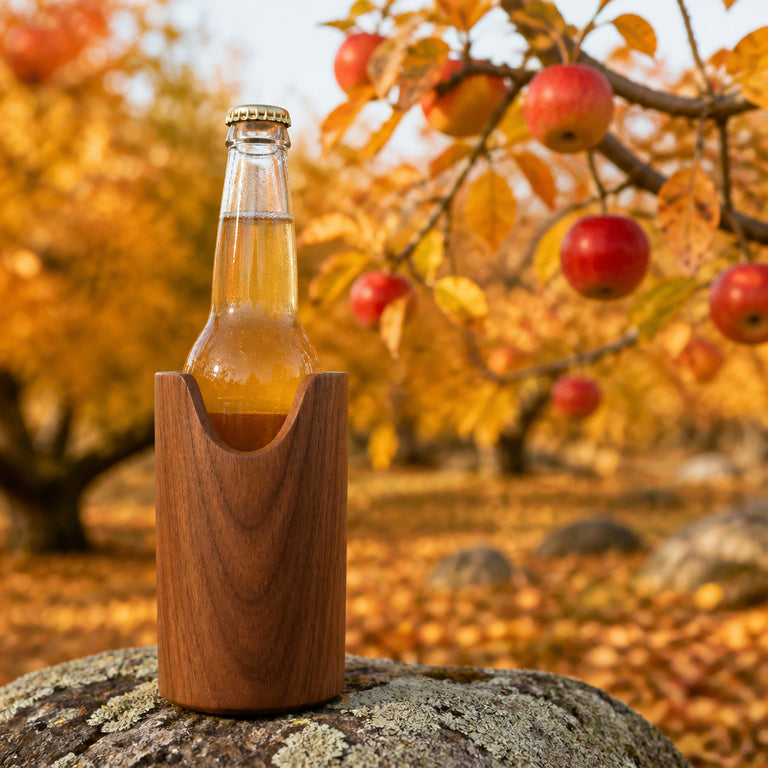
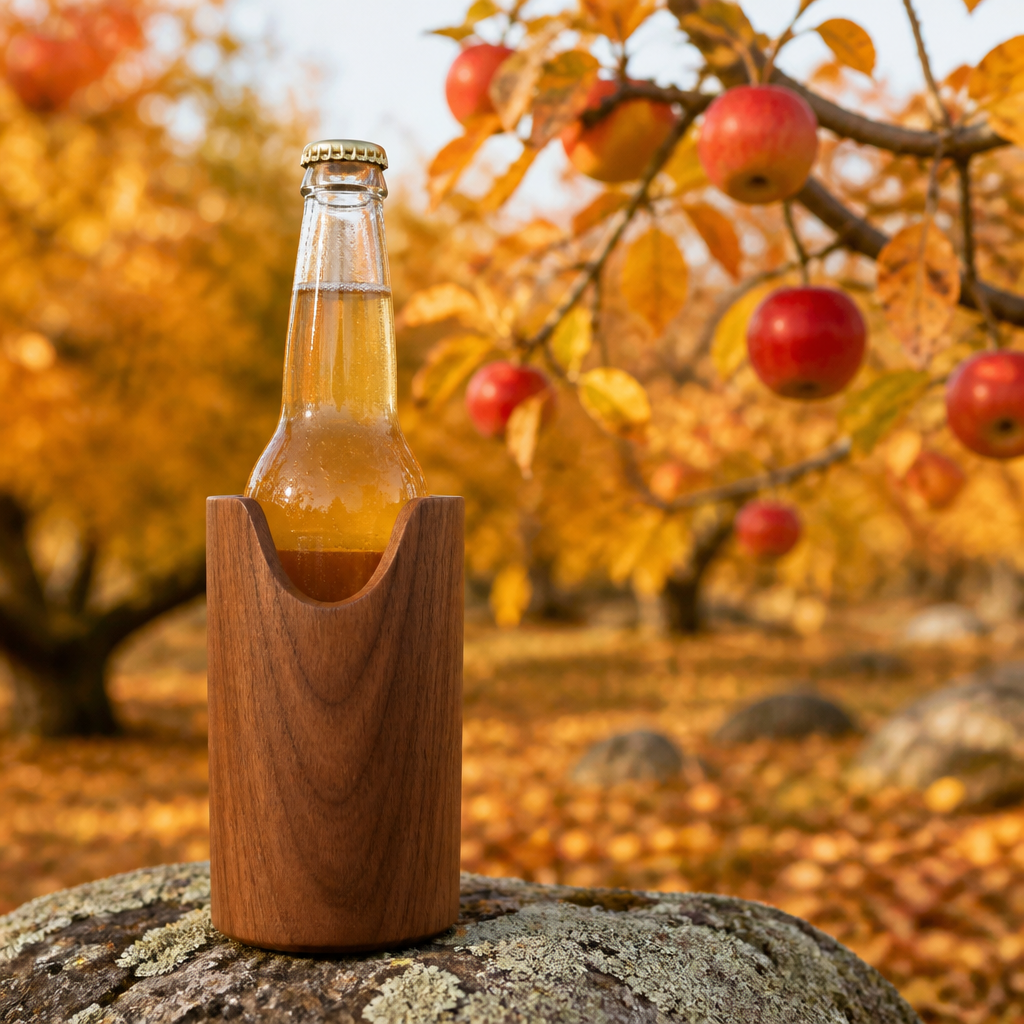
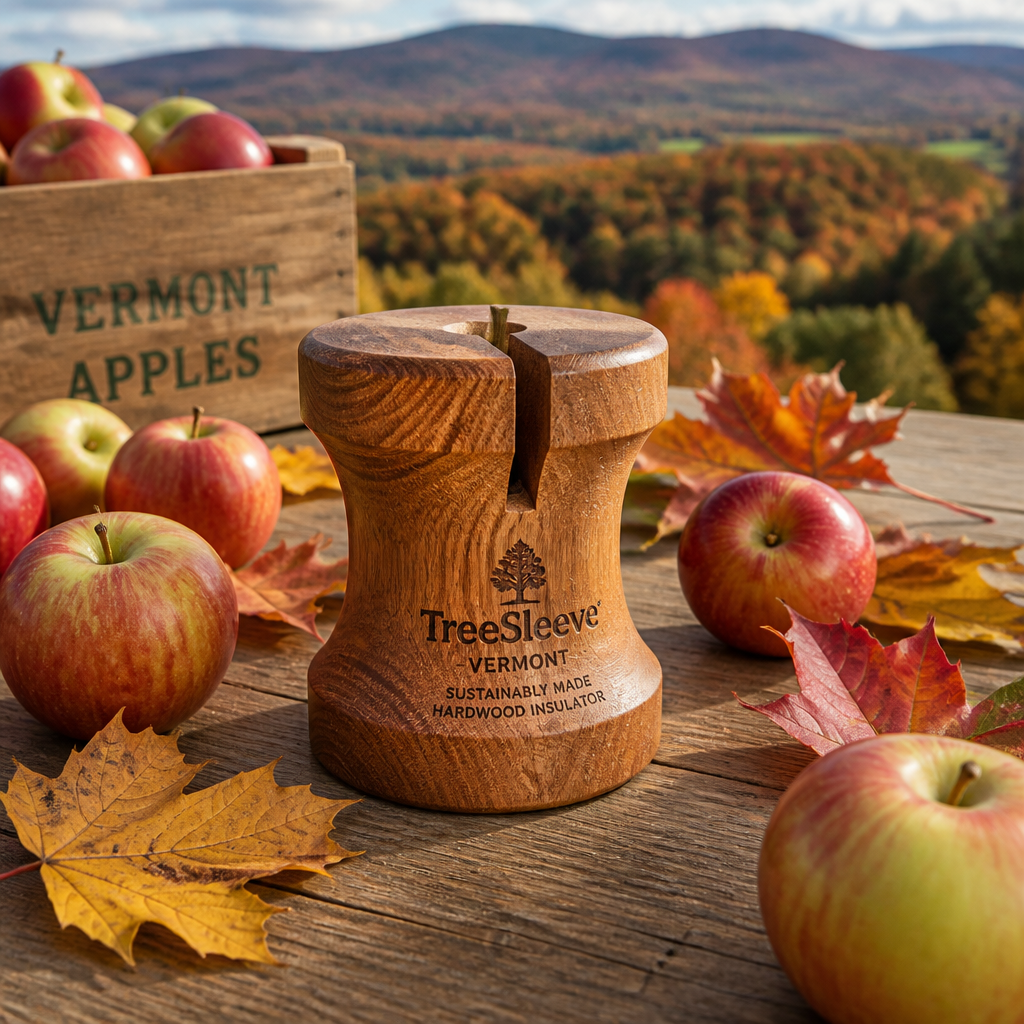
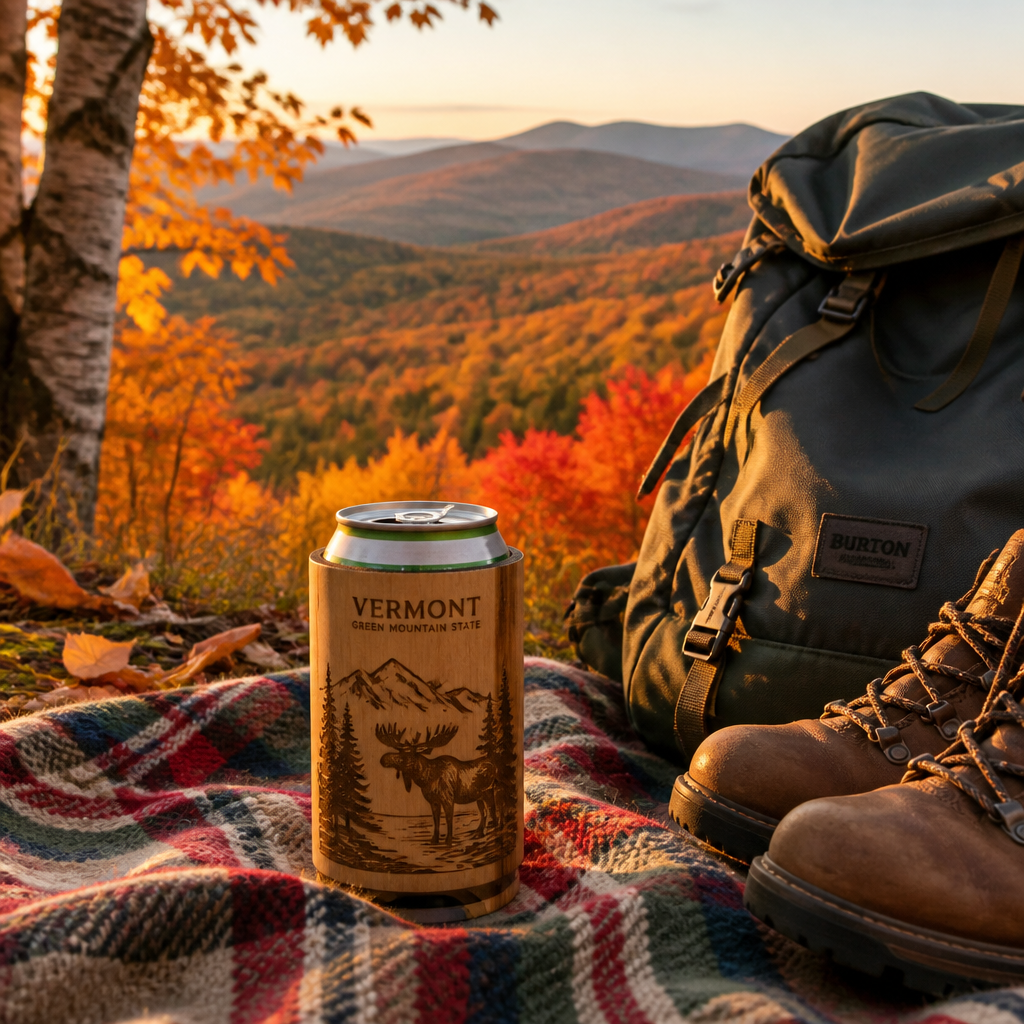
Solid hardwood is a natural insulator. Unlike foam, it does not compress over time, does not absorb odors, and does not end up in a landfill. The TreeSleeve from Better Wheel VT is made from a single piece of sustainably sourced Vermont hardwood, cut from forests in the Green Mountains. It keeps a standard 12 oz or 16 oz can cold for up to 40 minutes, longer than typical foam alternatives.
What makes it practical for a fall day outdoors is not just the insulation. It is the material. A wood can sleeve does not feel out of place in a Vermont orchard or on a foliage overlook the way a neoprene foam sleeve does. It belongs in the same category as the landscape around it: natural, durable, made here.
An Eco-Friendly Can Sleeve That Makes Sense as a Gift
If you are shopping for someone who spends time outdoors in fall, who loves Vermont craft cider or local beer, or who cares about what their single-use alternatives actually do to the environment, an eco-friendly can sleeve made from real Vermont wood is a genuinely useful gift. Better Wheel VT offers wildlife motifs, outdoor themes, and custom options. The custom versions work especially well as gifts for people who have a connection to Vermont, because you can personalize them to reflect that.
Pro tip: Order a custom TreeSleeve before your fall trip so it arrives in time. Custom orders typically require a few days of lead time. If you are planning a group outing, picking up a sleeve for each person is a practical memento that gets used rather than shelved.
The fully biodegradable construction means the product does not add to the accumulation of plastic and foam gear that piles up after years of outdoor adventures. When it reaches the end of its life, it can go back to the ground it came from.
Planning a Full-Day Itinerary: A Practical Framework
The most common mistake people make planning a Vermont fall day is building an itinerary that requires too much driving. Vermont's roads are beautiful, but they are not fast. What looks like a short distance on a map can take twice as long when you factor in one-lane bridges, farm stand stops, and general leaf-peeping traffic on peak weekends.
Comparing Three Vermont Fall Day Approaches
| Approach | Best For | What to Watch Out For |
|---|---|---|
| Champlain Valley Day (west side of the state) | Combining apple picking with lake views, flat scenic drives, and proximity to Burlington cideries. Good for groups and families. | Popular orchards near Burlington get very crowded on clear October weekends. Go early or visit midweek. Foliage peaks later at lower elevation here. |
| Central Vermont Mountain Day (Stowe, Woodstock, Mad River Valley) | The most dramatic foliage in the state. Peak color happens during the second week of October. Cideries, farm stands, and hiking all within reach. | Accommodation books out months in advance for peak weeks. Gap road drives are slow and not suitable if you are in a hurry. Expect crowds in Stowe village itself. |
| Northeast Kingdom Day (Burke, Lake Willoughby, Jay Peak area) | Earliest foliage in the state. Least crowded. Most remote. Best option if you want color without competition for parking or orchard rows. | Fewer cideries within easy driving distance. Some orchards and farm stands have shorter seasons here. Cell service is limited in parts of the Kingdom. |
A Realistic Day Structure That Works
Start at the orchard, no later than 9 a.m. Pick your apples, get the donuts, pick up a jug of sweet cider for the road. By 11 a.m., you are in the car with a route planned through the foliage. Drive the scenic roads without a fixed stop schedule. Pull over when something looks good. Have lunch at a farm stand or a small-town general store rather than a sit-down restaurant, which will add 45 minutes you do not need to spend.
By early afternoon, you are at a cidery or a spot with a good view. This is when the can sleeve earns its place. A cold hard cider from a Vermont cidery, cracked open at a hillside overlook with peak foliage in every direction, is the specific version of this day that people remember. Not the most perfectly timed itinerary, but that moment.
Head back before 4 p.m. if you want to avoid the traffic that builds on fall weekends as the light drops. The drive out of the mountains in fading afternoon light is beautiful, but moving slowly in a line of cars on a two-lane road is less so.
Frequently Asked Questions
When is the best time to go apple picking in Vermont?
Mid-September through early October is the strongest pick-your-own window for most Vermont orchards. Early varieties like McIntosh come in first, with mid and late varieties following through October. Always check with the specific orchard before visiting, since availability depends on that season's crop and what has already been picked.
Where is the best place to see fall foliage in Vermont?
There is no single best place, because different parts of the state peak at different times. The Northeast Kingdom peaks earliest, around late September. Central Vermont around Stowe and Woodstock peaks in the second week of October. Southern Vermont peaks in the third week of October. For the most concentrated color in a single drive, the mountain gap roads in Central Vermont during the second week of October are hard to beat.
What Vermont orchards offer pick-your-own apples and cider?
Vermont has a wide network of pick-your-own orchards. Many also sell fresh-pressed sweet cider and hard cider on site or from nearby producers. The Vermont Apple Association publishes an orchard listing organized by county and updated by season, which is the most reliable place to find current options. Some orchards also carry hard cider from local cideries at their farm stands.
How do I keep a canned hard cider cold on a Vermont fall day outdoors?
A quality insulated can sleeve is the practical answer. For outdoor use over several hours, a hardwood sleeve like the TreeSleeve from Better Wheel VT outperforms standard foam options in both insulation duration and durability. It keeps a 12 oz or 16 oz can cold for up to 40 minutes and holds up to repeated outdoor use without compressing or degrading. It also connects to Vermont's material culture in a way that foam never does.
What makes Vermont hard cider different from other ciders?
Vermont cider is built on a deep base of local apple growing. Several Vermont cideries source directly from orchards they own or have long relationships with, which means the terroir of specific Vermont apple varieties comes through in the product. Vermont is also one of the few states with a developed ice cider tradition, using cold winters to concentrate juice into a dessert-style product. The craft cider scene here tends toward variety and experimentation on top of that local foundation.
What is a good eco-friendly gift for someone who loves Vermont and the outdoors?
A handcrafted hardwood can insulator is one of the most practical and personal options available. The TreeSleeve from Better Wheel VT is made from sustainably sourced Vermont hardwood, fully biodegradable, and available in outdoor and wildlife designs as well as custom options. It is a gift that connects directly to the fall activities Vermont is known for, gets used rather than stored, and does not add plastic or foam to the environment.
Is leaf peeping in Vermont worth it on a cloudy day?
Yes, with conditions. Overcast days actually reduce glare and can bring out the reds and oranges in the foliage more vividly than direct sun in some cases. The bigger issue on cloudy days is rain, which can knock leaves off trees quickly if it is heavy. A light overcast is no reason to cancel a foliage day. Check the forecast for rain specifically rather than simply sun versus clouds.
If you have a favorite Vermont fall spot or a cidery that belongs on this list, share it in the comments. The best local knowledge rarely makes it into any published guide.
We would love your feedback and any insights you would share with others. What perspective would you add?
References
- Vermont Apple Association orchard and cider producer listing by county
- Vermont fall foliage peak timing map and county-by-county tracker for 2026
- Apple picking guide for orchards near Burlington Vermont with seasonal tips
- Vermont Cider Trail guide connecting orchards and cideries across the state
- Vermont fall season travel overview from Vermont Vacation
Share:
Custom Can Insulators: The Eco-Friendly Gift People Keep
Harvest Festival Accessories: The Vendor Booth Essential