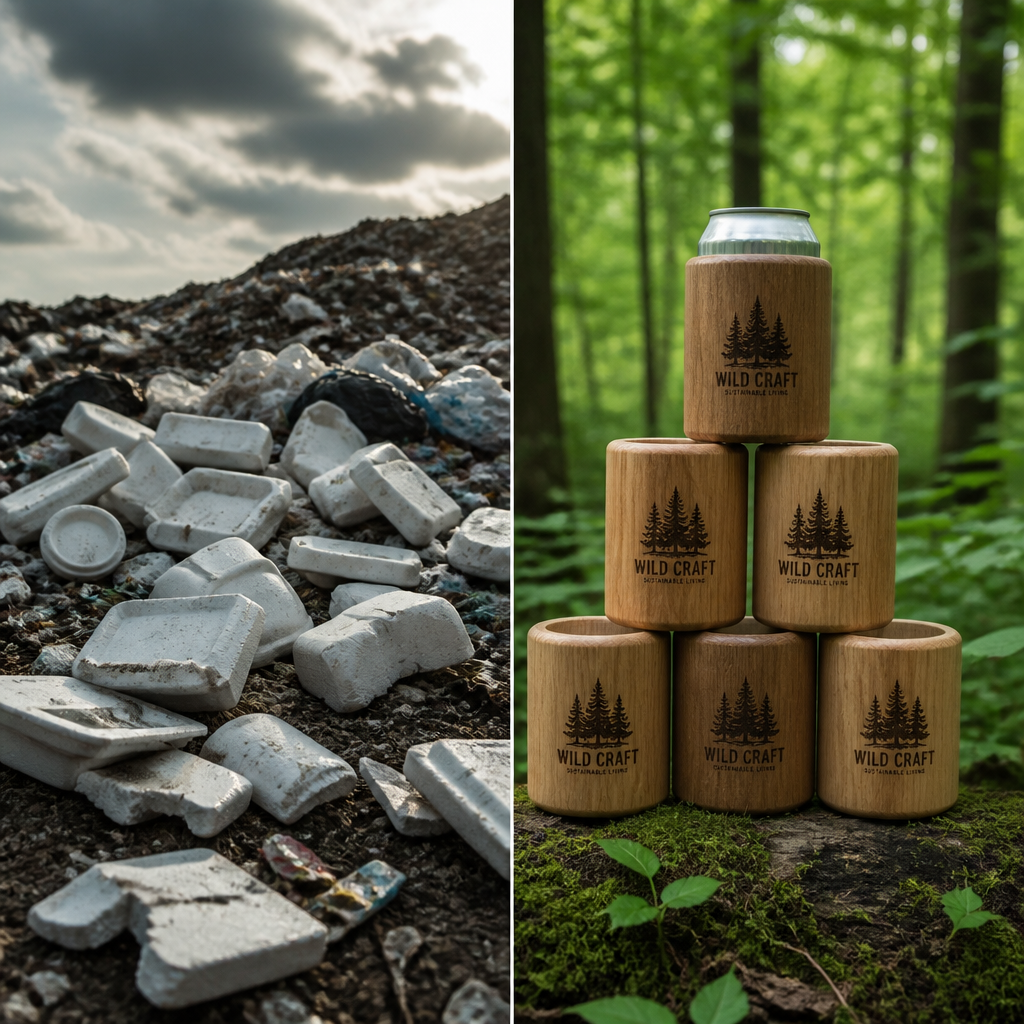
Foam koozies have been the default drink insulator for decades, but their environmental footprint is impossible to ignore. A single foam koozie takes roughly 500 years to decompose in a landfill, and the United States alone discards millions of them at festivals, tailgates, and outdoor events every year. For the growing number of outdoor enthusiasts who carry reusable water bottles, pack out their trash, and choose gear made from natural materials, handing someone a petroleum-derived foam sleeve feels like a contradiction. The wooden can insulator has arrived as a direct answer to that contradiction, and the shift from foam to wood is accelerating for reasons that go far beyond aesthetics.
Table of Contents
- Quick Takeaways
- Why Foam Koozies Are Losing Ground with Eco-Conscious Buyers
- What Makes a Wooden Can Insulator Actually Different
- Thermal Performance: Wood vs. Foam vs. Neoprene
- Biodegradable Can Sleeve: The Environmental Case by the Numbers
- Sustainable Outdoor Gear: How Wood Fits the Category
- Eco-Friendly Koozie Alternative: Gift Market Demand Is Real
- Side-by-Side Comparison: Wooden, Foam, and Neoprene Can Insulators
- Frequently Asked Questions
- References
Quick Takeaways
| Key Insight | Explanation |
|---|---|
| Foam koozies are not biodegradable | Standard polyurethane foam takes 500 or more years to break down, making it a poor choice for outdoor-focused consumers who prioritize leave-no-trace principles. |
| Hardwood insulators from sustainably managed forests carry a verifiable supply chain | Products like TreeSleeve use Vermont hardwood with a traceable origin, unlike foam or neoprene materials sourced from petrochemical processes. |
| Wood provides genuine thermal insulation through its cellular structure | The air pockets in wood grain slow heat transfer, keeping cold drinks cold for a comparable duration to standard foam in moderate outdoor conditions. |
| Gifting appeal for wooden insulators is measurably higher than generic foam | Unique materials and custom engraving options make wooden can insulators a premium gift item in the outdoor and beer enthusiast market segments. |
| Biodegradable can sleeves reduce festival waste streams | At large outdoor events, biodegradable materials decompose in composting facilities rather than persisting in landfills or waterways for centuries. |
| Custom wildlife and outdoor designs carry brand storytelling that foam cannot | Laser-engraved hardwood tells a design story tied to place and nature, building an emotional connection that printed foam simply does not achieve. |
| Eco-conscious consumers are willing to pay a premium for sustainable alternatives | According to Nielsen research, 73 percent of global consumers say they would definitely or probably change consumption habits to reduce environmental impact. |
Why Foam Koozies Are Losing Ground with Eco-Conscious Buyers
The foam koozie problem is not subtle. Polyurethane and polyethylene foam, the two most common materials used in cheap drink insulators, are byproducts of oil refining. They do not biodegrade in any meaningful timeframe, they cannot be recycled through standard municipal programs, and they shed microplastic particles as they degrade in the environment. For someone who spent the weekend hiking in Vermont's Green Mountains and packed out every scrap of waste, tossing a foam koozie in a festival trash bin afterward feels genuinely inconsistent.
The data consistently shows that outdoor consumers are not just paying lip service to sustainability. According to a 2023 survey published by the Outdoor Industry Association, 58 percent of active outdoor participants said they actively seek products made from natural, renewable, or recycled materials. That is not a niche preference anymore. It is a majority position among the exact audience that beer brands, festival organizers, and outdoor gift retailers are trying to reach.
Foam koozies also carry a perception problem that has compounded over time. They are associated with bulk promotional giveaways, cheap tradeshow swag, and single-use event merchandise. When a competitor like customkoozies.com ships 500 identical foam sleeves for a corporate event, the recipient experience is disposable by design. Eco-conscious buyers have rejected that disposable experience, and the market is moving toward products that feel intentional, durable, and worth keeping.
Pro tip: If you are selecting can insulators for a group outdoor event or as gifts for hikers and campers, ask the supplier directly about the material's end-of-life path. If the answer is "it goes to landfill," that is relevant information for your purchasing decision and your group's environmental values.
What Makes a Wooden Can Insulator Actually Different
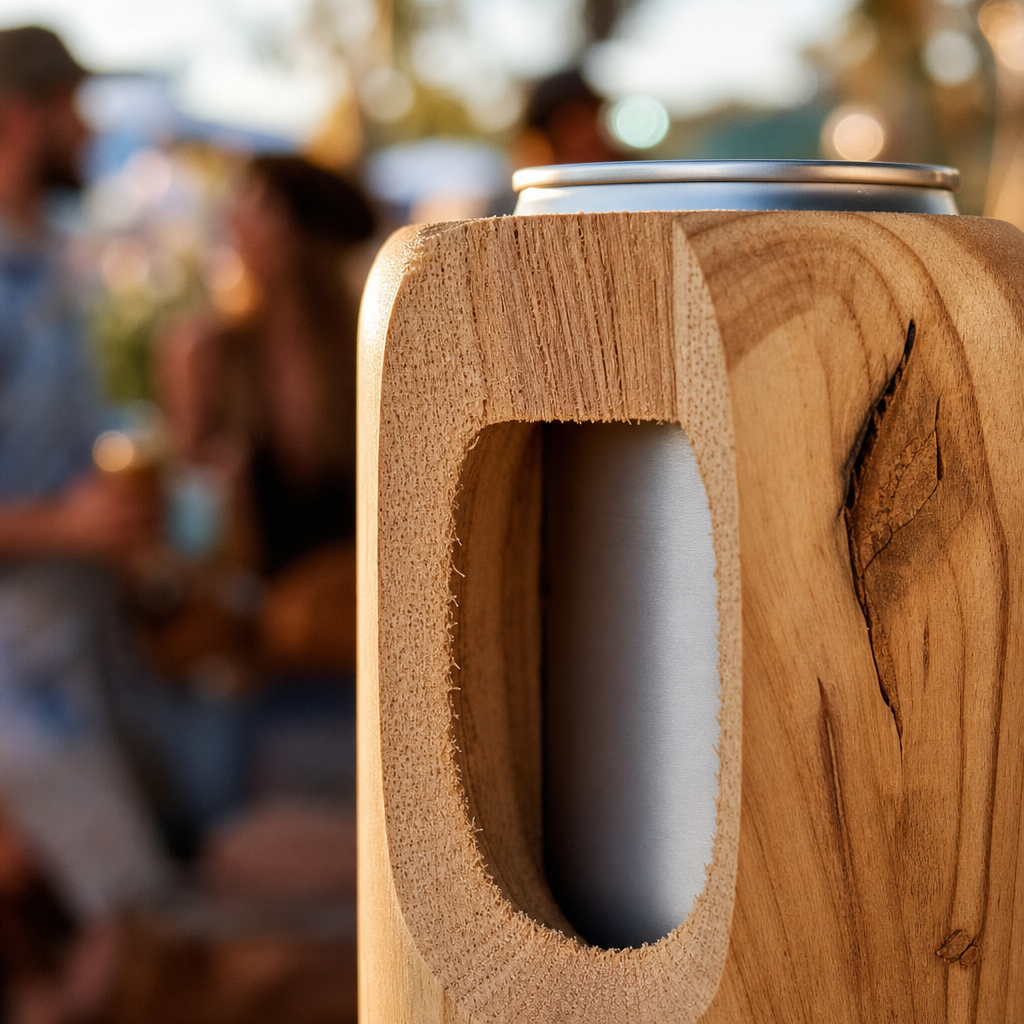
A wooden can insulator is not simply a novelty item shaped like a koozie. The construction matters enormously for both performance and environmental credibility. The TreeSleeve from Better Wheel VT, for example, is crafted from sustainably sourced Vermont hardwood, meaning the material originates from forests managed under responsible harvesting practices that maintain canopy cover, prevent soil erosion, and allow for natural regeneration.
Material Origin and Forest Stewardship
Hardwood sourced from northeastern U.S. forests benefits from some of the most rigorous forestry regulations in the country. Vermont's forests are subject to Act 250 land use controls, and timber operators in the state work within guidelines designed to protect watersheds and wildlife habitat. When you buy a wooden can insulator made from Vermont hardwood, you are buying into a supply chain with geographic accountability, not an anonymous petrochemical process.
This is the core difference that competitors in the foam and neoprene space cannot replicate. Koozieking.com and cooziecooler.com both offer neoprene and foam options at low price points, but neoprene is a synthetic rubber derived from chloroprene, a petroleum-based monomer. The supply chain is opaque, the material is not biodegradable, and there is no forest stewardship story to tell.
Design Language That Connects to Place
Laser-engraved hardwood carries a design vocabulary that printed foam simply cannot match. Wildlife motifs, topographic patterns, and Vermont-specific outdoor scenes engraved into natural wood grain become unique because no two pieces of wood have identical grain patterns. Every unit is subtly one-of-a-kind. That is a tangible differentiator in the gift market, where generic items are already oversupplied.
Pro tip: When evaluating a wooden can insulator as a gift for an outdoor enthusiast, look for designs tied to specific ecosystems or wildlife native to regions the recipient loves. A moose or maple leaf engraving carries personal meaning for Vermont hikers in a way that a generic logo never will.
Thermal Performance: Wood vs. Foam vs. Neoprene
A fair question about any can insulator is whether it actually works. The thermal argument for wood is grounded in material science, not marketing. Wood is a natural insulator because its cellular structure contains air pockets that resist heat transfer. Dry hardwood has a thermal conductivity of roughly 0.10 to 0.20 W/(m·K), which is significantly lower than aluminum (205 W/(m·K)) but higher than polyurethane foam at around 0.02 to 0.04 W/(m·K).
In practice, a wooden can insulator keeps a standard 12-ounce beer cold for 15 to 25 minutes in warm outdoor conditions, which is consistent with what most foam koozies achieve in real-world use. The performance gap between wood and foam is narrower than the material science numbers suggest, because the thin profile of a can insulator limits how much thermal mass either material can deploy. At the thickness used in products like TreeSleeve, wood performs within acceptable range of foam for typical outdoor use scenarios.
What wood does not do is collapse or compress like foam. Foam koozies degrade with use, losing their insulating air pockets over time. A hardwood sleeve maintains its structural integrity across years of use, which means the thermal performance does not decline. Durability translates directly to better long-term insulation consistency, which is an argument foam cannot win over any extended timeframe.
"Natural materials like wood offer a combination of renewable sourcing, biodegradability, and functional durability that synthetic alternatives structurally cannot provide. The conversation around sustainable outdoor gear is shifting from recycled plastics toward truly biodegradable natural materials." - Outdoor Industry Association, Sustainability Trends Report
Biodegradable Can Sleeve: The Environmental Case by the Numbers
The term "biodegradable" gets used loosely in product marketing, but for a wooden product made from untreated or minimally finished hardwood, it is accurate in the strictest sense. A biodegradable can sleeve made from hardwood will decompose through natural microbial and fungal activity within years, not centuries. Under commercial composting conditions, untreated wood breaks down within six months to two years. In natural soil environments, small hardwood items decompose within five to ten years depending on moisture and temperature.
Compare that to foam. Polyurethane foam does not biodegrade in any ecologically meaningful timeframe. It fragments into smaller pieces, but those pieces persist in soil and water as microplastics. The EPA's materials characterization data for municipal solid waste documents that plastics and foams make up over 12 percent of total landfill volume, and recovery rates for foam specifically remain below two percent.
For festival organizers, outdoor event planners, and gift buyers who care about this distinction, the choice of a biodegradable can sleeve over a foam koozie is not symbolic. It is a measurable reduction in material persistence in the environment. At scale, across thousands of units distributed at a single outdoor festival, that difference compounds into a real waste reduction outcome.
Sustainable Outdoor Gear: How Wood Fits the Category
The sustainable outdoor gear category has expanded dramatically beyond clothing and footwear. Consumers who choose merino wool base layers, beeswax food wraps, and stainless steel water bottles are applying the same material logic to every item in their outdoor kit. A can insulator might seem minor by comparison, but it is a visible, frequently used accessory that signals values to everyone around you at a campfire or trail-end gathering.
Why Wood Specifically Resonates with the Outdoor Audience
Wood is not just a sustainable material choice. It is a material with direct emotional resonance for people who spend time in forests. Vermont hikers, paddlers, and backcountry campers interact with hardwood trees as landmarks, shelter, and habitat markers. Holding a can insulator made from the same Vermont hardwood forests they walk through creates a connection that neoprene from a Chinese chemical facility simply cannot replicate.
Better Wheel VT has positioned TreeSleeve directly within this emotional and material logic. The product is not attempting to be a cheaper koozie. It is a piece of Vermont forest in your hand, which is a fundamentally different value proposition than anything cooziecooler.com or koozieking.com offers in their catalog.
Durability as a Sustainability Argument
A common mistake in evaluating sustainable gear is focusing only on what the product is made of, while ignoring how long it lasts. A wooden can insulator used for five years has a fraction of the lifecycle environmental impact of five foam koozies discarded over the same period. Durability is a sustainability argument that the outdoor community already understands from backpacking gear, and it applies equally to drink accessories.
Eco-Friendly Koozie Alternative: Gift Market Demand Is Real
The gift market for outdoor and beer enthusiasts is substantial and growing. According to Statista, the U.S. gift industry generates over 300 billion dollars annually, and the outdoor recreation gifting segment has outpaced general gift categories for three consecutive years. Within that segment, consumers are actively searching for items that feel premium, purposeful, and unique, not another mass-produced novelty item.
A wooden can insulator functions as a genuinely strong gift product because it solves a real problem, uses a material with a story, and offers customization options that foam cannot match. Custom engraving of names, dates, coordinates of favorite trails, or personal wildlife motifs turns a functional accessory into a keepsake. That transformation from disposable to durable is exactly what distinguishes an eco-friendly koozie alternative from the promotional merchandise category.
Gift buyers searching for items for hikers, craft beer lovers, festival-goers, and nature enthusiasts are underserved by the current foam and neoprene market. The TreeSleeve from Better Wheel VT fills that gap with a product that the recipient is likely to keep, display, and use repeatedly rather than losing at the bottom of a drawer.
Pro tip: If you are buying a wooden can insulator as a gift, pair it with a locally sourced craft beer or a trail map of the recipient's favorite hiking area. The combination creates a gift that tells a complete story about place, nature, and intentional living, which is far more memorable than a gift card or generic outdoor gadget.
Side-by-Side Comparison: Wooden, Foam, and Neoprene Can Insulators
The differences between can insulator materials become clear when examined across the dimensions that matter most to eco-conscious outdoor consumers. This comparison covers the three primary materials currently available in the market.
| Feature | Wooden Can Insulator (e.g., TreeSleeve by Better Wheel VT) | Foam Koozie (Standard Polyurethane/Polyethylene) | Neoprene Can Sleeve |
|---|---|---|---|
| Material Origin | Sustainably sourced Vermont hardwood, renewable and traceable | Petroleum-derived synthetic foam, non-renewable source | Synthetic rubber (chloroprene), petroleum-derived |
| Biodegradability | Fully biodegradable, decomposes within years in natural conditions | Not biodegradable, persists 500 or more years in landfill | Not biodegradable, slow degradation into microplastics |
| Thermal Performance | Moderate insulation, effective for 15 to 25 minutes in warm conditions | Moderate insulation, similar range but degrades with use | Good insulation, slightly better initial performance |
| Durability | High, maintains structural integrity with years of regular use | Low, foam compresses and degrades, losing insulation over time | Moderate, stretches and wears over time but more durable than foam |
| Customization | Laser engraving of designs, text, coordinates, wildlife motifs | Printing only, limited detail, design fades with use | Printing only, limited premium design options |
| Gift Appeal | High, premium material with unique grain patterns and personalization | Low, associated with bulk promotional giveaways | Moderate, functional but generic appearance |
| Environmental End-of-Life | Compostable or natural decomposition | Landfill only, no recycling stream | Landfill, limited recycling options |
The comparison above illustrates why wooden can insulators are the only option that scores favorably across every dimension that eco-conscious outdoor buyers prioritize. Neoprene wins on raw insulation performance, but loses on every sustainability measure. Foam loses on both.
Frequently Asked Questions
Are wooden can insulators as effective as foam koozies at keeping drinks cold?
Yes, within the range of typical outdoor use. Hardwood's cellular structure provides genuine thermal resistance, and a wooden can insulator keeps a cold beer cold for 15 to 25 minutes in warm conditions, which is consistent with standard foam performance. The key advantage of wood over foam is that it maintains this performance across years of use, while foam degrades and loses insulating capacity over time.
What does "sustainably sourced" actually mean for a wooden can insulator?
For products like TreeSleeve from Better Wheel VT, sustainably sourced means the hardwood originates from Vermont forests managed under responsible harvesting practices, including canopy preservation, soil protection, and natural regeneration protocols. It is a meaningful distinction from generic "eco-friendly" claims because the geographic origin is specific and the regulatory environment governing Vermont forestry is one of the most protective in the United States.
Will a wooden can insulator break if I drop it while hiking or camping?
Hardwood is durable under normal outdoor use conditions, but it is not indestructible. Dropping a wooden can insulator on rocks could crack it, depending on the height and angle of impact. In practice, hardwood insulators hold up well to the bumps and jostles of outdoor use, and their durability over years significantly exceeds that of foam koozies, which degrade simply through repeated normal use regardless of drops.
How does a biodegradable can sleeve dispose of at the end of its life?
An untreated or minimally finished hardwood can sleeve can go into a home compost pile, a municipal composting facility, or simply be left in a wooded area to decompose naturally. It will break down through microbial and fungal activity within years, not centuries. This is fundamentally different from foam or neoprene options, which have no responsible disposal pathway other than a landfill.
Are wooden can insulators a good gift for someone who doesn't identify as an environmentalist?
Absolutely. The appeal of a wooden can insulator extends well beyond explicit environmental values. The natural material, the warmth of the wood grain, the premium feel, and the uniqueness of laser-engraved designs make it an attractive gift for anyone who appreciates craft, quality, and objects that feel deliberate rather than disposable. Outdoor enthusiasts, craft beer lovers, and nature appreciators respond to the aesthetic and tactile experience even when sustainability is not their primary motivation.
Can I get a wooden can insulator with a custom design for an outdoor event or festival?
Yes. Better Wheel VT offers custom options on their TreeSleeve products, including custom engravings that work well for group events, outdoor gatherings, and corporate gifts for outdoor-focused organizations. Custom hardwood insulators serve as a memorable, functional keepsake from an event, and unlike foam promotional merchandise, recipients are likely to keep and use them long after the event ends. You can explore the full range of options at betterwheelvt.com.
How do wooden can insulators compare in price to foam koozies?
Wooden can insulators carry a higher per-unit price than bulk foam koozies, which is the honest answer. The cost difference reflects a premium material, responsible sourcing, and craftsmanship that foam products do not involve. For gift buyers and event organizers who care about the recipient experience and environmental impact, the price difference is justified by the gap in quality, durability, and perceived value. Buying ten wooden insulators that people keep is a better outcome than buying 100 foam koozies that end up in a landfill.
Have you made the switch from foam to a wooden or other natural can insulator? Share what drove your decision in the comments below and let us know how it has held up in the field.
References
- U.S. Environmental Protection Agency data on materials, waste, and recycling rates including foam and plastics in municipal solid waste
- Statista market research on U.S. gift industry size, outdoor recreation gifting trends, and consumer spending on sustainable products
- Forbes reporting on consumer sustainability preferences, eco-conscious purchasing behavior, and the premium sustainable goods market
- Outdoor Industry Association research on sustainability priorities among active outdoor participants and gear purchasing decisions
- U.S. Forest Service resources on sustainable forestry practices, hardwood sourcing, and forest stewardship standards in northeastern U.S. forests
Share:
End of Summer Gifts: Eco-Friendly Picks for Outdoor Lovers
10 Unique Gifts for Beer-Loving Outdoor Enthusiasts