Most people buying a can cooler for outdoor adventures focus on the wrong things. They fixate on price or brand name while ignoring the factors that actually determine whether their drink is still cold by the second sip: insulation material, grip in wet conditions, how the sleeve holds up across a full season of use, and whether the thing ends up in a landfill after six months. If you are searching for the best can cooler for outdoors, the honest answer is not a single product name. It is a set of priorities that most foam and neoprene sleeves do not address at all. This guide cuts through the noise and tells you exactly what outdoor enthusiasts should be demanding from a can insulator.
Table of Contents
- Quick Takeaways
- Insulation That Actually Works Outdoors
- Durability: The Difference Between One Trip and One Decade
- Material Matters More Than Most Buyers Realize
- The Eco-Conscious Case for a Different Kind of Outdoor Can Insulator
- Comparison: Foam vs. Neoprene vs. Hardwood Can Insulator
- Fit, Grip, and Portability for Real Outdoor Conditions
- Frequently Asked Questions
- References
Quick Takeaways
| Key Insight | Explanation |
|---|---|
| Insulation type determines performance ceiling | Foam degrades quickly. Neoprene performs well in moderate heat. Hardwood offers natural thermal resistance and keeps a cold can cool for around 40 minutes in typical outdoor conditions. |
| Outdoor use demands grip, not just insulation | Sweaty hands, rain, and riverbank mud all test a sleeve's grip. Smooth plastic and worn foam both fail here. Textured natural materials and fitted neoprene both do better. |
| Most disposable koozies are a waste problem | Foam insulators handed out at events rarely last more than a season and are not recyclable. If you care about trails, forests, and clean campgrounds, that matters. |
| A biodegradable outdoor can insulator is no longer a compromise | Hardwood sleeves like the TreeSleeve from Better Wheel VT are fully biodegradable and handcrafted from sustainably sourced Vermont forest wood, making them a genuine end-to-end eco product. |
| Customization has real value for gift-givers | Wildlife motifs, outdoor engravings, and personalized initials turn a can sleeve into a gift that holds meaning. Generic foam does none of that. |
| A durable beer sleeve should outlast a camping season | If your can insulator warps, stretches out of shape, or cracks after one summer, it is not worth buying. Well-maintained hardwood sleeves last for years. |
| The best outdoor can cooler matches use case, not just specs | Day hikers, festival-goers, and lake campers all have different portability and storage needs. A single neoprene sleeve does not serve all three equally well. |
Insulation That Actually Works Outdoors
The fundamental job of any can cooler is thermal delay: slowing the transfer of heat from the surrounding environment into your cold drink. In outdoor conditions, that ambient temperature often sits between 25°C and 35°C (77°F to 95°F), and the insulator is working against direct sun, warm hands, and surface heat from rocks or a picnic table. Most cheap foam sleeves were never designed for serious performance at those temperatures.
A well-performing outdoor can insulator needs to slow both conduction (heat moving through direct contact) and convection (heat from warm air circulation). Neoprene handles this reasonably well for short sessions. Vacuum-sealed stainless steel performs better for longer holds of six or more hours, but it adds significant weight and cost. Hardwood is a less obvious choice, but it offers genuine natural insulating properties. The TreeSleeve from Better Wheel VT keeps a 12- or 16-ounce can cold for up to 40 minutes, which covers the typical outdoor window between cracking a cold one and drinking it.
In practice, the 40-minute mark is the real target for most outdoor drinkers. Nobody is nursing a single beer for two hours on a trail or at a festival. The question is whether your drink is still worth drinking by the time you finish it, and a well-built hardwood sleeve clears that bar comfortably.
Pro tip: Pre-chill your can insulator in the cooler alongside your drinks before heading out. Even a few minutes at the cold temperature dramatically extends how long the sleeve keeps your drink cold once you are in the sun.
Durability: The Difference Between One Trip and One Decade
Durability is where most budget can sleeves fail, and where the case for investing in a quality product becomes obvious. Foam insulators, particularly the polyurethane variety common in promotional giveaways, deform after repeated use. A durability comparison in the neoprene space found that well-constructed neoprene maintained most of its original elasticity through hundreds of uses, while glued foam sleeves showed deformation after far fewer uses. The pattern holds broadly: cheap materials degrade fast, and fast degradation means more waste.
What Breaks First on a Typical Can Cooler
On foam sleeves, it is the structural compression that goes first. The sleeve stops gripping the can and starts sliding. On neoprene with stitched seams, the seams hold better than glued versions, but the outer fabric still pills, fades, and absorbs odors after extended outdoor use. On hardwood sleeves, the failure mode is different: the wood can expand or contract with humidity changes if not properly cared for. However, a well-maintained hardwood sleeve does not deform, does not stretch, and does not absorb sweat or sunscreen the way soft materials do.
Caring for a Wood Can Insulator in Outdoor Conditions
A common mistake is leaving a hardwood sleeve submerged in water or stored wet. Wood is a living material, and humidity changes affect fit. The TreeSleeve from Better Wheel VT is handcrafted to tight tolerances, but like any wood product, keeping it dry between uses extends its life dramatically. A quick wipe-down after a beach or lake session is all it takes to maintain performance across years of outdoor use.
Pro tip: If you notice your hardwood can sleeve fitting slightly tighter or looser than usual, that is the wood responding to seasonal humidity changes. A light application of a food-safe oil (like mineral oil) can help stabilize the fit over time.
Material Matters More Than Most Buyers Realize
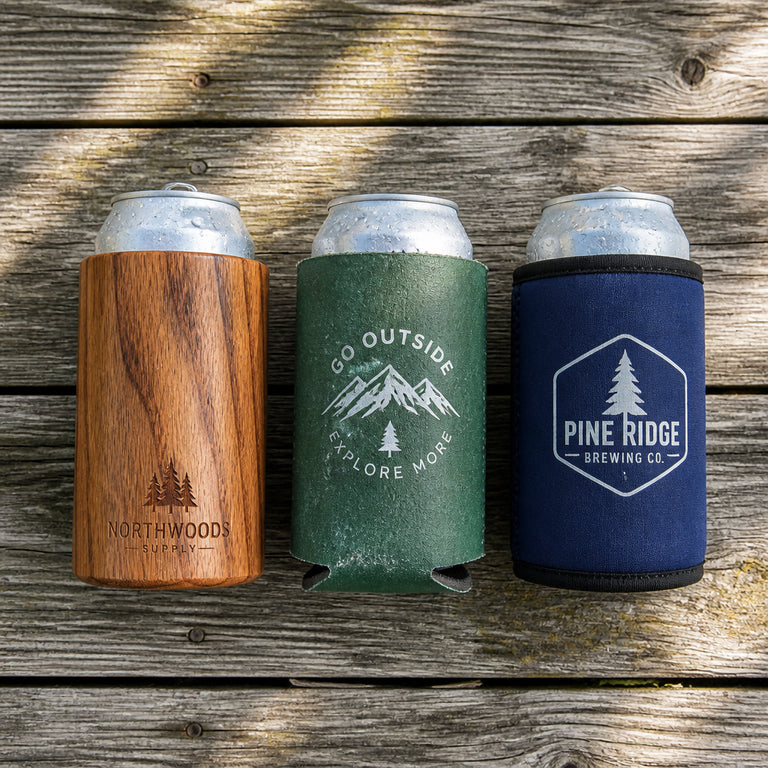
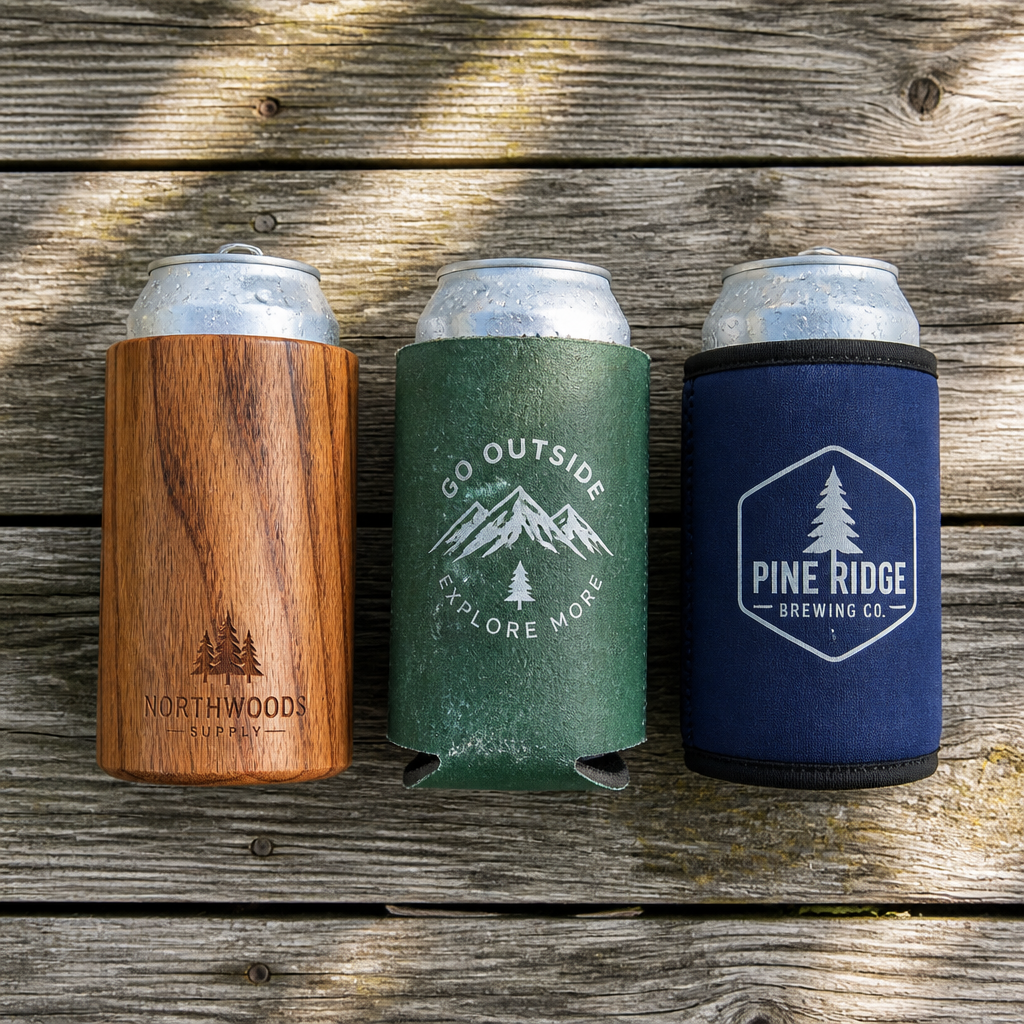
Every can cooler material makes a different set of tradeoffs, and most buyers pick based on price without understanding what they are actually getting. The three mainstream options are foam, neoprene, and stainless steel. A fourth option, hardwood, is less widely known but is increasingly the choice of outdoor enthusiasts who want something that looks and feels different from the usual promotional merchandise.
Foam is cheap, widely available, and performs modestly in mild conditions. It is not washable in any meaningful way, it picks up odors fast, and it is not recyclable. Neoprene is a clear upgrade: it is flexible, water-resistant, and provides better insulation through its cellular structure. Stainless steel offers the longest cold hold of any sleeve option, but it is heavier, more expensive, and overkill for a relaxed afternoon at a lakeside campsite. Hardwood sits in a different category entirely. It is a natural insulator, completely biodegradable, and carries an aesthetic that no manufactured synthetic material can replicate.
A cold drink is not just hydration at an outdoor event. It is part of ritual, identity, and how you show up in the space you care about most.
For outdoor enthusiasts in particular, the material story does not end at performance. What a product is made of, where it came from, and what happens to it at the end of its life are all part of the purchase decision. That shift in thinking is exactly why a product like the TreeSleeve, made from hardwood sourced from Vermont's Green Mountains, connects with people who also care about the places they hike, paddle, and camp in.
The Eco-Conscious Case for a Different Kind of Outdoor Can Insulator
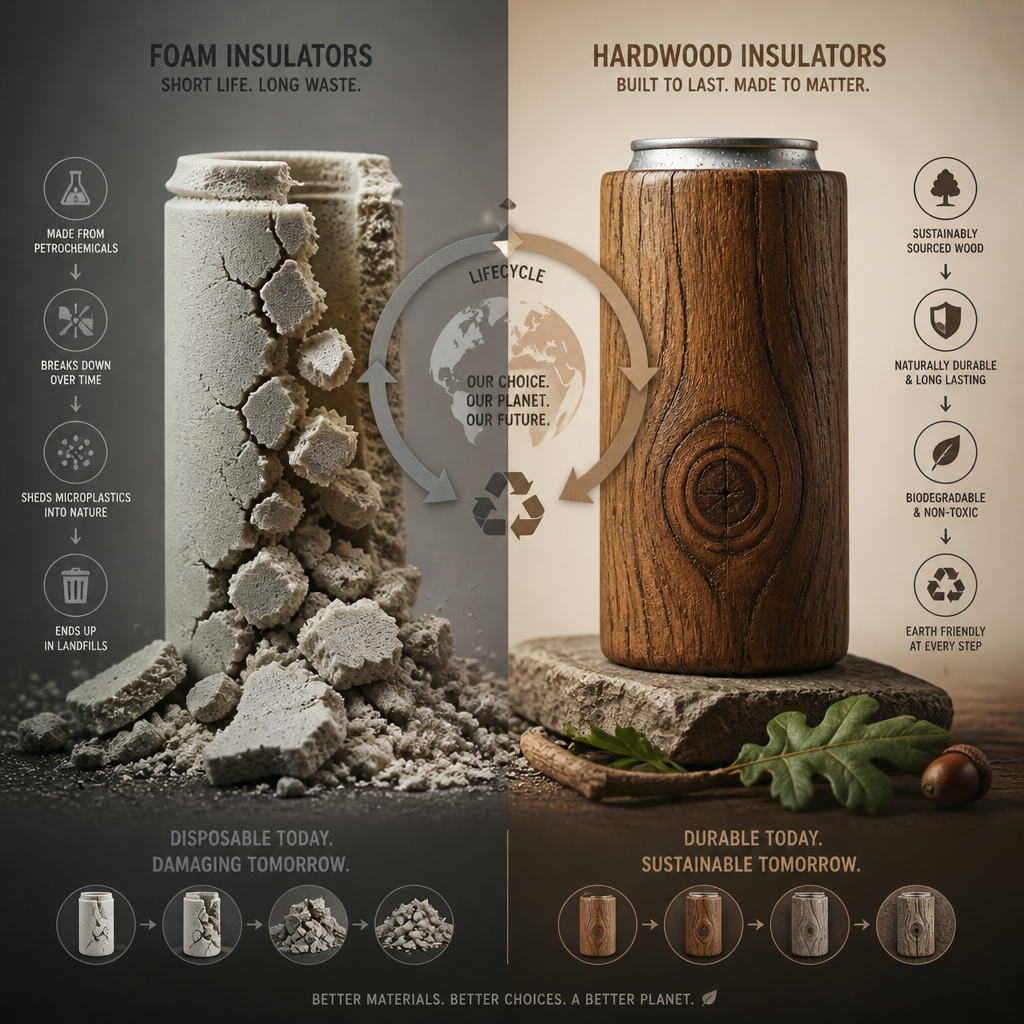
Foam insulators handed out at events and festivals rarely last a full season. When they fail, they go to landfill. They are not recyclable, they do not biodegrade on any meaningful timeline, and they add to the plastic and foam waste that ends up in parks, along trails, and at campgrounds. For people who spend real time outdoors, that is not a minor inconvenience. It is a contradiction.
The TreeSleeve from Better Wheel VT takes a direct approach to this problem. The wood is harvested from the company's own forest in Newfane, Vermont, or sourced from local arborists using storm-fallen or nuisance trees that would otherwise go to waste. The product itself is fully biodegradable. If a TreeSleeve reaches the end of its usable life, it returns to the earth without leaving a chemical trace. That is a genuinely different claim from anything that comes out of a neoprene or foam production line.
This matters not just as an ethical position but as a practical one. Outdoor enthusiasts who backpack, kayak, or spend time in wilderness areas understand that every item they bring in, they are responsible for. Choosing an outdoor can insulator made from responsibly sourced wood is a small but consistent expression of that responsibility. The full collection of TreeSleeve designs, including wildlife motifs and Vermont-themed options, was built with exactly that audience in mind.
Comparison: Foam vs. Neoprene vs. Hardwood Can Insulator
Not every material suits every outdoor situation. Here is a direct comparison of the three most relevant options for outdoor enthusiasts, based on what actually matters in the field.
| Feature | Foam Sleeve | Neoprene Sleeve | Hardwood Sleeve (TreeSleeve) |
|---|---|---|---|
| Cold retention | Modest, degrades quickly with heat | Good for moderate outdoor temps (up to ~35°C) | Up to 40 minutes in typical outdoor conditions |
| Durability | Compresses, deforms within one season | Good with stitched seams, fades over time | Years of use with basic maintenance |
| Environmental impact | Not recyclable, goes to landfill | Synthetic rubber, not biodegradable | Fully biodegradable, sustainably harvested wood |
| Grip in wet conditions | Slippery when wet | Good grip due to rubber-like texture | Natural wood texture provides reliable grip |
| Aesthetic and gift appeal | Minimal, generic appearance | Printable, but looks like merchandise | Handcrafted look, engraved designs, unique character |
| Weight and portability | Very light, compressible | Light, foldable | Slightly heavier, rigid, but packable |
| Customization options | Printed graphics only | Sublimation printing | Laser engraving, personalized text, wildlife designs |
The honest takeaway: foam is a throwaway product, and buying it once a season is a habit worth breaking. Neoprene performs respectably but is still a petroleum-based synthetic. Hardwood is the only option in this group that is genuinely sustainable and improves in character with age.
Fit, Grip, and Portability for Real Outdoor Conditions
An outdoor can insulator that looks great in a product photo but slips out of your hand on a wet dock is a problem. Fit and grip are non-negotiable for real outdoor use. A sleeve should hold the can securely without requiring constant adjustment. For standard 12-ounce cans, most quality sleeves are designed with this in mind. The TreeSleeve fits both 12- and 16-ounce cans, which covers the range of most craft beers and hard seltzers.
Portability for Hikers and Festival-Goers
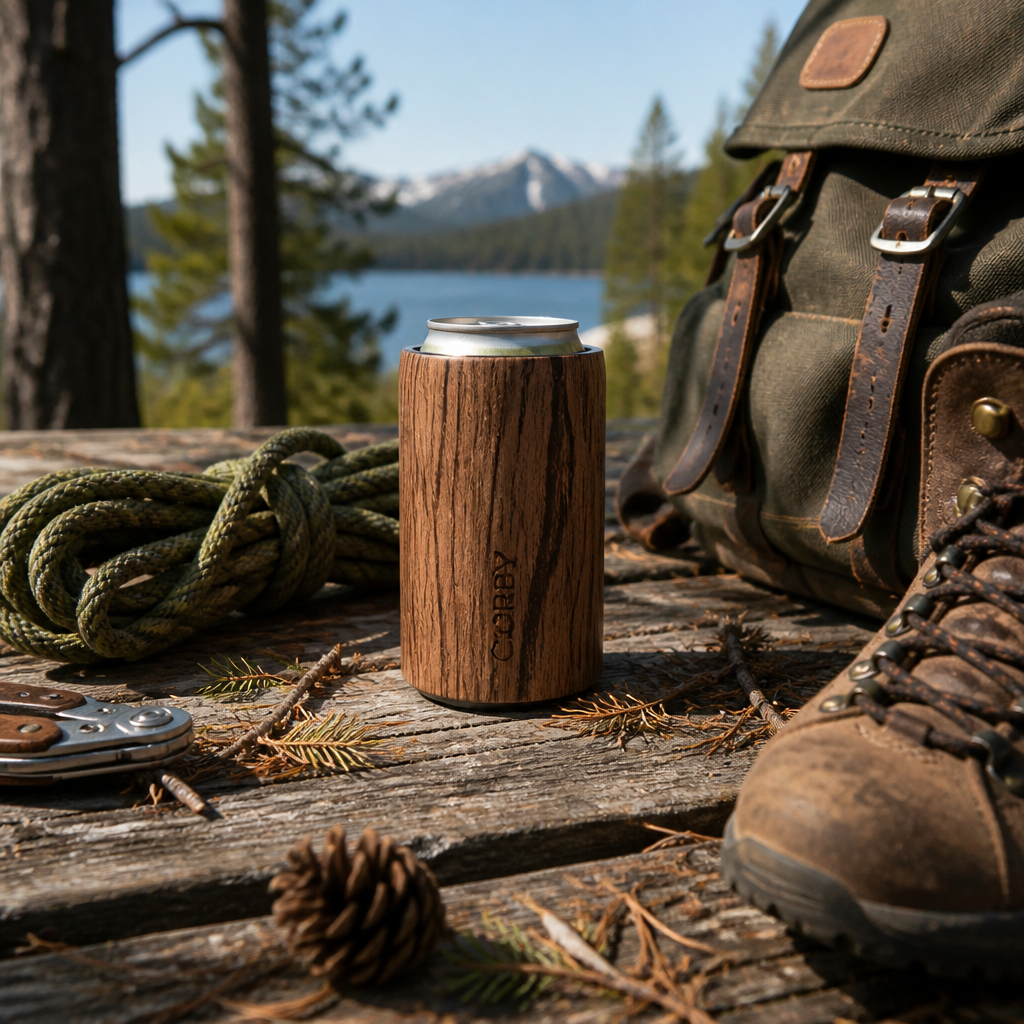
Rigid sleeves like hardwood require a bit more intentional packing than a compressible neoprene sleeve, but they weigh very little and fit easily in a side pocket or the top of a daypack. For festival-goers, a TreeSleeve slips into a hip bag without trouble. For hikers, it is the kind of item that earns its place because it does not fail, warp, or smell like sunscreen after three trips.
When Neoprene Makes More Sense
If you need to pack 20 sleeves for a group camping trip and you are not concerned about sustainability, bulk neoprene is pragmatic. It is foldable, cheap at volume, and widely available. But for the person buying one quality sleeve for themselves, or a gift that will actually be used and remembered, a wood sleeve is a better call in every dimension that matters past the first weekend.
For people who want a durable beer sleeve that also starts a conversation around the campfire, there is no foam or neoprene equivalent to a handcrafted hardwood TreeSleeve with an engraved mountain scene or a Vermont wildlife motif. The Better Wheel VT team designs specifically for that audience, and the accessories collection reflects the kind of outdoor taste that does not settle for a promotional giveaway.
Frequently Asked Questions
How long does a hardwood can sleeve actually keep a drink cold?
The TreeSleeve keeps a 12- or 16-ounce can cold for up to 40 minutes in typical outdoor conditions. That covers the realistic drinking window for most outdoor settings. If you need longer cold retention for extended outdoor sessions, pairing a hardwood sleeve with a pre-chilled can straight from a cooler extends that window noticeably.
Is a wood can cooler practical for hiking and camping?
Yes. A hardwood sleeve like the TreeSleeve is rigid but lightweight, packs easily into a daypack or hip bag, and does not compress or lose shape on the trail the way foam sleeves do. It handles the usual outdoor variables, including moisture, heat, and rough handling, better than most people expect from a natural material product.
What makes a can cooler eco-friendly enough for outdoor enthusiasts who care about the environment?
True eco-friendliness means more than a recycled logo printed on neoprene. A genuinely eco-friendly outdoor can insulator is made from a renewable, responsibly sourced material, produces no toxic manufacturing byproducts, and biodegrades at end of life. The TreeSleeve meets all three criteria: it is handcrafted from Vermont hardwood sourced from sustainably managed local forests, and it is fully biodegradable.
Can I get a custom design on a wood can sleeve for a group camping trip or outdoor event?
Yes. Better Wheel VT offers custom and personalized options on TreeSleeves, including name engravings, initials, dates, and design themes. For group gifts, outdoor events, or festivals, custom wood sleeves make a meaningfully different impression than a batch of printed neoprene koozies, and they are something recipients actually keep and use rather than toss.
How does a wood can insulator compare to neoprene in terms of grip when your hands are wet?
Natural wood grain texture provides reliable grip even with wet or sweaty hands. Smooth neoprene varies widely by brand and thickness. Thin neoprene and foam both become slippery when wet or oily from sunscreen. The natural surface of a hardwood sleeve handles real outdoor conditions, including lake water and camp cook hands, without the slippage issues common to synthetic alternatives.
What size cans does the TreeSleeve fit?
The TreeSleeve is designed to fit standard 12-ounce and 16-ounce cans, which covers most craft beers, hard seltzers, and standard lagers. A standard bottle can be placed inside a TreeSleeve as well, though the fit will be slightly looser given the difference in circumference between bottles and cans.
What kind of can cooler do you reach for on a trail, at a festival, or around a campfire? Share your setup or experience below, we genuinely want to know what works for you in the real outdoors.
References
- Can cooler buying guide: features, materials, and outdoor performance explained
- Can cooler sleeve guide: use cases, insulation types, and what to buy
- Neoprene vs. foam koozies: material performance, durability, and design comparison
- Koozie materials FAQ: neoprene, polyurethane, stainless steel, and more
- Can coolers buying guide: types, features, and how to choose the right sleeve
Share:
Zero Waste Camping Gear: Build a Leave No Trace Kit
Engraved Wood Gifts: Why Personalization Matters