Most people buying a custom can insulator for an event make the same mistake: they focus entirely on price and forget about material quality, print durability, and whether the product actually reflects the occasion. The result is a cheap foam sleeve that lands in the trash before the event ends. If you are planning a wedding, corporate outing, festival, or outdoor adventure gathering, the insulator you choose becomes a physical memory of that day. Getting it right matters more than most planners realize.
Table of Contents
- Quick Takeaways
- Why Material Matters More Than You Think
- Matching the Insulator to Your Event Type
- Design Choices That Actually Hold Up
- Quantity, Ordering, and Lead Time
- Comparing Insulator Types for Events
- Eco-Friendly Options and Why They Outperform
- Frequently Asked Questions
- References
Quick Takeaways
| Key Insight | Explanation |
|---|---|
| Material determines insulation performance | Hardwood and neoprene retain cold far longer than standard foam. For outdoor events in summer heat, this is not optional. |
| Personalization depth drives perceived value | A name, date, or event-specific design transforms a functional item into a keepsake. Generic logos do not accomplish this. |
| Eco-friendly materials resonate with outdoor audiences | Sustainably sourced hardwood products like TreeSleeve from Better Wheel VT align directly with what outdoor enthusiasts and eco-conscious gift shoppers value. |
| Order lead time is longer than most expect | Custom production, especially for engraved or biodegradable materials, typically requires 2 to 4 weeks minimum. Budget accordingly. |
| Design themes should match the event setting | Wildlife motifs and outdoor themes work beautifully for nature-oriented events. Corporate logos work for trade shows. Mixing these signals confuses guests. |
| Bulk pricing has a clear break-even point | Most suppliers offer meaningful discounts at 50 units or more. Below 25 units, per-piece costs spike dramatically and alternative sourcing is worth exploring. |
| Post-event usability extends brand impressions | According to PPAI research, promotional products used repeatedly generate far more impressions per dollar than single-use alternatives. Durable insulators win here. |
Why Material Matters More Than You Think
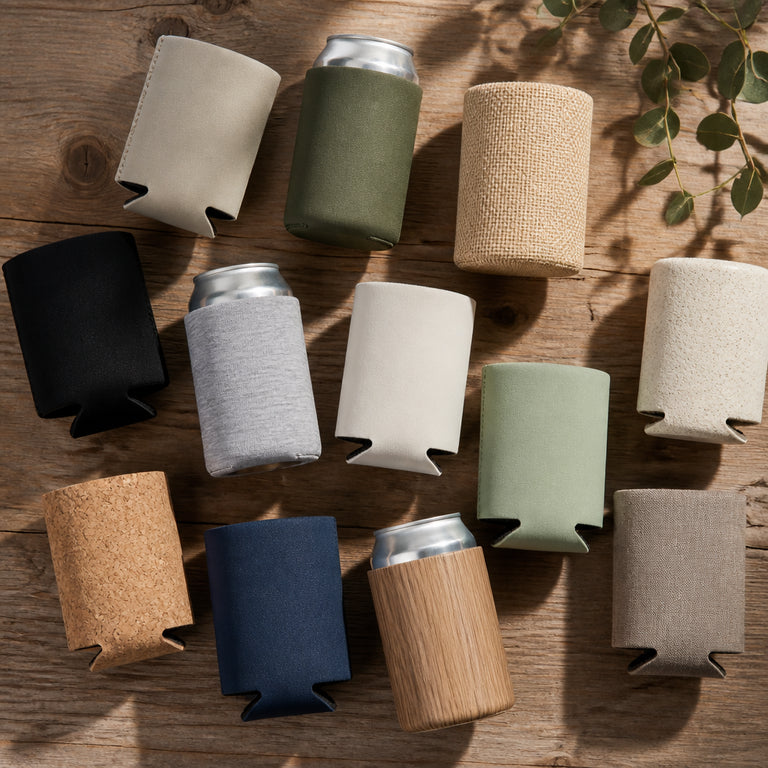
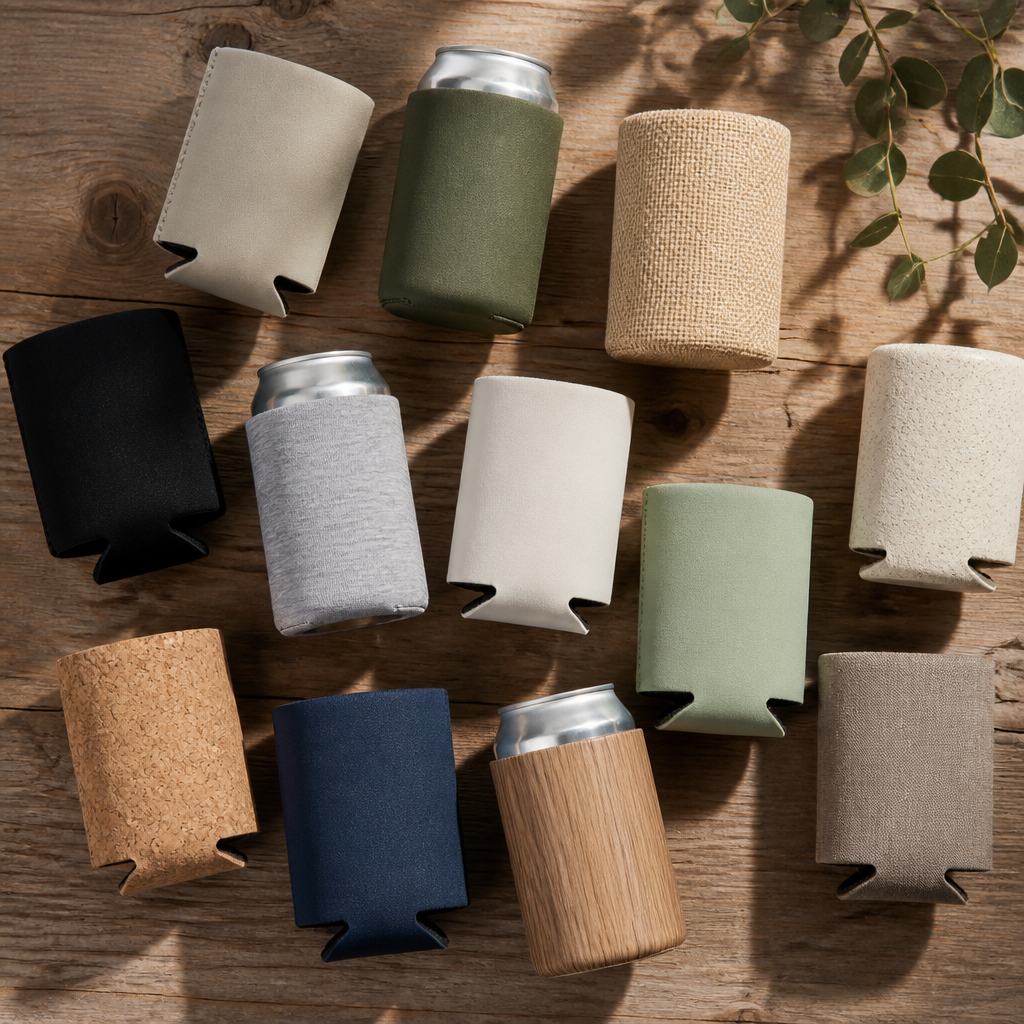
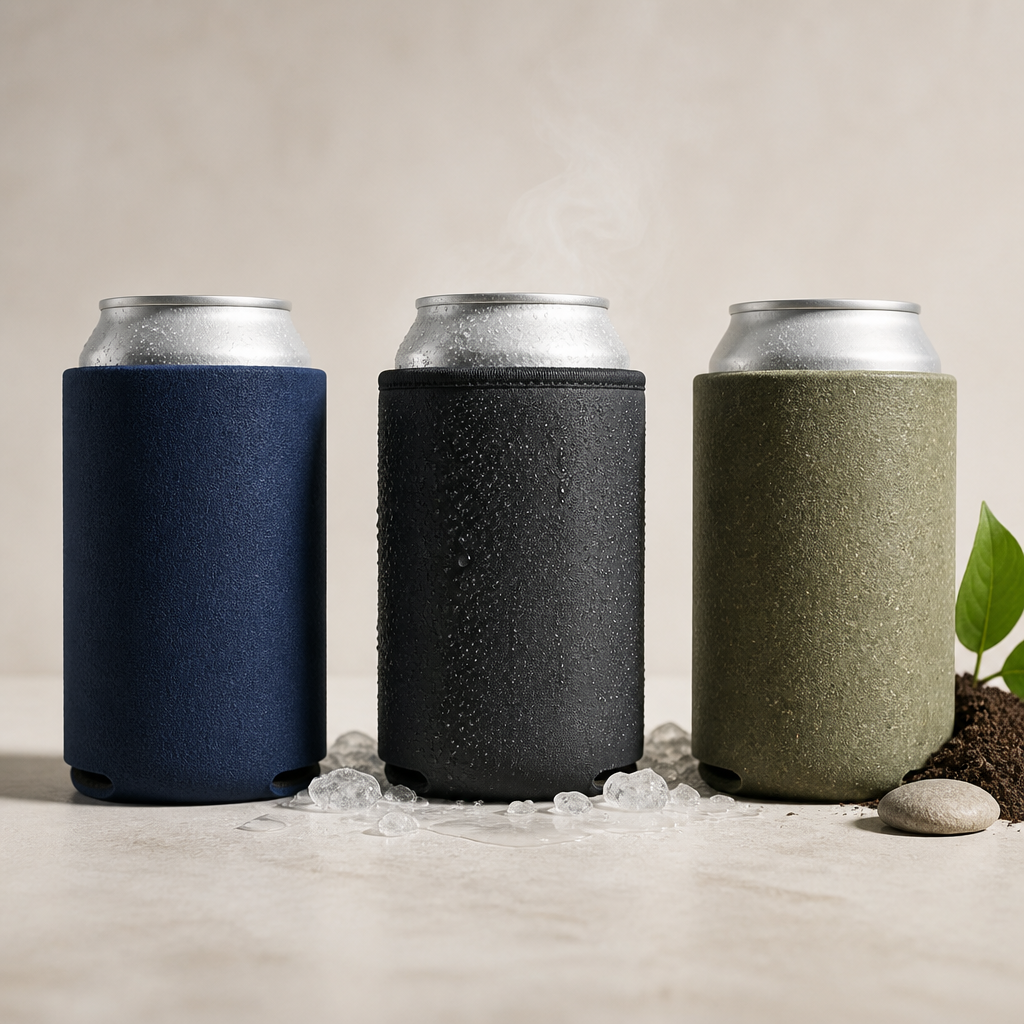
The insulator material is the single biggest factor separating a gift people keep from one they discard by Sunday morning. In practice, foam neoprene is the baseline, but it is not the ceiling. For events centered on the outdoors, including trail races, camping weekends, lake gatherings, and Vermont-style fall festivals, the material sends a message about the event itself.
A common mistake is treating all insulators as functionally equivalent and buying based on price alone. They are not equivalent. Hardwood can insulators, like the TreeSleeve from Better Wheel VT, provide genuine thermal insulation while being fully biodegradable and crafted from sustainably sourced Vermont forest hardwood. That combination is not available from foam.
The data consistently shows that recipients keep promotional products longer when the material feels premium and purposeful. According to the Advertising Specialty Institute, 85 percent of people who receive a promotional product remember the advertiser's name. The question is whether your insulator is one they keep or one they toss. Material quality is the deciding factor.
Pro tip: If your event has an environmental theme or draws an outdoor-focused crowd, choosing a biodegradable hardwood insulator over standard foam is not just an aesthetic choice. It is a values statement your audience will notice and respect.
Why foam falls short for outdoor events
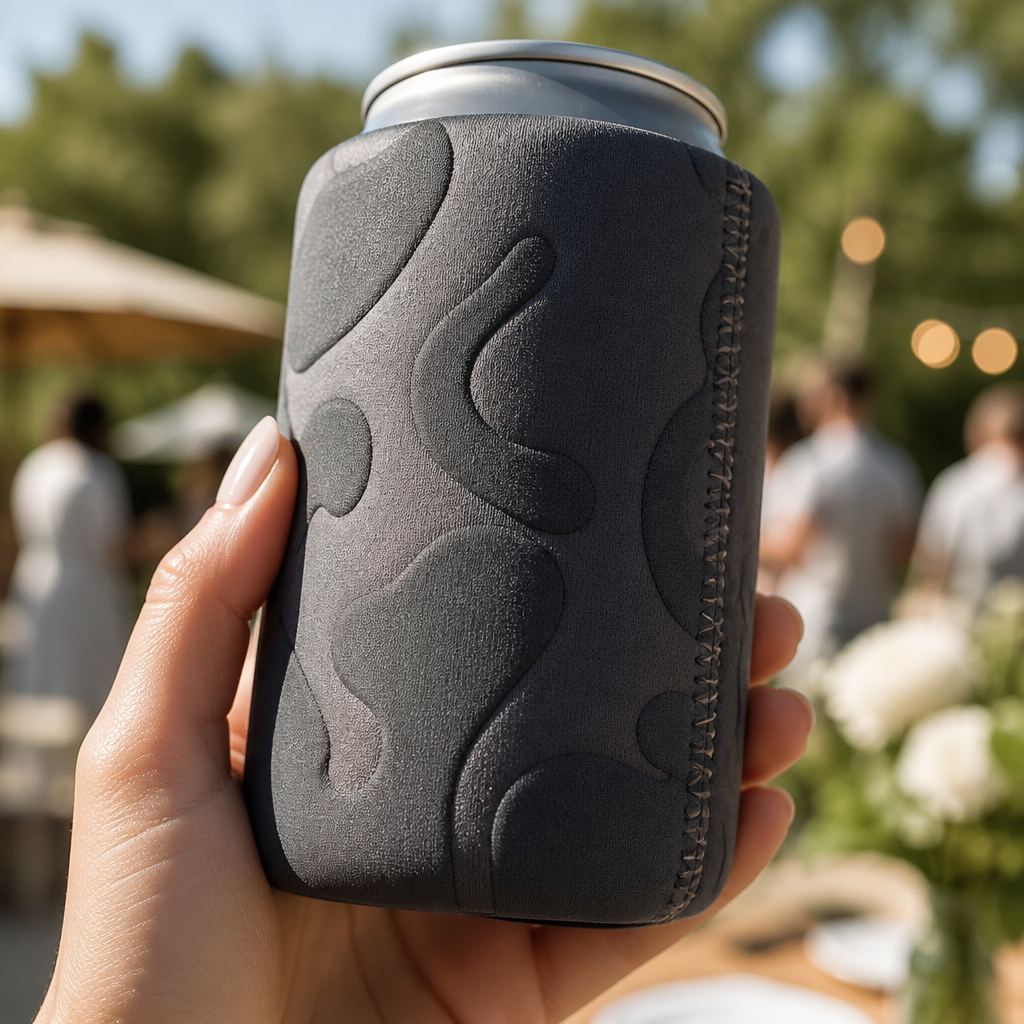
Standard foam insulators compress, absorb moisture, and degrade quickly under sun and outdoor conditions. They also carry no story. A hardwood sleeve engraved with a mountain silhouette or a wildlife motif carries context that foam simply cannot replicate.
For eco-conscious gift shoppers, the environmental footprint of the product is not background noise. It is a primary consideration. Giving a single-use plastic-wrapped foam cooler at a sustainability retreat or a nature-themed gathering is a brand contradiction that savvy attendees will catch immediately.
Matching the Insulator to Your Event Type
Not every event calls for the same approach. A wedding rehearsal dinner has different expectations than a ski resort gathering or a company picnic in the Green Mountains. Getting the match right means thinking about who your guests are, what they value, and what they will do with the product after the event ends.
For outdoor adventure events, including trail runs, fishing tournaments, kayak meetups, and camping weekends, the insulator should lean into nature-forward design. Wildlife motifs, forest textures, topographic engravings, and earth-tone palettes all communicate belonging to the outdoor community. This is exactly where TreeSleeve excels, with designs built around Vermont wildlife and natural landscapes.
Corporate and brand events
Corporate events need to balance brand visibility with guest usability. A purely logo-forward insulator works for trade shows where brand recall is the goal. For employee appreciation events or client outings, a more thoughtful design with subtle branding and high material quality signals that the company values quality over cheap impressions.
Festival and social events
Festival crowds and social gatherings respond to personality and humor in design. Custom text, inside jokes, or location-specific imagery all perform well. The key is ensuring the personalized can cooler still functions well in variable outdoor temperatures, because at a summer festival, a warm beer is a failing gift no matter how clever the design is.
"The best promotional product is one that works so well people forget it started as a gift. They just use it." -- Advertising Specialty Institute Industry Outlook
Design Choices That Actually Hold Up
Design is where most custom can insulator orders either succeed or become forgettable. The instinct is to put everything on the sleeve: the event name, the date, the organizer's name, a logo, a slogan. The result is visual noise that makes the piece feel cheap even when the base material is premium.
In practice, the most effective designs use negative space deliberately. A single wildlife engraving or a clean mountain ridge silhouette communicates more than a crowded layout. For hardwood products, laser engraving brings out the grain of the wood and adds tactile depth that printed foam cannot match.
Typography and text selection
If you are including text, limit it to one or two lines maximum. An event name and a year. A name and a location. Anything more and the design starts to look like a certificate rather than a keepsake. Serif fonts work better on wood because they echo the natural character of the material. Clean sans-serif fonts work well for modern or corporate contexts.
Theme alignment with your audience
Better Wheel VT offers designs across outdoor themes, wildlife motifs, and fully custom options. For an audience of outdoor enthusiasts, a bear, moose, or pine forest design will outperform a generic geometric pattern every time. The design should reflect where the event is happening and who is attending, not just the brand of the organizing company.
Pro tip: Ask your supplier for a proof on the actual material before approving a full production run. Designs that look sharp on a screen often lose detail or shift color when transferred to wood or dark neoprene. This step prevents expensive regrets on large orders.
Quantity, Ordering, and Lead Time
One of the most underestimated parts of ordering event gifts is the timeline. Custom production for high-quality insulators, especially engraved hardwood products, is not an overnight process. Most reputable suppliers need a minimum of 2 to 3 weeks for production alone, not counting shipping.
For events with firm dates, like weddings or scheduled corporate retreats, planning your insulator order at least 6 weeks out is the right call. This gives you buffer for design revisions, production, and any shipping delays. Rushing this process typically means paying premium expedite fees or accepting a lower-quality product.
Determining the right quantity
Over-ordering is almost always better than under-ordering for event gifts. Extras become team gifts, door prizes, or inventory for future events. Under-ordering means guests go home without a gift, which defeats the entire purpose of the investment. A standard rule of thumb: order 10 to 15 percent above your confirmed guest count.
Bulk pricing becomes meaningful at around 50 units for most suppliers. Below that threshold, per-piece costs are significantly higher. If your event has fewer than 25 attendees, consider whether a higher-unit-cost premium product, like a handcrafted wood insulator, actually makes more sense because the quality-to-price ratio justifies the spend per person.
Comparing Insulator Types for Events
Choosing the right format starts with understanding how the main options differ in real-world use. The table below compares the three most common insulator types across the dimensions that matter most for event planners and gift shoppers.
| Insulator Type | Best For | Key Tradeoff |
|---|---|---|
| Hardwood (e.g., TreeSleeve by Better Wheel VT) | Outdoor events, eco-conscious crowds, premium gifts, nature-themed gatherings | Higher per-unit cost and longer lead time, but exceptional keepsake value and zero environmental guilt |
| Neoprene or Collapsible Foam | High-volume corporate giveaways, trade shows, budget-driven events | Low cost and fast turnaround, but poor durability and minimal perceived value after the event |
| Stainless Steel or Hard Shell | Premium corporate gifts, long-term brand visibility campaigns | Excellent durability and insulation, but heavier, bulkier, and significantly more expensive per unit |
Eco-Friendly Options and Why They Outperform
The shift toward sustainable event gifts is not a trend. It is a permanent recalibration driven by who is now attending outdoor events and what they expect from brands that want their attention. According to Nielsen, 73 percent of global consumers say they would definitely or probably change their consumption habits to reduce environmental impact. For outdoor enthusiasts specifically, that number skews even higher.
A fully biodegradable can insulator made from sustainably sourced hardwood removes the cognitive dissonance that eco-conscious guests feel when they receive a foam sleeve at a nature-focused event. It aligns the gift with the values of the gathering, which makes the product feel intentional rather than incidental.
Better Wheel VT's TreeSleeve is designed precisely for this alignment. The product is crafted from Vermont hardwoods, features designs rooted in wildlife and outdoor themes, and decomposes without leaving microplastics behind. That is not a marketing claim, it is a material reality that separates it from competitors like cooziecooler.com or koozieking.com that primarily offer neoprene and foam formats without the biodegradable profile.
What eco-friendly actually means in practice
Not every product labeled eco-friendly is genuinely sustainable. Watch for vague claims like "made with recycled materials" without specifics, or "environmentally friendly" applied to products that still use plastic coatings or non-biodegradable adhesives. Genuinely sustainable insulators use natural materials throughout, not just on the surface, and decompose completely at end of life.
Hardwood insulators sourced from responsibly managed forests meet this standard. They are also unique objects, because no two pieces of wood grain are identical. That natural variation makes each insulator subtly one-of-a-kind, which adds to its value as a personalized event gift in a way that mass-produced foam products simply cannot replicate.
Frequently Asked Questions
What is the minimum order quantity for a custom can insulator?
Minimum order quantities vary by supplier and material. For neoprene and foam insulators, many suppliers start at 24 to 50 units. For premium hardwood insulators like the TreeSleeve from Better Wheel VT, smaller custom runs may be available, which makes them practical for intimate gatherings like weddings or small corporate retreats where you want quality over volume. Always confirm minimums before finalizing your event budget.
How far in advance should I order personalized can coolers for an event?
Order at least 6 weeks before your event date. This accounts for design approval, production time (which is typically 2 to 3 weeks for engraved or premium materials), and shipping. If your event falls during a peak season like late spring, summer, or December, add another week to that estimate. Rushing custom production almost always means compromise on quality or a steep rush fee.
Can hardwood can insulators really keep drinks cold?
Yes. Dense hardwood has natural insulating properties that slow heat transfer effectively. While hardwood insulators are not vacuum-insulated like stainless steel, they perform comparably to neoprene for standard outdoor use and outperform thin foam sleeves significantly. For a typical summer event where cans are consumed within 30 to 45 minutes of opening, hardwood provides more than adequate insulation.
What design options work best for outdoor and nature-themed events?
Wildlife motifs perform consistently well for outdoor audiences. Bears, moose, deer, eagles, and forest silhouettes all resonate with people who spend time in nature. Topographic map engravings work well for hiking or trail events. For Vermont-specific gatherings, maple leaf designs and mountain ridge profiles carry regional identity. The key is choosing imagery that reflects the actual setting and community of your event, not just generic outdoor clichés.
Is there a meaningful difference between a custom can insulator and a standard one for event gifts?
The difference is significant. A standard off-the-shelf insulator says nothing specific about your event or your guests. A custom insulator with an event name, date, personalized design, or location-specific imagery creates a direct connection to the memory of that day. Research from the Promotional Products Association International shows that personalized promotional items generate 2.5 times more positive impressions than generic ones. For event gifts, personalization is the entire point.
Are biodegradable can insulators more expensive than foam options?
Per unit, yes, premium biodegradable hardwood insulators cost more than standard foam. However, the comparison should account for what recipients do with each product. Foam insulators are frequently discarded after an event. Hardwood insulators are kept, displayed, and used repeatedly. When you factor in ongoing brand impressions, the cost-per-impression of a durable, kept product is often lower than the cost-per-impression of a cheaper item that goes straight into the recycling bin.
We would love to hear about your experience selecting custom can insulators for events. What factors mattered most to you, and what would you do differently?
References
- Statista: Consumer attitudes toward sustainable products and promotional merchandise spending data
- Forbes: Business insights on branded merchandise, event marketing ROI, and sustainable gifting trends
- HubSpot Marketing Statistics: Data on promotional product effectiveness and audience engagement at events
- PPAI (Promotional Products Association International): Industry research on promotional product recall, retention rates, and personalized event gifts
- U.S. Environmental Protection Agency: Guidelines and data on biodegradable materials, sustainable sourcing, and environmental impact of consumer products
Share:
Best Eco-Friendly Gifts for Campers and Hikers 2024
Wildlife Can Cooler Designs: Vermont Fauna & TreeSleeve™