
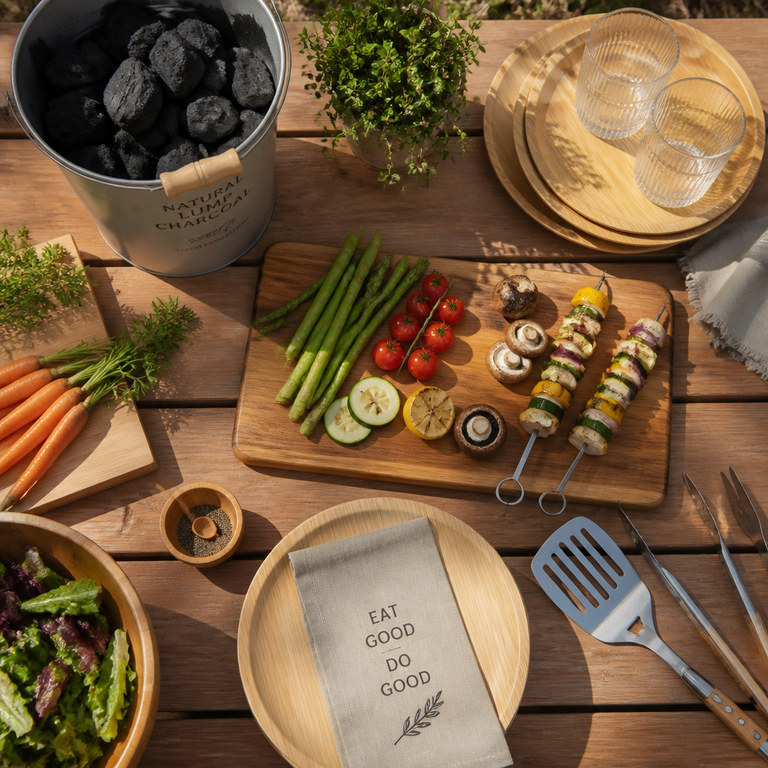
August is peak backyard season, and if you care about the outdoors the other 11 months of the year, it's worth applying that same ethic to the party you're throwing in it. A traditional backyard BBQ generates a surprising amount of waste, from single-use plastic plates and red Solo cups to chemically treated charcoal briquettes and food packaging that never makes it past the trash can. Hosting an eco-friendly BBQ does not mean sacrificing the fun. It means being deliberate about a handful of decisions that add up to a cleaner cookout and a better experience for everyone at the table.
Table of Contents
- Quick Takeaways
- Choose a Greener Grill Fuel
- Ditch Disposable Tableware for Good
- Source Local and Seasonal Food
- Manage Food Waste Before It Starts
- Set Up a Sustainable Drinks Station
- Green Decor and Ambiance
- Grilling Fuel Comparison
- Frequently Asked Questions
- References
Quick Takeaways
| Key Insight | Explanation |
|---|---|
| Fuel choice is your biggest lever | Switching from conventional charcoal briquettes to natural lump charcoal or propane meaningfully cuts emissions at the grill. |
| Reusable beats compostable | If you can wash dishes, do it. Reusable plates, glasses, and cutlery are always lower-impact than any single-use alternative, compostable or otherwise. |
| Plan portions to minimize leftovers | Over-catering is the single biggest source of food waste at backyard parties. Count your guests, plan realistically, and have takeaway containers ready. |
| Local, seasonal ingredients cut food miles | Sourcing from a farmers' market or nearby farm reduces packaging waste and transportation emissions compared to imported produce. |
| Make recycling and composting obvious | Labeled bins placed next to the food table, not hidden in a corner, are the difference between a zero-waste setup and a landfill event. |
| Eco-conscious party gear sets the tone | Swapping plastic cup holders and foam koozies for biodegradable alternatives like hardwood can insulators sends a clear signal to guests about your values. |
| Go plant-forward without going full vegetarian | Grilled corn, mushroom skewers, and veggie burgers alongside the meat gives guests options and noticeably reduces the overall footprint of the spread. |
Every item on that list is achievable without renting equipment, hiring anyone, or spending significantly more money. The most impactful choices, fuel and tableware, are decisions you make before anyone arrives. The rest is about setting up your backyard so that doing the right thing is also the easiest thing for your guests.
Choose a Greener Grill Fuel
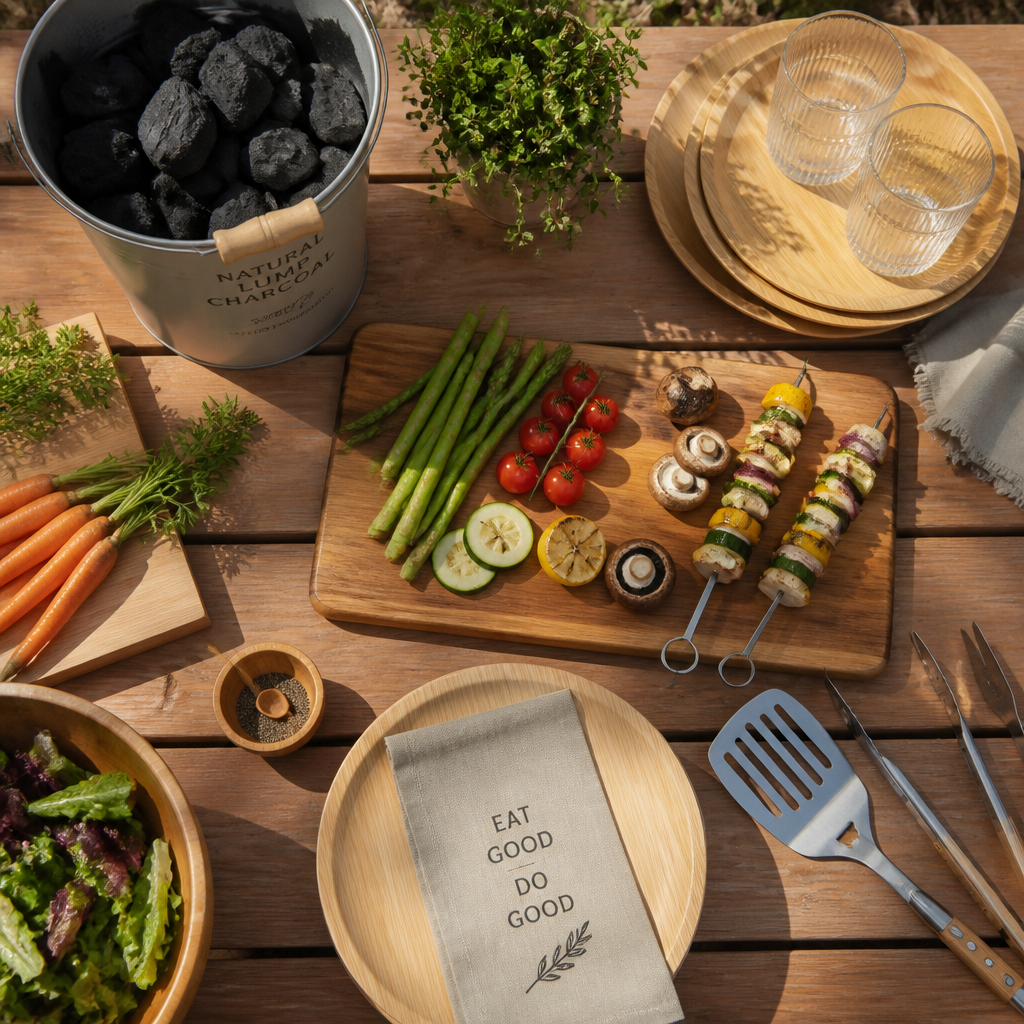
The fuel you choose is the single highest-impact decision in your entire BBQ setup. Conventional charcoal briquettes are the worst option, not because charcoal is inherently bad, but because standard briquettes often contain binders, additives, and coal dust that release additional pollutants when burned. The production process is also notoriously inefficient, with a large portion of the heating value of harvested wood lost during kiln conversion before the charcoal ever reaches your bag.
Natural Lump Charcoal and Chimney Starters
Natural lump charcoal, made from sustainably harvested hardwood without additives, burns hotter and cleaner than standard briquettes. Pair it with a chimney starter instead of lighter fluid. Lighter fluid contains volatile organic compounds that off-gas into the air and into your food. A chimney starter uses nothing but newspaper and heat to get coals ready in roughly the same time.
Hardwood lump charcoal sourced from sustainably managed forests, much like the forests that supply the timber for the TreeSleeve hardwood can insulators made right here in Vermont, represents a renewable choice when handled responsibly. Look for products certified by organizations that track sustainable forestry practices.
Propane and Gas Grills
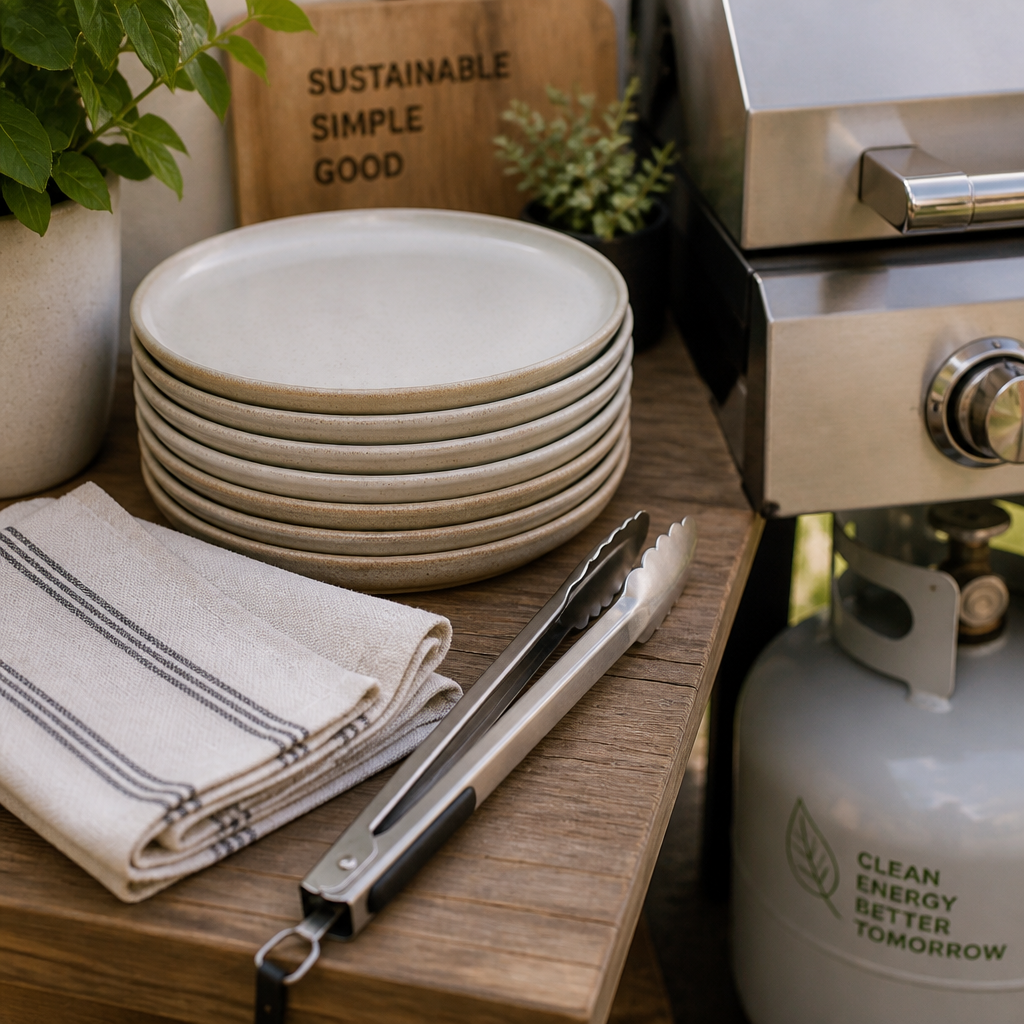
If you already own a gas grill, you are ahead of the curve for most cookouts. Propane burns significantly cleaner than conventional charcoal, producing considerably less carbon per cooking session. Gas grills also retain about 90% of their fuel's heating value compared to the energy-heavy conversion process charcoal goes through. The tradeoff is that propane is still a fossil fuel, so it is not a perfect solution, just a better one than standard briquettes for frequent backyard use.
Pro tip: Use a grill lid consistently. Keeping the lid closed retains heat, shortens cooking time, and reduces total fuel use without any extra effort.
Ditch Disposable Tableware for Good
The default at most backyard BBQs is a stack of plastic plates, a sleeve of plastic cups, and a bag of plastic forks. That stack of disposables represents real waste. Estimates suggest tens of billions of plastic kitchen utensils are discarded in the United States every year. The fix is not complicated: use your actual dishes.
Reusable Plates and Cutlery
If you can run a dishwasher afterward, use real plates. This is the most straightforward upgrade you can make, and it requires zero specialized purchasing. For larger gatherings where washing everything is genuinely impractical, compostable tableware made from palm leaf, bagasse (the fiber left over from sugarcane processing), or bamboo is a credible second choice. These break down in a composting environment, unlike standard paper plates coated in plastic film, which do not.
Wooden birchwood utensils are another compostable alternative that are food-safe, sturdy enough for BBQ food, and compatible with a home compost bin after the party. Just make sure your compost stream can actually accept them.
Drinks: The Foam Koozie Problem
The plastic red Solo cup and the foam koozie are the unofficial mascots of the American backyard BBQ. Both are throwaway items with essentially no sustainable end-of-life. A reusable tumbler handles the cup problem. For the koozie problem, swapping a foam or neoprene can insulator for something like the TreeSleeve hardwood can insulator from Better Wheel VT solves it in a way that also becomes a conversation piece. Crafted from sustainably sourced Vermont hardwood, it is fully biodegradable at the end of its long life, and it does the actual job of keeping a cold can cold while you are outside in August heat.
This is exactly the kind of detail that separates a genuinely eco-conscious gathering from one that just looks the part. Your guests notice, and it gives you a natural opportunity to talk about why these choices matter. You can explore the full range of TreeSleeve designs, including outdoor themes and wildlife motifs, at Better Wheel VT.
The most effective sustainable hosting choices are the ones guests do not have to think about. When the eco-friendly option is also the most convenient and attractive option on the table, people use it without being asked.
Source Local and Seasonal Food
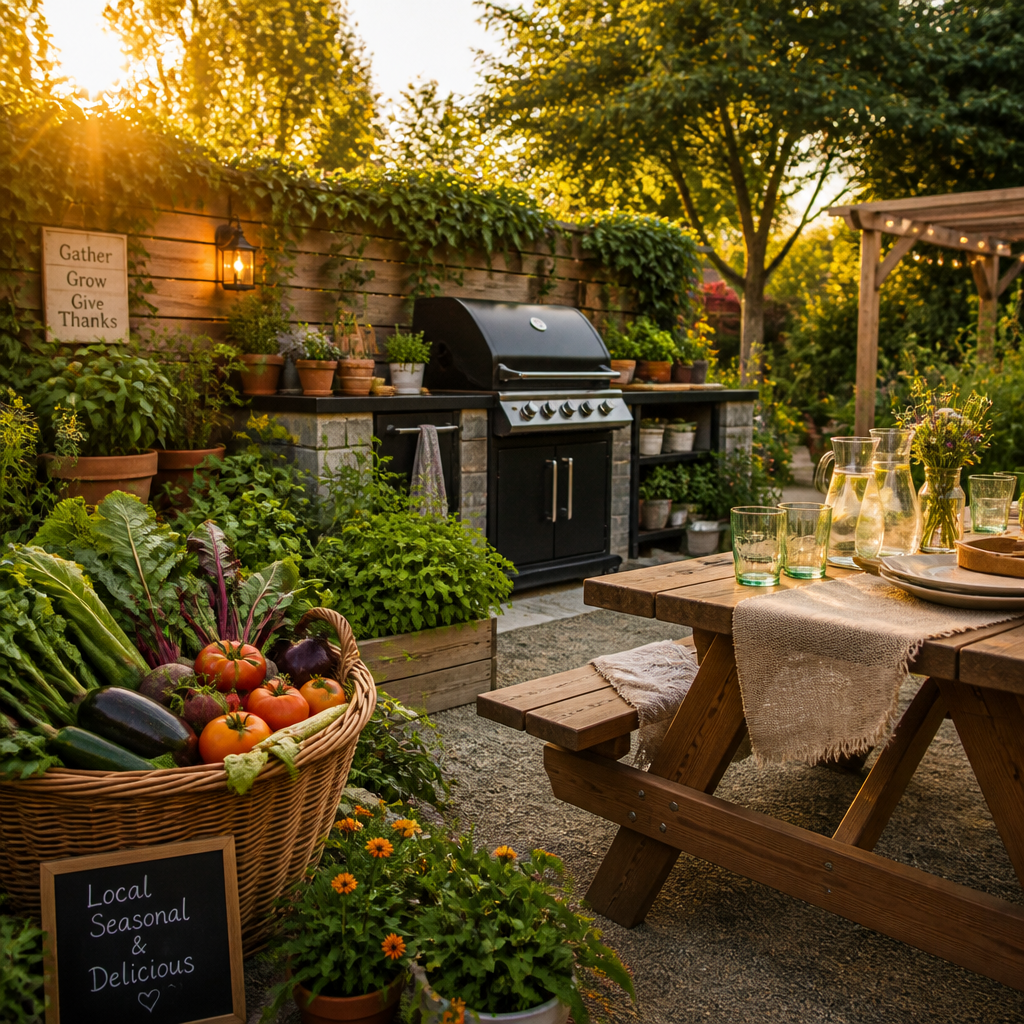
August is an embarrassment of riches for seasonal produce in most of the country, and especially in New England. Corn, tomatoes, zucchini, peppers, peaches, and fresh herbs are all at their peak and are available at farmers' markets and farm stands with almost no packaging. Sourcing locally reduces transportation emissions, eliminates much of the plastic packaging that comes with supermarket produce, and the food genuinely tastes better.
Meat Choices Matter Too
If your BBQ includes meat, the sourcing decision matters as much as it does for produce. Look for locally raised, pasture-based options from farms you can name. Buying from a regional butcher rather than a supermarket typically means less packaging, a shorter supply chain, and better traceability. A practical alternative worth adding to the grill: plant-forward options like grilled portobello mushrooms, corn on the cob, vegetable skewers, and stuffed peppers satisfy a wider range of guests while meaningfully reducing the overall environmental footprint of the meal without requiring anyone to skip the burgers entirely.
Pro tip: Build your menu around two or three dishes you can prepare well rather than eight dishes you will half-use. A focused menu leads to less over-buying, less prep waste, and a better meal.
Manage Food Waste Before It Starts
Food and food packaging make up a significant portion of the waste generated at American gatherings. The practical way to manage this is to address it at the planning stage, not the cleanup stage.
Portion Planning
A common mistake is treating a BBQ like a buffet and cooking far more than you need as a buffer against running out. This is generous but wasteful. Count your guests, estimate realistic portions based on actual food, and cook to that number. If there are leftovers, have a plan for them before the party starts: biodegradable takeaway containers or simply asking guests to bring their own containers removes the friction of sharing leftovers at the end of the night.
Composting Setup
Set up a dedicated compost bin for food scraps during both prep and cleanup. Vegetable trimmings, corn husks, fruit peels, and food scraps from the table should go into compost, not the trash. If you do not have a backyard compost setup, many municipalities run community composting programs. The other key move is labeling your bins clearly. Recycling contamination happens when people are unsure where things go. If the correct bin is labeled, visible, and placed next to the food, most guests will use it correctly.
Set Up a Sustainable Drinks Station
A sustainable backyard party drinks setup is simpler than most people expect. The goal is to eliminate single-use packaging wherever possible. Large beverage dispensers or coolers filled with water, lemonade, or iced tea eliminate the need for individually bottled drinks entirely. For beer and canned drinks, stock the cooler with regional craft options when possible. Supporting a local brewery means supporting a shorter supply chain, and August is a great time to feature seasonal releases.
The insulation question comes up quickly at an August outdoor party. Beer gets warm in the summer heat, and the instinct is to reach for foam or neoprene. A hardwood can insulator like the TreeSleeve is a genuine functional upgrade that also doubles as a gift guests take home, which means the sustainability story extends beyond your backyard. It is one of those rare items that works harder as a keepsake than as a throwaway.
Skip individually wrapped ice bags when you can. Buy ice in bulk from a local source, or freeze water in reusable containers in the days before the party. Small preparation steps eliminate a surprising amount of packaging waste before the party even begins.
Green Decor and Ambiance
Decorations are an area where eco-conscious hosting often falls apart. Plastic banners, balloons, synthetic streamers, and single-use tablecloths are all short-lived items with a long afterlife in landfill. The better approach is to use what you already have and lean on natural materials.
Mason jars, cloth napkins, potted herbs as centerpieces, and items borrowed rather than purchased all serve the same decorative purpose without the waste footprint. If you are entertaining outdoors in Vermont or elsewhere in New England, the natural setting does most of the aesthetic heavy lifting. String lights on reusable cord, wooden serving boards, and natural fiber tablecloths are all items that survive many BBQ seasons.
For guests who are celebrating something specific, a handcrafted item like a TreeSleeve with a wildlife or outdoor theme makes a better party favor than a plastic branded trinket. It is something people keep, use, and remember. That is the standard worth applying to every choice you make for a green summer entertaining setup.
Grilling Fuel Comparison
Choosing the right fuel for your grill is the foundational decision for any eco-friendly BBQ setup. Here is a direct comparison of the three most common options:
| Fuel Type | Environmental Profile | Best For |
|---|---|---|
| Conventional Charcoal Briquettes | Highest emissions per session; often contains additives and coal dust; inefficient production process; not recommended for eco-conscious BBQs | Avoid where possible; if used, pair with a chimney starter and skip lighter fluid |
| Natural Lump Charcoal (sustainably sourced hardwood) | Lower emissions than briquettes; no additives; renewable when sourced from certified sustainable forests; produces less ash | Hosts who want smoky flavor and are willing to source carefully; ideal paired with a chimney starter |
| Propane / Natural Gas | Burns cleaner than charcoal with a lower carbon footprint per session; high fuel efficiency at roughly 90% heating value retained; still fossil fuel-based | Hosts who grill frequently and prioritize convenience alongside lower emissions; best option for most standard backyard setups |
Electric grills powered by renewable energy are the cleanest option in theory, but they remain less practical for most backyard setups and lack the flavor profile most BBQ guests expect. For the majority of August cookouts, the choice comes down to natural lump charcoal or a well-maintained gas grill.
Frequently Asked Questions
Is it really worth switching from charcoal briquettes to natural lump charcoal?
Yes. Conventional charcoal briquettes often contain binders, fillers, and additives that produce extra pollutants during combustion. Natural hardwood lump charcoal burns hotter and cleaner, produces less ash, and when sourced from sustainably managed forests, comes from a renewable supply chain. The flavor difference is also noticeable, and not in favor of the briquettes.
What is the best compostable tableware for a backyard BBQ?
Plates made from bagasse (sugarcane pulp) or palm leaf are among the sturdiest and most reliably compostable options. They hold up to grilled food and sauces without going soggy. Birchwood utensils are a good pairing. Avoid anything labeled "compostable" that is actually plastic-lined paper, since those require industrial composting facilities to break down and are not suitable for home bins.
How do I reduce food waste at a party where I do not know exactly who will show up?
Build in a takeaway plan rather than over-cooking. Have biodegradable containers or ask guests in advance to bring their own. A potluck format, where guests each bring one dish, naturally distributes portion responsibility and tends to generate less surplus than a single host cooking everything. It also takes pressure off the host.
Are foam or neoprene can insulators bad for the environment?
Both foam and neoprene are synthetic materials that do not biodegrade. Foam koozies in particular are lightweight enough that they frequently blow away at outdoor events, making their way into waterways and natural areas. A hardwood can insulator, like the TreeSleeve made by Better Wheel VT from sustainably sourced Vermont hardwood, is fully biodegradable, keeps drinks just as cold, and lasts far longer, making it a genuinely better choice on every practical and environmental measure.
Can I host an eco-friendly BBQ without asking guests to change their behavior?
Largely, yes. The most effective approach is to make the sustainable option the default option. If the only plates available are reusable or compostable, guests use them. If the bins are labeled and placed next to the food, guests sort correctly. If the beer is kept cold in hardwood can insulators rather than foam, guests use those. You do not need to give a sustainability briefing. Just set the table the right way.
What is the single highest-impact change I can make for a sustainable backyard party?
Eliminate single-use plastic tableware entirely. This means no plastic plates, no plastic cups, no plastic cutlery. Switch to real dishes if you can, or compostable alternatives if you cannot. This single change removes the most visible and most volumetrically significant category of waste from your event, and it costs very little once you have the replacements in hand.
What changes have you already made at your own backyard gatherings, and what has actually stuck? Share your experience in the comments, including the swaps that surprised you by being easier than expected.
References
- Tips for hosting sustainable and eco-friendly summer parties from EarthHero
- Sustainable summer grilling and recycling tips for barbecues from Rubicon
- Analysis of charcoal as an eco-friendly BBQ fuel choice from Eco Servants Project
- Zero-waste summer BBQ planning guide for eco-friendly parties
- Ultimate guide to hosting an eco-friendly BBQ this summer from Peko Produce
Share:
Unique Gifts for Him: The Art of Gifting
TreeSleeve™ Life Cycle: Forest to Your Hand