Most people grab a foam koozie without a second thought, use it for a summer, and toss it. Then it sits in a landfill for decades, long after the beer is a distant memory. The product life cycle sustainability story of the TreeSleeve™ from Better Wheel VT is the exact opposite: it begins in a living Vermont forest and ends, when you're finally done with it, returning cleanly to the earth. Every stage in between is deliberate, local, and traceable. If you've ever wanted to understand what a genuinely circular product looks like in practice, not in a marketing brochure, this is it.
Table of Contents
- Quick Takeaways
- The Forest Where It All Starts
- From Log to Sleeve: The Craftsmanship Stage
- What Makes Wood a Better Insulator Than Foam
- The Use Phase: A Product That Ages Beautifully
- End of Life: What Actually Happens to a TreeSleeve™
- Comparing Can Insulator Life Cycles
- Frequently Asked Questions
- References
Quick Takeaways
| Key Insight | Explanation |
|---|---|
| Hardwood sourced from a single Vermont forest | The TreeSleeve™ is made from hardwood harvested from Better Wheel VT's own forest in the Green Mountains of Vermont, keeping the supply chain local and verifiable. |
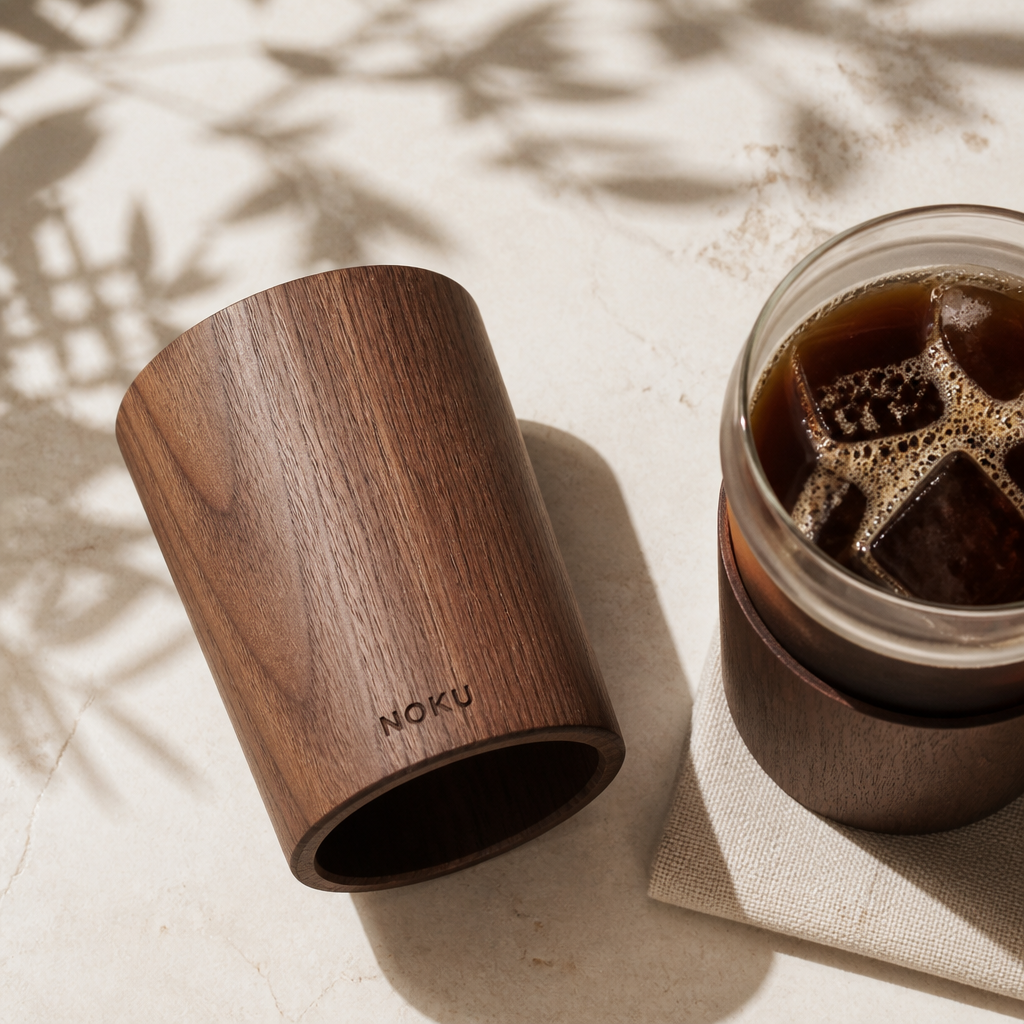
| One solid piece of wood, no composites | Each TreeSleeve™ is bored from a single piece of hardwood. There are no synthetic binders, no laminated layers, and no petroleum-based materials in the shell itself. |
| Cork lining for a natural fit | The interior is lined with cork, another naturally sourced and biodegradable material, fitted by hand to match the exact diameter of a standard 12- or 16-ounce can. |
| Keeps drinks cold for up to 40 minutes | Wood's natural cellular structure provides genuine insulation. The TreeSleeve™ performs the same function as foam or neoprene competitors without any synthetic materials. |
| Fully biodegradable at end of life | Unlike polyurethane foam or neoprene, which do not biodegrade meaningfully, the TreeSleeve™ will return to the earth without leaving a permanent waste footprint. |
| Built to be kept, not discarded | The woodgrain, hand finish, and engraveable surface make it a keepsake. Products that people actually hold onto stop being single-use objects entirely. |
| Handmade in small batches in Vermont | Production is done by real people in a workshop, not an anonymous factory. Small-batch manufacturing means quality is checked at every stage, not at the end of a conveyor belt. |
The Forest Where It All Starts
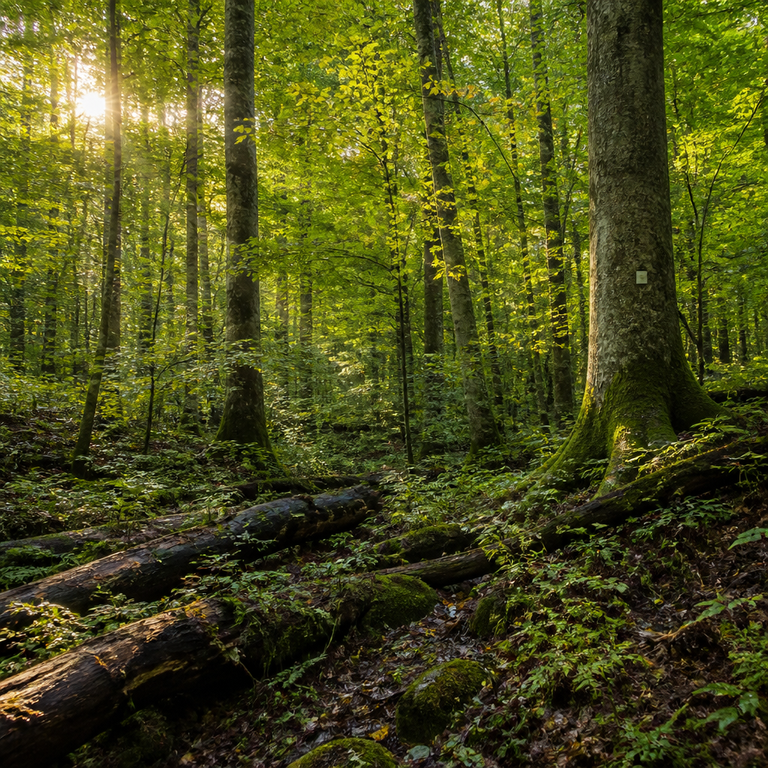
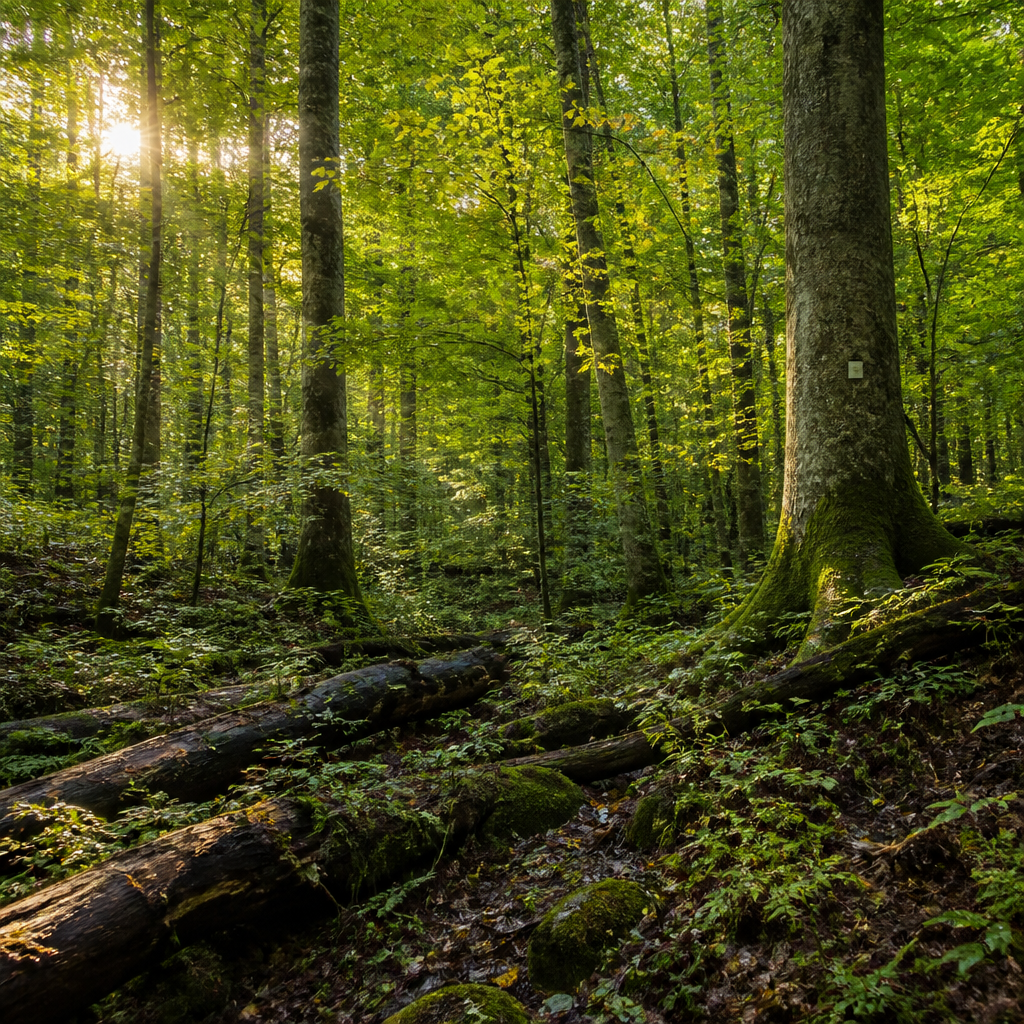
The TreeSleeve™ lifecycle begins at its most literal point: a living tree in the Green Mountains of Vermont. Better Wheel VT sources hardwood from their own forest, which means the origin of the wood is not a vague "sustainably certified" checkbox on a supplier form. It is a specific place, owned and managed by the people making the product.
Vermont's northern hardwood forests are among the most studied and carefully managed timber ecosystems in the northeastern United States. Rich northern hardwood forest communities in Vermont are known to recover well from selective harvest when patch cuts are kept appropriately sized and logging is conducted with care for soil and water resources. That context matters, because responsible selective harvest from a managed woodlot is genuinely different from industrial clear-cutting. The former leaves a living forest. The latter does not.
A common mistake in eco-product marketing is to treat "sustainably sourced" as a finish line. In practice, sustainability at the sourcing stage means the forest you took from is still standing and still growing after you leave it. When the supplier is also the forest owner, the incentive to manage that land well is structural, not just rhetorical.
Why Hardwood Specifically
Not all wood is the same for this application. Hardwoods like those found in Vermont's northern forests have a denser cellular structure than softwoods, which gives them better natural insulating properties and greater durability for repeated handling. A softwood sleeve would dent and splinter faster. Hardwood ages with use, developing a patina that actually improves the look of the product over time.
The substitution of synthetic, petroleum-derived products with wood-based alternatives is documented as a meaningful way to reduce greenhouse gas emissions across a product's full life cycle. For a can insulator, the comparison is stark: one material is made from fossil fuels and persists in the environment for generations. The other grew in sunlight and rain and will return to the soil.
Pro tip: When you're evaluating any "eco-friendly" product, ask specifically where the raw material comes from and who owns that source. A TreeSleeve™ has a direct, named answer to that question. Most foam koozie brands do not.
From Log to Sleeve: The Craftsmanship Stage
After harvest, the hardwood is shaped in Better Wheel VT's Vermont workshop. The TreeSleeve craftsmanship process starts with boring out each sleeve from a solid piece of wood to a consistent interior diameter. This is where the product's character is set. The grain, the color variation, the subtle differences in weight from one piece to the next, all of that is a product of working with a natural material rather than molding an identical synthetic compound.
Once the bore is complete, the interior is lined with cork. Cork is applied, then the sleeve is fitted to an actual can of beer to check the tolerances. Wood is a living material: its cells continue to expand and contract with changes in humidity and temperature. Because of this, each finished TreeSleeve™ is individually checked and adjusted. If too much cork has to be sanded away in the fitting process and the surface looks rough, the product is assessed by hand before it ships.
Why Small-Batch Production Matters Here
The workshop uses traditional woodworking techniques alongside modern design, in small batches. That is not a quirky aesthetic choice. It is the only way to maintain quality control over a product made from a material that behaves differently depending on the specific piece of wood.
Mass-manufactured foam insulators are stamped from a uniform material in identical conditions. That consistency is easy to control. Wood is not uniform. Every piece has its own grain direction, moisture content, and density. Small-batch production means a person is making decisions at each step, not a machine setting a tolerance and walking away.
Good products should be made by real people, not anonymous factories. They should feel natural in your hands, tell a story, and age beautifully over time.
The engraving stage is the final step before a TreeSleeve™ ships. Outdoor themes, wildlife motifs, and custom designs are applied to the exterior surface. Custom orders, including corporate logos, names, and dates, are a major part of the product line. The laser engraving works with the wood grain rather than on top of it, which is why the result looks like part of the material, not a label printed over it.
Pro tip: If you're ordering a TreeSleeve™ as a personalized gift, the custom engraving option is worth it. Engraved text and graphics on real hardwood look nothing like printed designs on foam. One improves with age. The other peels.

What Makes Wood a Better Insulator Than Foam
The most practical question about any can insulator is simple: does it work? The TreeSleeve™ keeps a 12- or 16-ounce beverage cold for up to 40 minutes. That is a specific, stated performance figure from Better Wheel VT, not a vague claim about "superior insulation."
Wood's insulating performance comes from its cellular structure. The hollow cells in hardwood trap air, and air is a poor conductor of heat. This is the same principle behind hollow-core insulation in construction. It does not require synthetic foaming agents or gas-injection processes. The material does it naturally.
The Grip and Feel Difference
Beyond temperature performance, wood has a tactile quality that foam and neoprene cannot replicate. Wood is warm to the touch. It does not feel slippery when wet. It does not absorb odors the way foam does after repeated use in a cooler bag. These are functional advantages, not just aesthetic ones, and they contribute to the TreeSleeve™ being used and kept rather than lost at the bottom of a bag and eventually thrown out.
Wood also does not leave condensation on your hands the way a cold aluminum can does. The surface itself is a natural moisture buffer. This is a small detail that people who use a TreeSleeve™ for the first time consistently notice.
The Use Phase: A Product That Ages Beautifully
The use phase of most can insulators is short. Foam compresses and loses shape. Neoprene gets stained, smelly, and worn. The typical foam koozie goes from "free swag at an event" to "landfill contribution" within a season or two, often without the user making a conscious decision to discard it.
The TreeSleeve™ use phase is designed to be years, not months. Hardwood becomes more characterful with use. Light scratches on the exterior deepen the patina of the grain. The cork interior, fitted to a specific can size, maintains its grip through repeated use. A TreeSleeve™ that has been to a hundred campfires looks more interesting than the day it arrived, not less.
The Keepsake Factor and What It Means for Sustainability
Products that people keep are inherently more sustainable than products that people discard. This is not a soft argument. It is a direct extension of what the biodegradable product journey means in practice. Every month a TreeSleeve™ stays in use is a month a disposable foam insulator was not purchased, used, and sent to a landfill.
Better Wheel VT's own observation captures this well: guests who receive a TreeSleeve™ at an event take them home and actually keep them, which means they stop being single-use objects entirely. That behavioral outcome, a product that stays in circulation, is more valuable from a sustainability standpoint than any end-of-life recycling claim made by a competitor's product.
Custom and personalized TreeSleeves™ amplify this effect. A sleeve engraved with a name, a wedding date, or a meaningful place has sentimental value that a generic foam koozie can never have. Sentimentally valuable objects get kept. Kept objects do not become waste.
End of Life: What Actually Happens to a TreeSleeve™
At some point, even the most carefully kept product reaches the end of its useful life. For a foam or neoprene insulator, that endpoint is a landfill, and the material will remain there essentially unchanged for decades. Standard foam can insulators are made from polyurethane or EVA foam. Neither material biodegrades meaningfully. They end up in landfills or as litter in outdoor spaces.
For a TreeSleeve™, the end of life is fundamentally different. Solid hardwood and cork are both fully biodegradable. When a TreeSleeve™ is finally retired, it can go into a compost pile, be returned to a garden bed, or simply placed in natural conditions where it will decompose without leaving synthetic residue. The wood that started as part of a Green Mountains forest can return to the soil cycle it came from.
Why "Biodegradable" Is Not a Marketing Word Here
The term biodegradable is used loosely by many product categories. Technically, some materials biodegrade, but only under very specific industrial composting conditions that most consumers never have access to. Hardwood and cork biodegrade in ordinary soil conditions. You do not need a specialized facility. You need the ground.
Wood is a renewable, biodegradable raw material. It is also the only major building material produced entirely from environmental inputs: sunlight, rainfall, and carbon from the air. At end of life, it returns carbon to the soil and atmosphere as part of a natural cycle rather than sealing synthetic compounds into the landscape permanently.
The TreeSleeve™ does not claim to solve every environmental problem. What it does is remove one small but real source of permanent synthetic waste from the lives of people who use can insulators regularly. Across the full product life cycle, from selective harvest in a Vermont hardwood forest to natural biodegradation at the end, every stage points in the same direction.
Comparing Can Insulator Life Cycles
To understand how significant the TreeSleeve™ lifecycle difference is, it helps to look at it directly against the mainstream alternatives. Competitors like cooziecooler.com, koozieking.com, and customkoozies.com sell foam and neoprene products that perform the basic insulation function, but their material choices carry very different environmental consequences at every stage of the product journey.
| Life Cycle Stage | TreeSleeve™ (Better Wheel VT) | Foam / Neoprene Koozie (Typical Competitors) |
|---|---|---|
| Raw Material Origin | Sustainably harvested hardwood from a named Vermont forest in the Green Mountains | Polyurethane, EVA foam, or neoprene derived from petroleum-based production processes |
| Manufacturing | Hand-bored, hand-finished, small-batch production in a Vermont workshop by named makers | High-volume stamping or injection molding in anonymous factory settings, often overseas |
| Use Phase | Years of use; ages with character; engraving creates sentimental attachment and keeps product in circulation | Typically one to two seasons before compression, staining, or odor makes it unappealing; frequently discarded |
| End of Life | Fully biodegradable in ordinary soil conditions; hardwood and cork return to the natural carbon cycle | Does not biodegrade meaningfully; ends up in landfill or as environmental litter for decades |
| Carbon Story | Wood sequesters carbon during growth; substituting wood for fossil-derived materials reduces net emissions over the full lifecycle | Petroleum-based materials carry embedded fossil carbon and release it without sequestration benefit at end of life |
The comparison above makes clear that the difference is not at one stage. It runs through every phase of the product's existence. Choosing a TreeSleeve™ over a foam koozie is not a compromise for the sake of being eco-conscious. The product performs the same core function, keeps your drink cold, while being better in every other measurable dimension of its life cycle.
Frequently Asked Questions
Does the TreeSleeve™ actually keep drinks as cold as a foam koozie?
Yes. The TreeSleeve™ keeps a 12- or 16-ounce beverage cold for up to 40 minutes. Wood's natural cellular structure traps air, which is a poor heat conductor. The insulation works through the same physical principle as synthetic foams, just without the petroleum-derived materials.
What wood species is used in the TreeSleeve™?
The TreeSleeve™ is made from hardwood harvested from Better Wheel VT's own forest in the Green Mountains of Vermont. The northern hardwood forests of Vermont include species like maple, birch, and beech. The specific piece used for any given sleeve will vary naturally based on the grain and character of the individual stock.
Is the cork lining also biodegradable?
Yes. Cork is a natural bark product harvested from cork oak trees. It is fully biodegradable and is used in the TreeSleeve™ interior precisely because it fits the natural, non-synthetic material profile of the whole product. Both the shell and the lining will decompose in ordinary conditions at the end of the product's life.
Can a TreeSleeve™ fit both 12-ounce and 16-ounce cans?
The TreeSleeve™ is available for both 12-ounce and 16-ounce cans. Each sleeve is individually bored and fitted to a specific can size, then checked against an actual can before it ships. Because wood is a living material that responds to humidity and temperature, every sleeve is fitted and adjusted by hand rather than being stamped to a single fixed tolerance.
What happens if my TreeSleeve™ fits too tight or too loose?
Wood continues to expand and contract with seasonal changes in humidity and temperature, just like any wooden door or floorboard. Better Wheel VT fits each TreeSleeve™ using a label on the can during production. If you find the fit has changed, light sanding of the cork interior can adjust the tolerances. If the product is genuinely defective, the makers offer a swap, because every unit is handcrafted and individually accountable.
Is the TreeSleeve™ a good gift for someone who is not particularly eco-conscious?
Absolutely. The product works well as a practical insulator, looks distinctive compared to any foam koozie, and can be personalized with names, dates, or graphics. Many people who receive a TreeSleeve™ as a gift discover the sustainability story secondarily, after they've already fallen for how it looks and feels in their hand. The eco-credentials are a bonus to a product that stands on its own merits.
How does the TreeSleeve™ lifecycle compare to a stainless steel can insulator?
Stainless steel insulators are durable and reusable, which gives them a longer use phase than foam. However, steel production is energy-intensive and the material does not biodegrade at end of life. The TreeSleeve™ completes its full cycle, from a living tree back to the earth, without leaving a permanent material footprint. For outdoor enthusiasts who care about that full-circle story, wood wins on the complete lifecycle picture, not just the use phase.
Have you made the switch from foam to wood? Share what you noticed the first time you used your TreeSleeve™, we'd genuinely like to hear what caught your attention.
References
- FAO report on the environmental and energy balances of wood products compared to synthetic substitutes across their full life cycle
- Vermont Fish and Wildlife Department fact sheet on Rich Northern Hardwood Forest ecology and sustainable harvest recovery
- Overview of the environmental benefits of wood products including biodegradability, renewability, and carbon footprint comparison with plastics and metals
- Peer-reviewed research on wood-based products in the circular bioeconomy and their potential to reduce greenhouse gas emissions through material substitution
Share:
How to Host an Eco-Friendly Backyard BBQ This August
Nature-Themed Gifts That Match an Outdoorsy Personality