
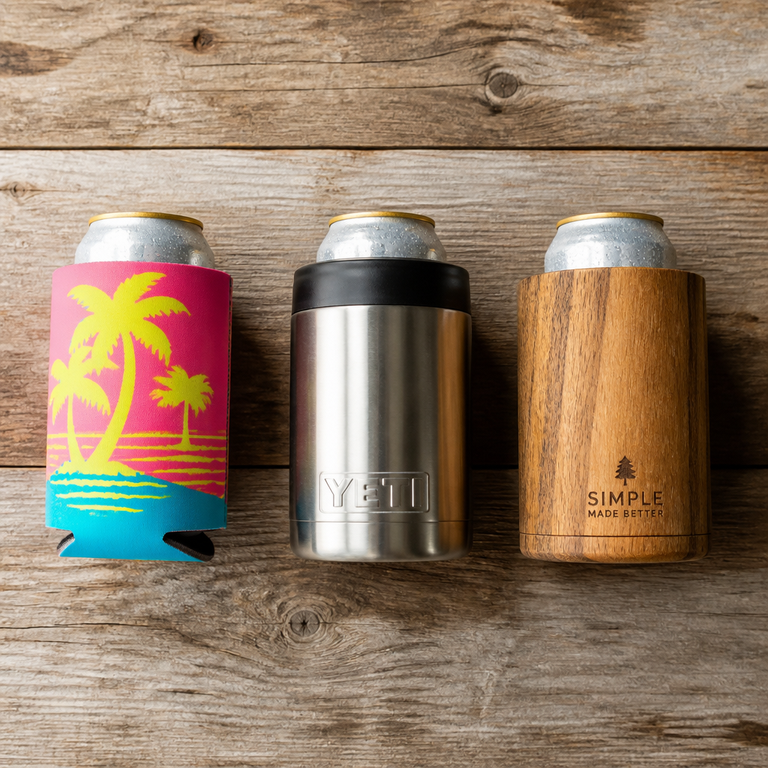
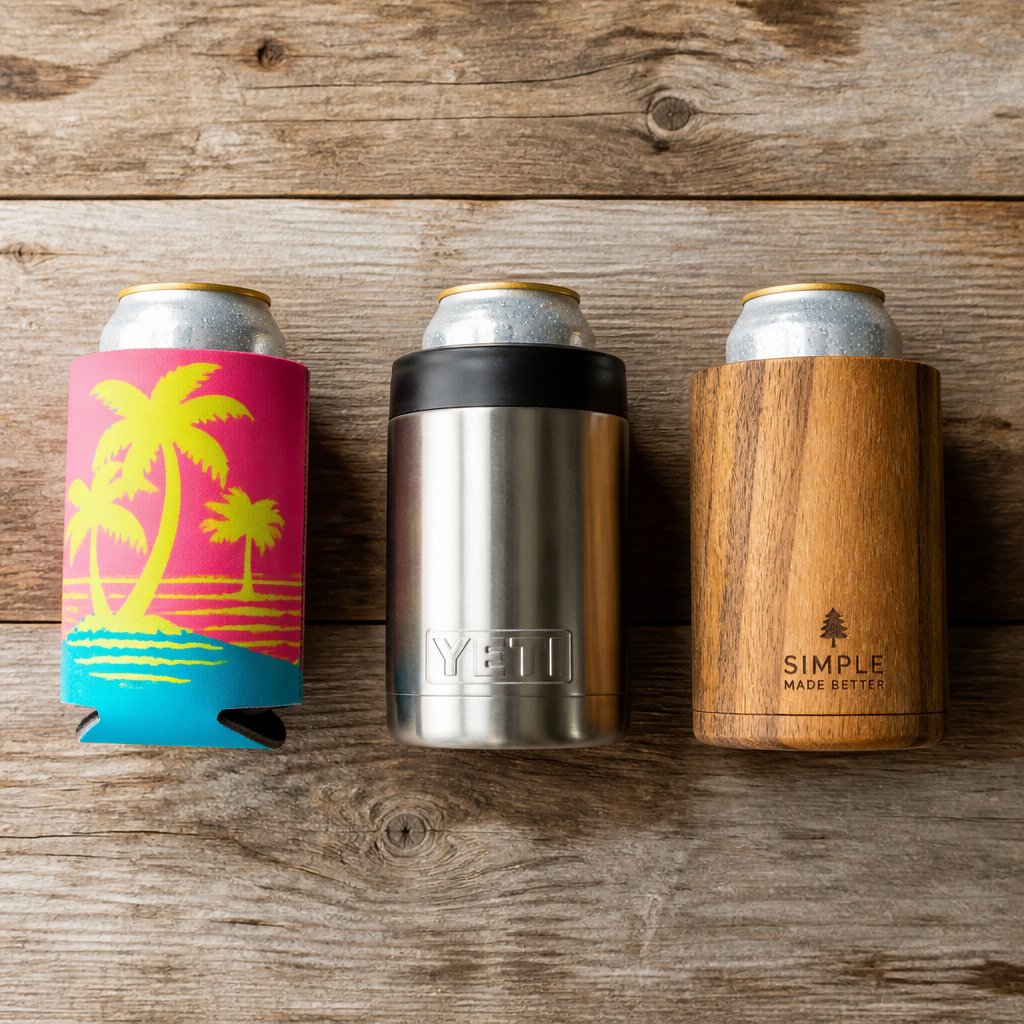
Most people use the words "koozie," "can insulator," and "can sleeve" as if they mean the same thing. They do not. The differences between a flat foam koozie, a hard-shell stainless insulator, and a solid wood sleeve go well beyond branding. They cover material performance, environmental footprint, durability, gifting value, and how the thing actually feels in your hand on a hot afternoon at a trailhead or a music festival. If you have ever wondered about the real koozie vs can insulator debate, or where a wooden sleeve fits in the picture, this guide breaks it all the way down, without pulling punches.
Table of Contents
- Quick Takeaways
- What Is a Koozie, Really?
- What Is a Can Insulator?
- What Is a Wooden Can Sleeve?
- Material Performance Compared
- Environmental Impact: Foam, Steel, and Wood
- Best Use Cases for Each Type
- Full Comparison: Koozie vs Can Insulator vs Wooden Sleeve
- Frequently Asked Questions
- References
Quick Takeaways
| Key Insight | Explanation |
|---|---|
| "Koozie" is a brand name, not a generic term | Radio Cap Corporation trademarked "Koozie" in 1980. Every foam sleeve you have ever called a koozie is technically using a brand name, the same way people say "Kleenex" for tissue. |
| Neoprene outperforms foam on insulation and durability | Neoprene's closed-cell structure resists water absorption at the molecular level and maintains cold longer in hot or humid conditions. Foam compresses and degrades faster, especially with UV exposure. |
| Hard-shell stainless insulators are overkill for casual use | Stainless steel can insulators keep drinks cold for hours, but they are heavy, expensive, and add more bulk than most outdoor situations require. They are built for long hauls, not for casual tailgating. |
| Wooden sleeves are the only fully biodegradable option | Foam and neoprene both end up in landfills. Solid hardwood sleeves like the TreeSleeve from Better Wheel VT are fully biodegradable and sourced from sustainably managed forests. |
| Wood offers passive insulation plus a tactile grip advantage | Hardwood naturally wicks moisture and provides a comfortable, non-slip grip without synthetic coatings. It does not sweat or get slippery in a humid environment. |
| Gifting value differs wildly across types | Foam koozies are disposable promotional items. Stainless insulators are functional but generic. A handcrafted wooden sleeve is a keepsake, the only one in the group that someone actually displays after using. |
| Wooden sleeves win on uniqueness, no two are identical | Because natural wood grain varies by piece, every hardwood can sleeve looks slightly different. That built-in individuality is something no injection-molded foam or stamped steel product can replicate. |
What Is a Koozie, Really?
The word "koozie" gets used so loosely that most people have no idea it started as a trademark. Radio Cap Corporation (RCC) of San Antonio, Texas registered the name "Koozie" in 1980, originally applying it to rigid Styrofoam can coolers. Within a decade, the material shifted to softer foam and eventually neoprene, but the brand name stuck in the public vocabulary the same way people call all facial tissues "Kleenex."
In practice, when someone says "koozie" today, they usually mean one of two things: a flat, collapsible foam sleeve or a neoprene sleeve. Both slip over a standard 12-ounce can. Both slow heat transfer into the drink. Neither is the same as a rigid insulator or a wooden sleeve, even though all three get called "can holders" in casual conversation.
Foam Koozies
Foam koozies (typically made from polyurethane, EVA, or polyethylene foam) are the cheapest option on the market. They provide moderate insulation for short periods, collapse flat for storage, and are the default choice for high-volume promotional giveaways. Their thermal resistance slows heat from entering the can, but the foam's outer layer equilibrates quickly with ambient air, which means performance drops off faster than neoprene in sustained heat or high humidity.
A common mistake is assuming a foam koozie and a neoprene sleeve offer identical performance because they look similar. They do not. Foam compresses, tears, and degrades faster, especially with UV exposure and repeated handling outdoors.
Pro tip: If you are handing out foam koozies at an event and expecting guests to reuse them, you are being optimistic. The average foam koozie is a single-season item at best. For anything meant to last, go up to neoprene or skip the category entirely.
Neoprene Koozies
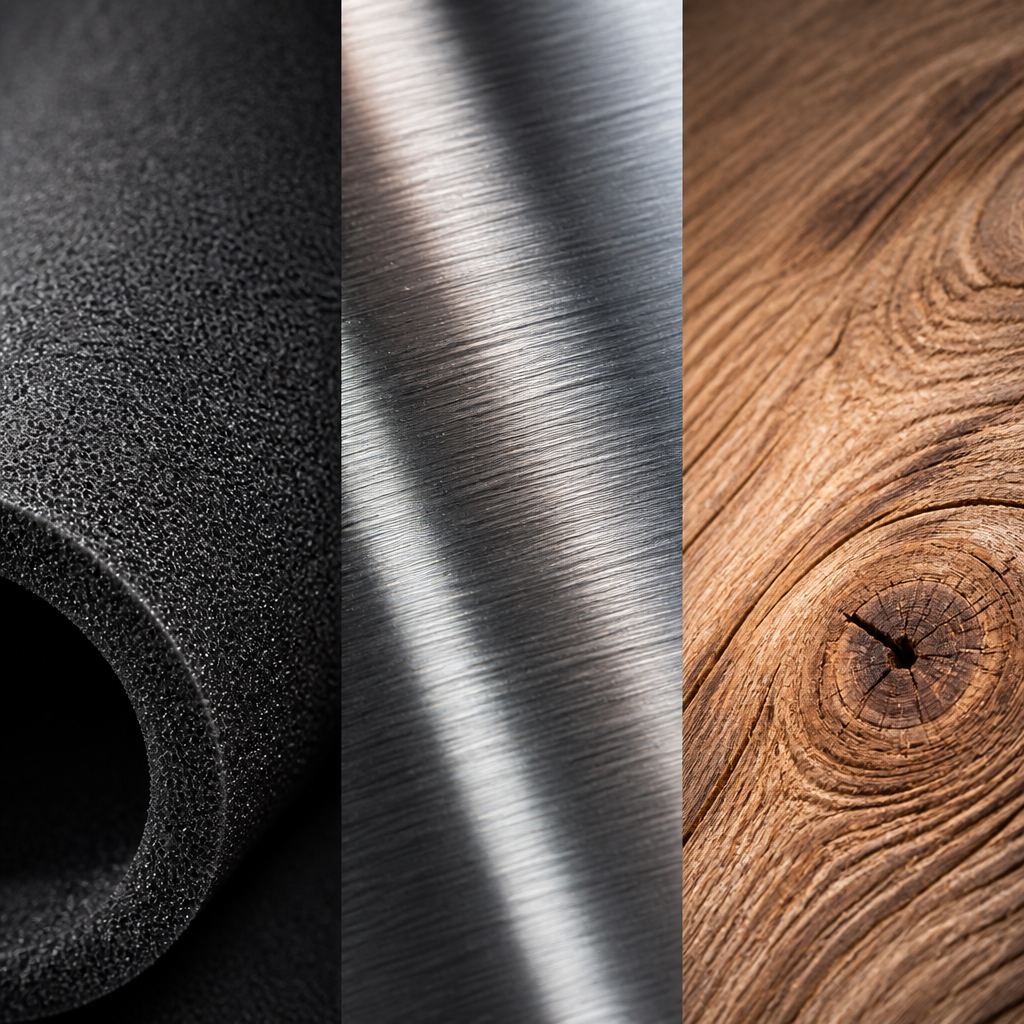
Neoprene is a closed-cell synthetic rubber originally engineered for wetsuits and insulation products. Among all koozie materials, neoprene provides the best cold-retention performance because its dense structure minimizes heat transfer from both air and hand contact. Its outer skin stays closer to ambient temperature due to slower conductive coupling, which is what separates a dry grip from a damp, slippery handshake on a summer afternoon.
Neoprene holds its shape after repeated use and washing, resists water at the molecular level, and can handle multi-color branding better than foam. For regular retail or gift use, neoprene is the clear winner over foam. But it is still a synthetic material, non-biodegradable, and manufactured through a petroleum-based process, which matters if you care about where your gear ends up after its useful life.
What Is a Can Insulator?
When a product is marketed specifically as a "can insulator" rather than a koozie, it usually signals a step up in construction. Hard-shell stainless steel can insulators like those made by YETI or similar brands are double-walled, vacuum-insulated products designed to keep drinks cold for several hours, far longer than any foam or neoprene sleeve can manage.
The tradeoff is weight, cost, and bulk. A stainless steel can insulator is heavier than a foam koozie and takes up more pack space. For backpackers, festival-goers, or anyone prioritizing light travel, that weight-to-performance trade is not always a good one. These insulators are also frequently more expensive than the drinks they are keeping cold.
The word "insulator" is also used more broadly to describe any product designed to slow heat transfer to a beverage, which includes foam koozies and wooden sleeves. That broad usage is technically correct but creates real confusion when people are shopping. The clearest way to navigate it: if the product is collapsible foam or neoprene, it is a koozie. If it is rigid stainless steel, it is a hard insulator. If it is solid wood, it is a sleeve or a wooden can holder, and it belongs in its own category.
What Is a Wooden Can Sleeve?
A wooden can sleeve is a rigid cylindrical holder machined or crafted from solid wood to fit a standard 12-ounce can. It is a fundamentally different object from a foam koozie or a stainless insulator. It does not collapse, it does not bend, and it is not designed for volume production. It is designed to be a specific, lasting object you actually want to own.
The TreeSleeve by Better Wheel VT is a clear example of what a premium wooden can sleeve looks like in practice. Made from solid hardwood sourced from the Green Mountains of Vermont, the TreeSleeve is the first fully biodegradable, sustainably crafted can insulator on the market. No plastic inserts, no synthetic coatings, no synthetic rubber.
Wood is a natural thermal insulator. The cellular structure of hardwood creates air pockets that slow heat transfer passively, without the need for petrochemical foam or vacuum chambers. It also does not sweat. Because wood is hydrophilic at a micro level, it manages surface moisture differently than cold steel or neoprene, resulting in a grip that stays comfortable even when the ambient temperature climbs.
Wood is biodegradable. At the end of its very long life, a wooden product breaks down naturally. It does not sit in a landfill for 500 years the way a plastic product does. This is a practical distinction, not just an environmental talking point.
From a gifting perspective, a wooden sleeve sits in a completely different category from a foam koozie or a generic stainless tumbler. It is handcrafted, it carries the visual identity of the wood's natural grain, and no two pieces are identical. That level of individuality is built into the material itself. It cannot be replicated by injection molding.

Material Performance Compared
Choosing between a koozie, a hard can insulator, and a wooden sleeve comes down to what you actually need it to do. Here is how each material performs across the dimensions that matter most to outdoor enthusiasts and eco-conscious buyers.
Thermal Performance
Foam koozies provide short-burst insulation, adequate for a 30-to-60-minute drink. Neoprene extends that window modestly. Stainless steel vacuum insulators dominate on raw cold-retention time, keeping drinks cold for multiple hours in direct sun. Wooden sleeves fall between foam and stainless in terms of raw thermal performance, but they are also not trying to compete with vacuum technology. They provide sufficient insulation for a normal drinking experience while adding comfort and grip that metal cannot match.
Grip and Handling in Outdoor Conditions
Wet hands are the enemy at any outdoor event. Smooth stainless steel becomes slippery when condensation builds on the outside. Foam squishes but offers decent grip until it gets soaked. Neoprene is the best of the synthetic options for wet-hand grip. Wood, because of its natural surface texture and moisture behavior, provides a grip that is instinctive and stable. Anyone who has ever held a well-finished wooden handle on a tool or a paddle understands this immediately.
Durability and Longevity
Foam degrades with UV exposure, compression, and repeated washing. Neoprene is significantly more durable but still has a finite life and does not biodegrade. Stainless steel lasts for years but can dent. A quality hardwood sleeve, properly finished, resists moisture and maintains its structure for years of regular use. The TreeSleeve is designed to be a long-term object, not a seasonal promotional giveaway.
Pro tip: If you are buying a can holder as a gift for someone who actually spends time outdoors, skip the foam koozie entirely. It communicates "afterthought." A wooden sleeve communicates that you chose something intentionally, because you did.
Environmental Impact: Foam, Steel, and Wood
This is where the differences between the three categories get serious. Most foam koozies are made from petroleum-derived polyurethane or polyethylene foam. They are not recyclable through standard curbside programs and end up in landfills, where they persist for an indeterminate period. Neoprene is similarly synthetic and not biodegradable. Producing it involves chloroprene, a petrochemical, and the manufacturing process carries a meaningful environmental cost.
Stainless steel is recyclable, which is a genuine advantage. But manufacturing stainless steel is energy-intensive, and the mining of chromium and nickel, the primary alloying elements, carries its own environmental footprint. Recycling at end of life requires industrial processing that most consumers never actually follow through on.
Sustainably sourced hardwood is the most defensible option on environmental grounds. Wood is a renewable resource. Trees grow back. When harvested from a managed ecosystem rather than stripped from an unmanaged forest, hardwood represents a genuinely low-footprint material choice. At the end of its useful life, a solid wood sleeve breaks down naturally. It does not persist in a landfill.
The TreeSleeve takes this one step further: the hardwood comes directly from the Green Mountains of Vermont, from a forest managed by the same people making the product. That traceability is rare and valuable. It is the difference between a vague "sustainably sourced" label and an actual supply chain you can follow.
Best Use Cases for Each Type
Not every situation calls for the same product. Here is a direct breakdown of when each type actually makes sense.
When a Foam Koozie Makes Sense
Foam koozies work for high-volume, single-use promotional contexts. If you are running a booth at an event and handing out branded items to hundreds of people, foam is appropriate for the budget and the context. You are not claiming these will last. They are marketing collateral, not products.
When a Stainless Steel Can Insulator Makes Sense
If you are hiking in summer heat and need your beer to stay cold for two-plus hours in direct sun, a vacuum-insulated stainless can insulator is the right tool. The weight penalty is real, but the thermal performance is in a different class from foam or wood. It is a functional tool for a specific performance need.
When a Wooden Sleeve Makes Sense
Wooden sleeves make sense in three situations: as a premium gift, as a personal daily-use item where aesthetics and sustainability matter, and as a product for outdoor settings where you want something that looks and feels intentionally made. If you are shopping for a beer lover, a festival regular, a hiker, or anyone who cares about the environmental footprint of the things they own, a wooden can sleeve is the right choice. No foam koozie has ever been displayed on a shelf after the event ended. A well-made wooden sleeve has.
Full Comparison: Koozie vs Can Insulator vs Wooden Sleeve
The table below compares the three main categories across the dimensions that matter most for outdoor use and eco-conscious gifting.
| Category | Foam or Neoprene Koozie | Stainless Steel Can Insulator | Wooden Can Sleeve (e.g., TreeSleeve) |
|---|---|---|---|
| Primary Material | Polyurethane foam, EVA, or neoprene (synthetic rubber) | 18/8 stainless steel, vacuum-insulated double wall | Solid sustainably sourced hardwood |
| Insulation Duration | 30-60 minutes (foam), slightly longer (neoprene) | Several hours in direct sun | Sufficient for typical drinking session; passive thermal insulation |
| Wet-Hand Grip | Moderate (foam), good (neoprene) | Poor on bare metal when condensation forms | Excellent; natural wood texture provides stable grip |
| Biodegradable | No | No (recyclable, but not biodegradable) | Yes, fully biodegradable |
| Durability | Low (foam), medium (neoprene) | High (can dent) | High with proper finish; resists moisture |
| Weight and Portability | Very light, collapses flat | Heavier, rigid form factor | Light, rigid, slightly heavier than foam |
| Gifting Value | Low; perceived as promotional giveaway | Medium; functional but generic | High; handcrafted, unique grain, keepsake quality |
| Environmental Footprint | High (petrochemical, non-recyclable) | Medium (energy-intensive to produce, recyclable) | Low (renewable, traceable, biodegradable) |
| Customization Options | Screen print, full-color dye sublimation | Laser engraving on some models | Laser engraving, custom designs, wildlife and outdoor motifs |
| Best For | Promotional events, high-volume giveaways | Extended outdoor use, long hikes, peak-heat conditions | Eco-conscious gifting, outdoor enthusiasts, festival-goers, daily use |
Frequently Asked Questions
Is "koozie" a brand name or a generic word?
"Koozie" is technically a trademarked brand name, first registered by Radio Cap Corporation of San Antonio, Texas in 1980. Over time it entered everyday usage the way other brand names do, becoming a generic shorthand for any foam or neoprene can sleeve. But in a strict sense, only products made by or licensed through the trademark holder are true "Koozies." Everything else is a can sleeve, a can cooler, a stubby holder, or a beverage insulator.
Does a wooden can sleeve actually keep a beer cold?
Yes, though the mechanism is different from a vacuum-insulated stainless product. Hardwood provides passive thermal insulation through its natural cellular structure, which slows heat transfer from your hand and the surrounding air into the can. For a normal drinking session, a wooden sleeve maintains drink temperature effectively. If you need your beer cold for two hours sitting in full afternoon sun, a stainless vacuum insulator is the better tool for that specific extreme. For everything else, wood performs well and adds grip and aesthetics that metal cannot.
What is the difference between a can insulator and a koozie?
The term "can insulator" describes any product that insulates a can from heat, so it technically includes foam koozies, neoprene sleeves, stainless vacuum insulators, and wooden sleeves. In common retail usage, "koozie" usually refers to flexible foam or neoprene sleeves, while "can insulator" often implies a more rigid, higher-performance product like a stainless steel double-wall design. A wooden can sleeve is a can insulator by definition but belongs in its own category based on material, construction, and purpose.
Are foam koozies recyclable or biodegradable?
Standard foam koozies made from polyurethane, EVA, or polyethylene foam are not accepted in most curbside recycling programs and are not biodegradable. They end up in landfills where they persist for a very long time. Neoprene koozies are also synthetic and non-biodegradable. This is a meaningful distinction if your buying decision includes environmental considerations. A wooden can sleeve like the TreeSleeve is fully biodegradable because it is made entirely from natural hardwood with no synthetic materials.
What makes a wooden can sleeve a better gift than a koozie?
Foam koozies read as promotional giveaways because that is their primary use. They are not kept, collected, or displayed. A handcrafted wooden can sleeve carries a completely different signal: that the gift was chosen deliberately and made with care. Because natural wood grain varies by piece, every wooden sleeve is visually unique. The TreeSleeve in particular comes from hardwood sourced directly from Vermont forests, which gives it a provenance that no mass-produced foam or stamped steel product can claim. For a beer lover, a hiker, or anyone who values things that are well-made and eco-conscious, it is a far more meaningful gift.
Can I get a wooden can sleeve with a custom design?
Yes. Custom wooden can sleeves can be laser-engraved with designs, names, logos, or artwork. Better Wheel VT offers the TreeSleeve in a range of designs including outdoor themes and wildlife motifs, and custom options are available for buyers who want a personalized or branded product. Laser engraving on hardwood produces sharp, permanent results that do not fade or peel the way screen-printed foam eventually does.
Which type is best for outdoor use at festivals or on the trail?
It depends on what "outdoor use" means. For casual festival use, a wooden sleeve or a quality neoprene sleeve handles the job well. The wooden sleeve has the added benefit of not looking like every other foam koozie in the crowd, and it provides a grip that stays reliable when your hands are damp from condensation. For serious trail use in extreme heat where multi-hour cold retention matters, a stainless vacuum insulator is the performance choice. For gifting to someone who loves the outdoors, the wooden sleeve wins because it is the only option in this category that someone will actually keep long after the event.
If you are choosing between a standard foam koozie and a wooden can sleeve, you are not really comparing insulation specs. You are choosing between a disposable marketing item and something made to last. Which one reflects how you actually feel about the person you are buying for?
References
- History and origin of the Koozie trademark and early can cooler development
- The story of how the koozie became a cultural staple in beverage culture
- Neoprene versus foam koozie material performance and insulation comparison
- Why sustainably sourced hardwood is a defensible eco-friendly material choice for gifts
Share:
Why Made in Vermont Products Still Matter Today
Tailgate Accessories: Best Handcrafted Gear for Football