Most people assume buying wood products is either fine or not fine, with no real middle ground. The truth is messier and more actionable than that. Sustainably sourced wood products exist on a real spectrum, from certified and traceable to vaguely "natural" with no accountability behind the label. If you care about Vermont's forests, about what ends up in a landfill, and about whether your dollars actually support responsible forestry, this guide will give you the specific knowledge to shop with conviction, not just good intentions. Eco-conscious shopping is only as powerful as the information backing it up.
Table of Contents
- Quick Takeaways
- Why Wood Sourcing Actually Matters
- Certifications Decoded: What Each Label Really Means
- Vermont Wood Craftsmanship: A Standard Worth Understanding
- Comparing Wood Product Types: Certified, Reclaimed, and Uncertified
- Biodegradable Wood vs. Synthetic Alternatives
- How to Shop Smart for Sustainably Sourced Wood Products
- Frequently Asked Questions
- References
Quick Takeaways
| Key Insight | Explanation |
|---|---|
| Not all "natural" wood is sustainable | Without a credible certification, a "natural wood" label tells you almost nothing about how the tree was harvested or whether the forest was responsibly managed. |
| FSC certification is the most widely recognized standard | The Forest Stewardship Council (FSC) is the original and most rigorous international certification for sustainably sourced wood. Look for it first. |
| Vermont hardwood forests are genuinely healthy | Vermont's forests grow faster than they are harvested, which means well-managed Vermont hardwood is among the most defensible wood you can buy. |
| Biodegradable wood beats foam and plastic every time | Foam koozies, plastic souvenirs, and synthetic insulators persist in landfills for centuries. Hardwood products from responsibly managed forests return to the earth cleanly. |
| Local sourcing shortens the supply chain | Wood sourced from nearby forests requires less transport, reduces emissions, and makes supply chain verification much easier for both producers and consumers. |
| Less than 20% of US wood products are certified | This means the majority of wood products on store shelves carry no independent verification. Choosing certified or locally traceable products is a meaningful act, not a marginal one. |
| Custom wood gifts are a durable eco-conscious alternative to disposable merchandise | A handcrafted wood item used for years replaces dozens of disposable plastic alternatives. Durability is a sustainability metric too. |
Why Wood Sourcing Actually Matters
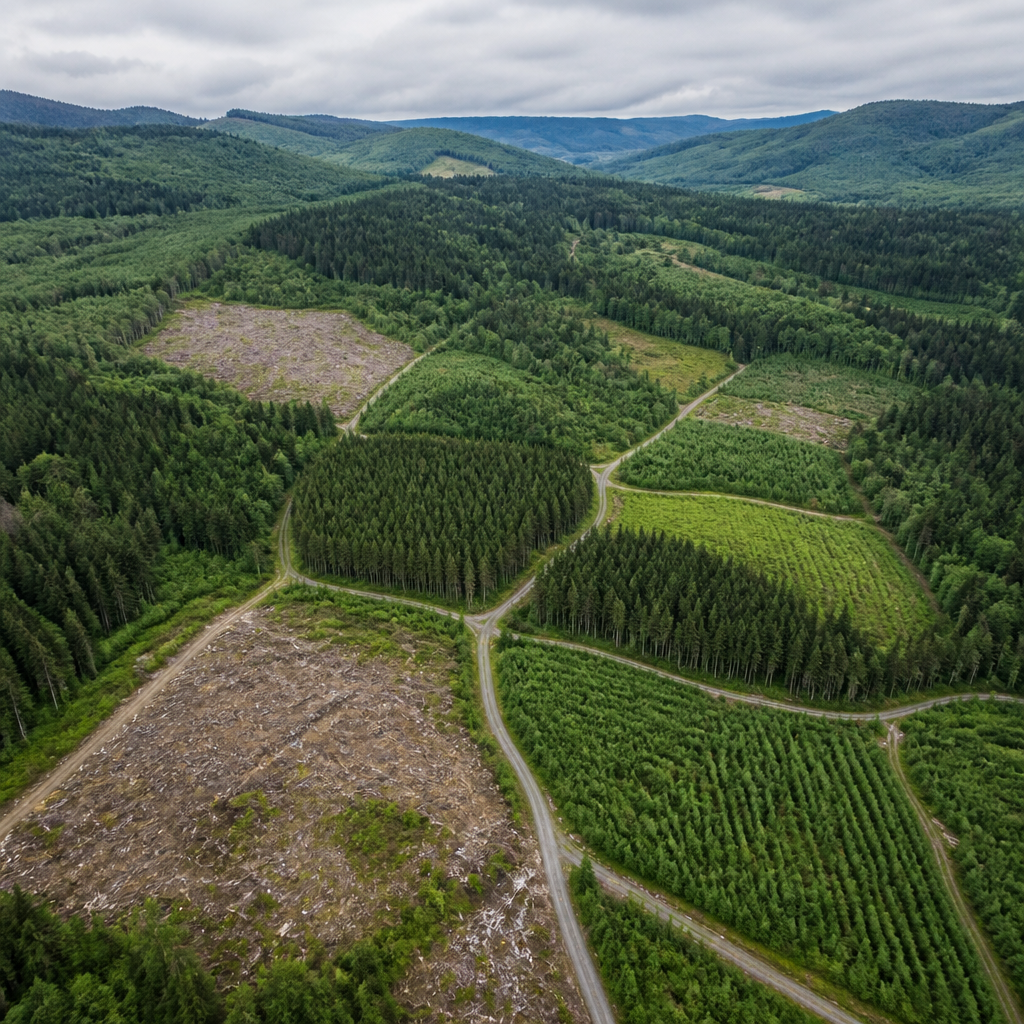
The instinct to reach for something "made of wood" as the eco-friendly choice is mostly right, but the details determine whether that instinct holds up. Wood is inherently renewable, recyclable, and biodegradable, which places it ahead of plastics and synthetic foams from the start. But irresponsible logging erases those advantages fast: clear-cut forests release stored carbon, destroy wildlife habitat, and destabilize the communities that depend on those forests for their livelihoods.
The stakes are not abstract. When you buy a wood product with no certification and no sourcing transparency, you genuinely cannot know whether it came from a well-managed forest or a stripped hillside. That uncertainty is the whole reason certification programs exist, and it is why eco-conscious shopping requires more than picking the product with a leaf on the packaging.
What makes sustainably sourced wood different is accountability. An independent body has audited the harvest practices, confirmed the forest is regenerating, and verified the chain of custody from tree to finished product. That audit is what separates a real claim from a marketing gesture.
For gift-givers and outdoor enthusiasts in particular, the source of a wood product matters beyond the environmental argument. A can insulator, a cutting board, or a hand-engraved keepsake made from traceable Vermont hardwood carries a story. That story is part of what makes it worth giving.
Certifications Decoded: What Each Label Really Means
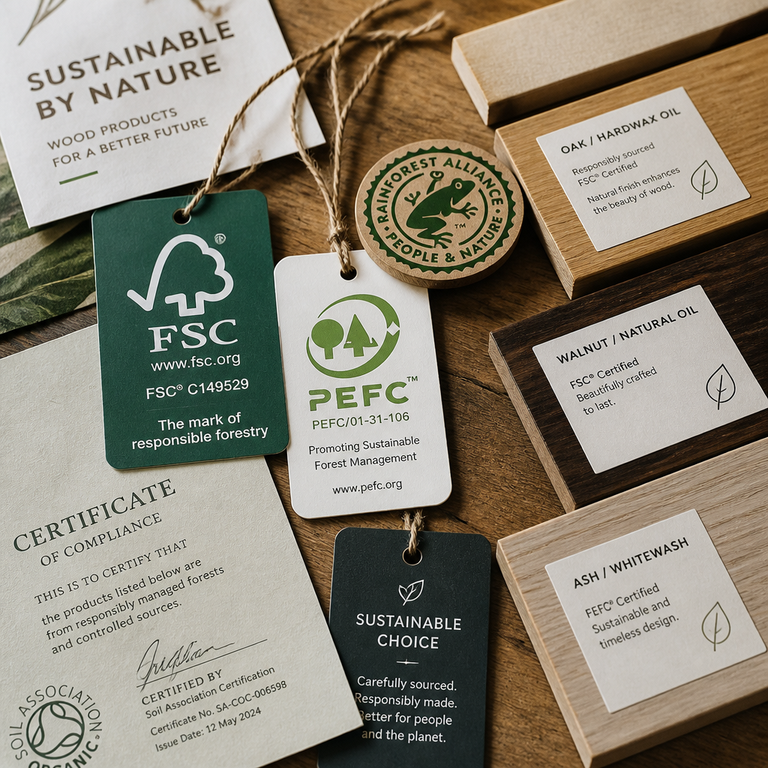
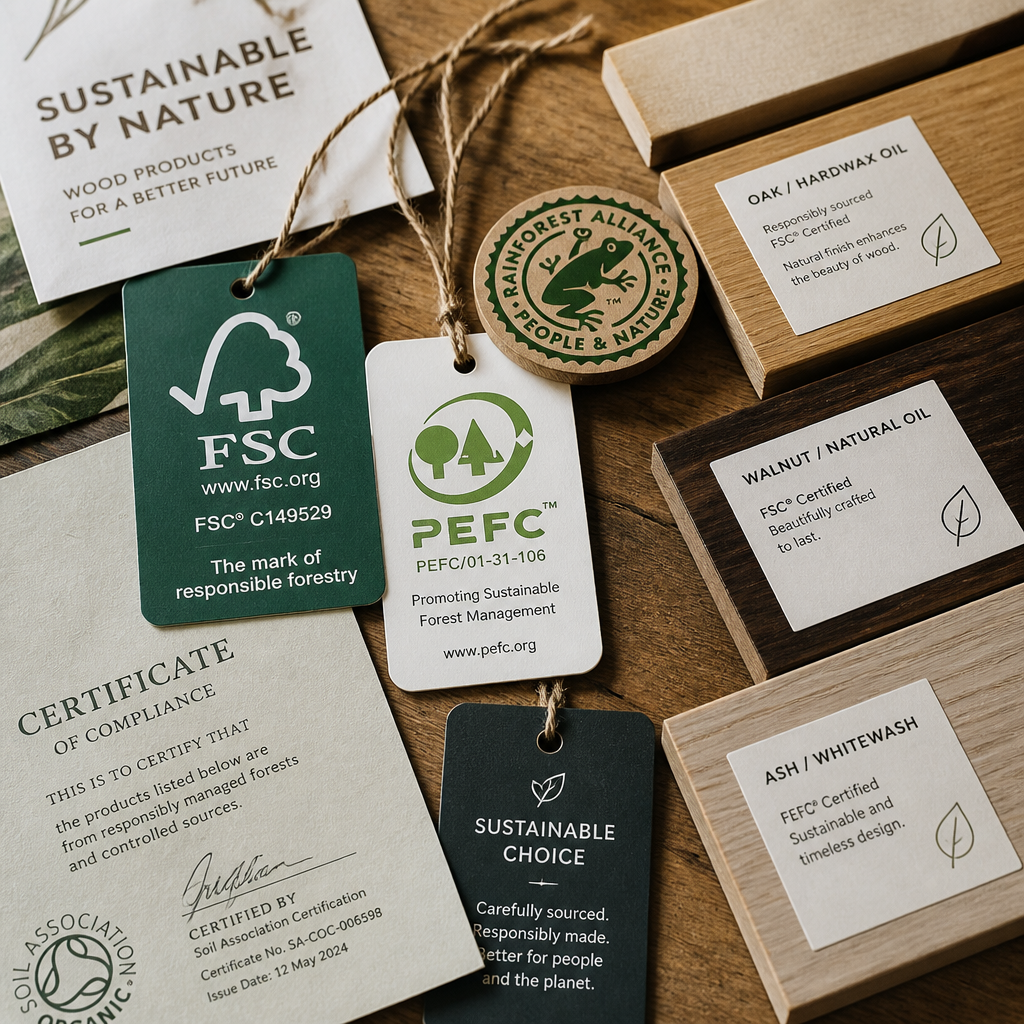
Certifications are the only objective signal a consumer has in a market full of vague environmental claims. The problem is that not all certifications are equal, and most shoppers have no clear mental model of what any of them actually verify. Here is a direct breakdown of the ones that matter.
Forest Stewardship Council (FSC)
FSC is the standard to prioritize. It is the original recognized certification program for ensuring wood meets sustainability criteria accepted by major green building rating systems, including LEED. The FSC covers hundreds of millions of acres of certified forest globally and uses an eco-label on finished products so consumers can make responsible purchases at the point of sale. FSC-certified wood is harvested in a way that results in no net loss of forest over time, which means the forests keep doing their job: regulating climate, protecting biodiversity, and storing carbon.
The FSC label recognized by nearly half of consumers across the globe, which makes it the most meaningful signal you can look for when purchasing wood items. When you see it, an independent third party has already done the verification work for you.
PEFC and SFI: Legitimate but Different in Scope
The Programme for the Endorsement of Forest Certification (PEFC) and the Sustainable Forestry Initiative (SFI) are also credible programs. The SFI is particularly common in North American timber markets. Neither is a greenwash label, but their standards and audit rigor differ from FSC in ways that matter to informed shoppers. If FSC-certified products are not available, SFI-certified is a defensible second choice for domestic wood purchases.
What "No Certification" Actually Tells You
Less than 20% of wood products sold in the United States carry any recognized certification. That means the overwhelming majority of wood items on any given store shelf have no independent verification of their sourcing. "Natural," "eco-friendly," and "responsibly made" without a certification behind them are marketing language, not audited claims. A common mistake is treating the aesthetic of wood as proof of its sustainability. It is not.
Pro tip: When shopping online for wood gifts, search specifically for the FSC, PEFC, or SFI logo in product imagery, not just in the product description text. Descriptions can be written by anyone; logos require licensing from the certifying body.
Vermont Wood Craftsmanship: A Standard Worth Understanding
Vermont has a specific and well-earned reputation for wood craftsmanship that goes beyond regional pride. The state's forests are dominated by the maple, beech, and birch forest-type group, which occupies approximately 71 percent of Vermont's total forest land area. Vermont contains nearly 4.5 million acres of forest, and the volume of growing stock has continued to increase since the 1980s, now totaling close to 9 billion cubic feet. Forests in Vermont grow faster than they are harvested. That is a measurable, verified fact, not a tourism slogan.
This growth-to-harvest balance is the foundation of what makes Vermont hardwood sourcing genuinely defensible. When a product is crafted from Vermont hardwood, the raw material comes from a forest ecosystem that is actively getting healthier, not one being drawn down. The northern hardwoods of Vermont, primarily sugar maple, yellow birch, American beech, and red maple, are among the most recognizable and durable species in North American woodworking.
The Vermonter Tradition of Resourceful Forestry
Vermont has a long tradition of being resourceful with its natural materials, retaining old-school practices of selective harvesting and land stewardship that many larger industrial timber regions abandoned decades ago. Vermonters who depend on forest products for their livelihoods have strong practical incentives to manage those forests sustainably over the long term, because their next generation's livelihood depends on it.
This context matters when you buy a product like the TreeSleeve™ from Better Wheel VT. The hardwood used is not sourced from anonymous industrial supply chains. It comes from Vermont forests with a documented history of responsible stewardship, crafted by a company rooted in that tradition.
Pro tip: Ask any Vermont wood product maker which specific species they use and where they source it. A maker who can answer that question clearly, naming counties, sawyers, or certification programs, is one who has actually thought through their supply chain. Vague answers are a signal worth paying attention to.

Why Local Sourcing Matters Beyond the Carbon Argument
Local sourcing shortens the chain of custody dramatically. Every link in a supply chain is a point where accountability can break down. When wood travels from a forest in one continent to a manufacturer on another and arrives as a finished product at your door, auditing each step is genuinely difficult even for certification bodies. When a Vermont maker sources from Vermont forests, the supply chain is often a direct relationship between the craftsperson and the sawyer, or between the sawyer and the landowner. That is a form of traceability that no certification can fully replicate.
Comparing Wood Product Types: Certified, Reclaimed, and Uncertified
Not all sustainable wood products get their credentials the same way. Understanding the differences helps you make better choices across different product categories, from furniture and flooring to small-batch artisan goods like engraved wood accessories.
| Product Type | Sustainability Credentials | Best Use Case |
|---|---|---|
| FSC-Certified Virgin Wood | Independent audit of forest management, chain-of-custody verification, biodegradable end-of-life. No new deforestation. | Furniture, flooring, artisan gifts where the grain and character of new hardwood matter to the finished product. |
| Reclaimed or Salvage Wood | No new trees harvested. Diverts material from landfill. Traceability varies widely: some reclaimed wood has excellent provenance, some has none at all. | Rustic or industrial aesthetic projects, structural wood in construction, decorative items where provenance can be verified by the seller. |
| Uncertified "Natural" Wood | No third-party verification. May come from well-managed sources or may not. Consumer has no reliable way to distinguish between the two at point of purchase. | Only acceptable if you have a direct relationship with the maker and can verify sourcing yourself. Otherwise, a lower confidence choice. |
In practice, the best eco-conscious wood gift purchases sit clearly in the first category: new hardwood from verified sources, crafted by makers who can speak directly to their supply chain. Reclaimed wood is an excellent choice for the right application but requires due diligence on provenance that many shoppers skip. Uncertified wood is a gamble, and one that becomes harder to justify once you understand how easy it is to find certified alternatives.
Biodegradable Wood vs. Synthetic Alternatives
The conversation about eco-conscious shopping for drinkware accessories and outdoor gear almost always circles back to the same core comparison: a product made of wood, cork, or natural fiber versus one made of neoprene, foam, or plastic. For can insulators specifically, the comparison is stark.
The Problem with Foam Koozies
Standard foam can insulators are made from materials derived from petrochemicals. They do the job of keeping a can cold, but at the end of their short life, they contribute to landfill waste that does not meaningfully break down over human timescales. Neoprene and open-cell foam products are not recyclable through most municipal programs. They are single-generation products designed without any consideration of what happens after their first (or fifth) use.
The outdoor enthusiast community in particular has every reason to care about this. You spend time in the environments that plastic waste and microplastics degrade. The koozie that accompanies you on a trail or at a campsite festival should not be contributing to the problem it surrounds.
Why Hardwood Insulators Are a Different Category
A hardwood can insulator, like the TreeSleeve™ by Better Wheel VT, is not competing on the same terms as a foam koozie. It is a different product category entirely: durable, biodegradable, and genuinely crafted. Wood is renewable. It is recyclable. It breaks down organically at end of life without leaving a chemical residue. The growing acres it came from, both before and after harvesting, support wildlife habitat, clean air and water, and employment for the people who manage those forests.
From a gift-giving perspective, a wood insulator also lasts years rather than months, which means one purchase replaces many disposable alternatives over time. Durability is its own form of sustainability math.
The best sustainable purchase is often the one you never have to replace. A well-crafted wood product from a responsible source beats a cheap, recyclable alternative every single time, because the durability means far fewer units manufactured, shipped, and eventually disposed of over a decade of use.
Outdoor Enthusiasts and the Gear-Consciousness Gap
Outdoor gear culture has become genuinely sophisticated about environmental claims. Hikers and campers who would reject a plastic water bottle without hesitation often still reach for foam koozies at festivals or tailgates without a second thought. The gap is not about values. It is about awareness of what alternatives exist. Once you know a fully biodegradable, sustainably sourced hardwood can insulator is available at a price point close to premium foam alternatives, the choice becomes clear.
How to Shop Smart for Sustainably Sourced Wood Products
Eco-conscious shopping works best as a set of repeatable habits rather than a case-by-case research project. Here is a direct framework for evaluating any wood product before you buy it, whether it is a piece of furniture, a cutting board, or a handcrafted gift.
Step 1: Look for a Recognized Certification
Start with FSC. If FSC-certified is not available in the product category you are shopping, look for SFI or PEFC. If none of those certifications are present, move to the next question: can the seller give you a clear, specific account of where the wood came from? If the answer is "responsibly sourced" with no follow-up, treat that as uncertified and calibrate accordingly.
Step 2: Prioritize Local and Regional Sourcing
Regional sourcing from places with documented forest health, like Vermont, adds a layer of accountability that certification alone cannot provide. Vermont's forest management tradition is backed by published USDA data showing that growing stock has consistently increased since the 1980s. That is not marketing language. It is inventory data.
Step 3: Evaluate End-of-Life Honestly
Ask yourself what happens to this product in ten years. A foam koozie goes to landfill. A hardwood product biodegrades, can be composted, or can be repurposed. A plastic novelty gift ends up in a drawer and then in a bin. End-of-life is the factor most eco-conscious shoppers forget to include in their purchasing calculus, but it is one of the most consequential ones.
Step 4: Think About the Gift Context
For gift-givers specifically, the story of a product matters as much as its specifications. A wood can insulator engraved with a wildlife motif, crafted from Vermont hardwood by a company that can trace its sourcing, is a gift with a genuine narrative behind it. That narrative is what makes it memorable and meaningful rather than another item that gets used twice and forgotten.
The TreeSleeve™ from Better Wheel VT is designed with exactly this context in mind: outdoor themes, wildlife motifs, custom options, and a fully biodegradable construction that the recipient can feel good about every time they use it. It is not a generic gift. It is one that reflects a specific set of values about Vermont, craftsmanship, and environmental responsibility.
Pro tip: When buying wood gifts for outdoor enthusiasts, pair the product with a brief note about where the wood came from and why the sourcing matters. Most people appreciate knowing the story behind what they are holding. It transforms a nice object into a conversation starter about something the recipient actually cares about.
Frequently Asked Questions
What does "sustainably sourced wood" actually mean?
Sustainably sourced wood comes from forests that are managed so that harvesting does not exceed the forest's ability to regenerate. In practice, it means trees are selectively cut rather than clear-felled, biodiversity is maintained, and an independent body has verified that the operation meets those standards. The FSC certification is the most widely recognized signal of genuinely sustainable sourcing. Without certification, the term is a marketing claim, not an audited fact.
Is Vermont hardwood a reliable choice for eco-conscious shoppers?
Yes, with good reason. Vermont's forests are dominated by northern hardwoods including sugar maple, yellow birch, and American beech. USDA forest inventory data confirms that Vermont's forests have been growing more volume than is harvested since the 1980s, meaning the resource is not being drawn down. Products crafted from Vermont hardwood by makers who source locally come from one of the most verifiably healthy forest ecosystems in the northeastern United States.
How do I know if a wood can insulator is actually biodegradable?
A hardwood insulator with no synthetic coatings, adhesives, or embedded foam components will biodegrade naturally. The key is the materials list: pure hardwood with natural or water-based finishes breaks down cleanly. Composite materials, foam liners, or plastic inserts do not. When in doubt, ask the maker directly what the finish is and whether the product contains any synthetic components. A transparent answer is a good sign.
What is the difference between FSC-certified and SFI-certified wood?
Both are credible certification programs, but they have different origins and emphasis. FSC is an international, non-profit body with rigorous standards that emphasize ecological outcomes and community benefit. SFI is a North American program with strong industry participation and solid standards for US timber operations. For most consumer purchases, either certification is meaningfully better than no certification. FSC has broader international recognition and a more stringent chain-of-custody requirement, which is why it is generally considered the higher bar.
Are wood gifts better for the environment than personalized plastic or foam gifts?
In almost every case, yes, assuming the wood is responsibly sourced. Wood is renewable, biodegradable, and carbon-storing during its growth phase. Plastic and foam derivatives of petrochemicals are not biodegradable in any meaningful timeframe and are rarely recycled in practice. A hardwood gift that lasts ten years also displaces the production of multiple disposable alternatives, which compounds the environmental advantage over time.
Can I trust an eco-friendly label on wood products without a certification?
Not by itself, no. "Eco-friendly," "natural," and "responsibly made" are unregulated phrases that any company can use. The only way to trust an environmental claim on a wood product is if it is backed by a recognized third-party certification (FSC, SFI, PEFC) or if the maker can provide specific, verifiable information about their wood sourcing. A direct answer from a maker about species, region of origin, and harvest practices is more trustworthy than vague marketing language, even without a formal certification.
Have you made the switch to sustainably sourced wood products for your outdoor adventures or gift-giving, and what was the experience that finally convinced you to do it?
References
- NRDC guide on how to buy responsibly sourced wood products and what certifications to look for
- Forest Stewardship Council overview of FSC-certified wood for furniture and consumer products
- Vermont Department of Forests, Parks and Recreation: facts about Vermont's forest health and management
- USDA Forest Service inventory data on Vermont forest land area, species composition, and growing stock volume
- Vermont Wood Studios breakdown of the five major wood sourcing certification programs
Share:
Festival Can Cooler: Make Your Sleeve as Cool as Your Playlist
Vermont Sustainable Forestry: How Hardwoods Are Managed