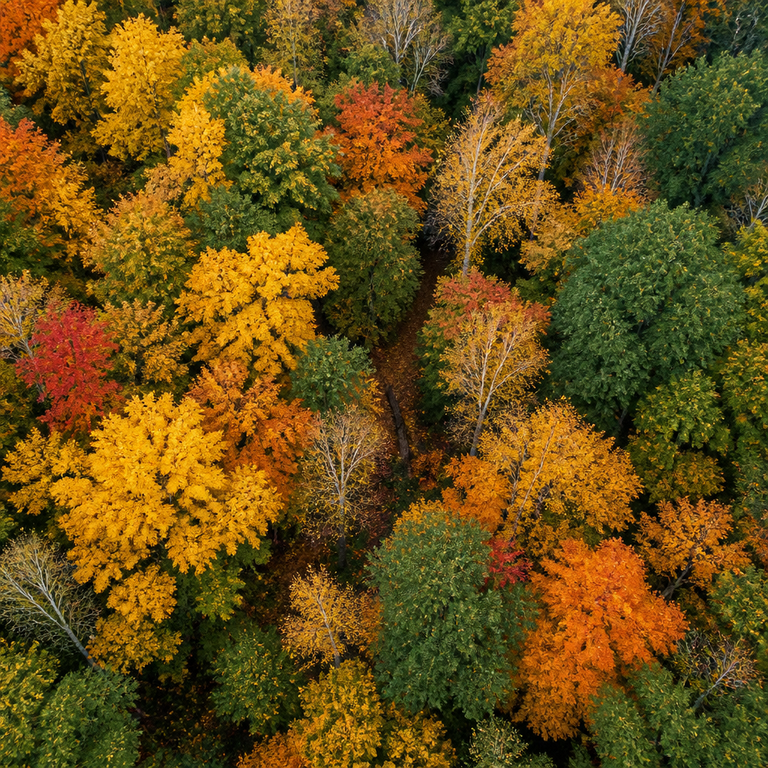
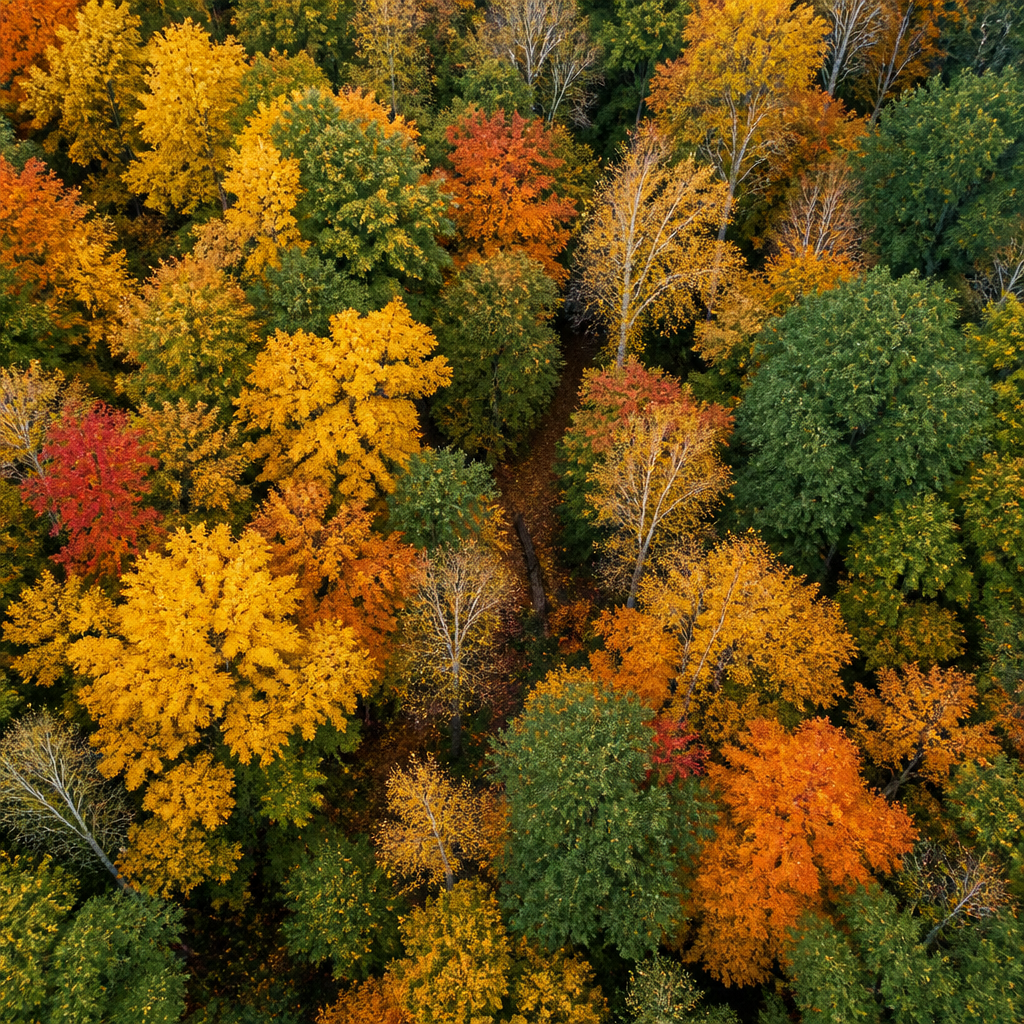
Vermont is one of the most forested states in the contiguous United States, with roughly 76% of its land covered by trees, totaling approximately 4.49 million acres as of 2022 Forest Inventory and Analysis data. The dominant type is a northern hardwood mix of beech, birch, and maple, which accounts for 71% of forest cover. That is not an accident. It is the result of deliberate, multi-generational stewardship guided by state policy, private landowner responsibility, and a cultural commitment to the land that runs deeper than marketing language. Vermont sustainable forestry is not a slogan. It is a legal and ecological framework that shapes how every tree is grown, harvested, and replaced. And when a company like Better Wheel VT crafts a TreeSleeve from sustainably sourced Vermont hardwood, that product is the downstream result of all of it.
Table of Contents
- Quick Takeaways
- Who Owns Vermont's Forests and Why It Matters
- The Use Value Appraisal Program: Vermont's Primary Policy Engine
- Acceptable Management Practices: The Rules on the Ground
- Silviculture and Hardwood Forest Management in Practice
- Third-Party Certification: FSC, SFI, and What They Actually Mean
- From Forest to Eco Vermont Products: Closing the Loop
- Frequently Asked Questions
- References
Quick Takeaways
| Key Insight | Explanation |
|---|---|
| 76% of Vermont is forested | Vermont's 4.49 million acres of forest represent one of the highest forest-cover rates in the country, dominated by northern hardwood species. |
| 80% of Vermont forests are privately owned | The majority of the forest base depends on private landowner decisions, making programs that incentivize good stewardship critical to statewide outcomes. |
| The Use Value Appraisal (UVA) program drives sustainable practice | Vermont's UVA program taxes enrolled forestland based on forestry value rather than development value, financially rewarding landowners who follow approved management plans. |
| Acceptable Management Practices (AMPs) are legally binding | Vermont's AMPs require all logging operations on public and private land to protect water quality, soil health, and aquatic habitat. Non-compliance carries real enforcement penalties. |
| Silvicultural practices vary by forest goal | Selection harvesting, shelterwood cuts, and clearcuts each serve different ecological purposes. Responsible hardwood management almost always favors uneven-aged approaches. |
| FSC and SFI certification provide chain-of-custody accountability | Third-party certifications verify that wood sourced from Vermont's forests meets internationally recognized standards at every step from stump to finished product. |
| Sustainably sourced hardwood products extend forest stewardship | When consumers choose products made from certified Vermont hardwood, they create an economic incentive that keeps forestland in productive management rather than development. |
Who Owns Vermont's Forests and Why It Matters
Ownership is the starting point of any honest conversation about hardwood forest management. According to research published through the USDA Forest Service, families own roughly 67% of Vermont's forestland, which is significantly higher than the national average of 35%. The remaining forest is split among federal holdings (approximately 10%), state-managed lands (approximately 8%), and municipal parcels (approximately 2%).
That ownership breakdown has enormous practical consequences. Statewide forest health cannot be achieved through state-managed lands alone. It depends on what thousands of individual private landowners choose to do on their own property, year after year, often without any professional forester ever setting foot on the land. This is the central challenge of Vermont sustainable forestry: how do you produce consistent, ecologically sound outcomes across a patchwork of private ownership?
The answer is a combination of financial incentives, enforceable rules, and a professional forestry culture that views timber harvesting and forest health as compatible goals, not competing ones. Vermont has built all three, and the results show up in the sustained density and species diversity of the northern hardwood mix that covers most of the state.
Sustainable management of family-owned woodlots could provide social and economic benefits for generations, but achieving it at scale requires both policy instruments and a culture of land stewardship that outlasts any single harvest.
Pro tip: If you buy a product made from Vermont hardwood, ask whether the wood comes from a forest enrolled in the Use Value Appraisal program or certified under FSC or SFI standards. Those two questions alone will tell you more about the wood's origin than any marketing copy.
The Use Value Appraisal Program: Vermont's Primary Policy Engine
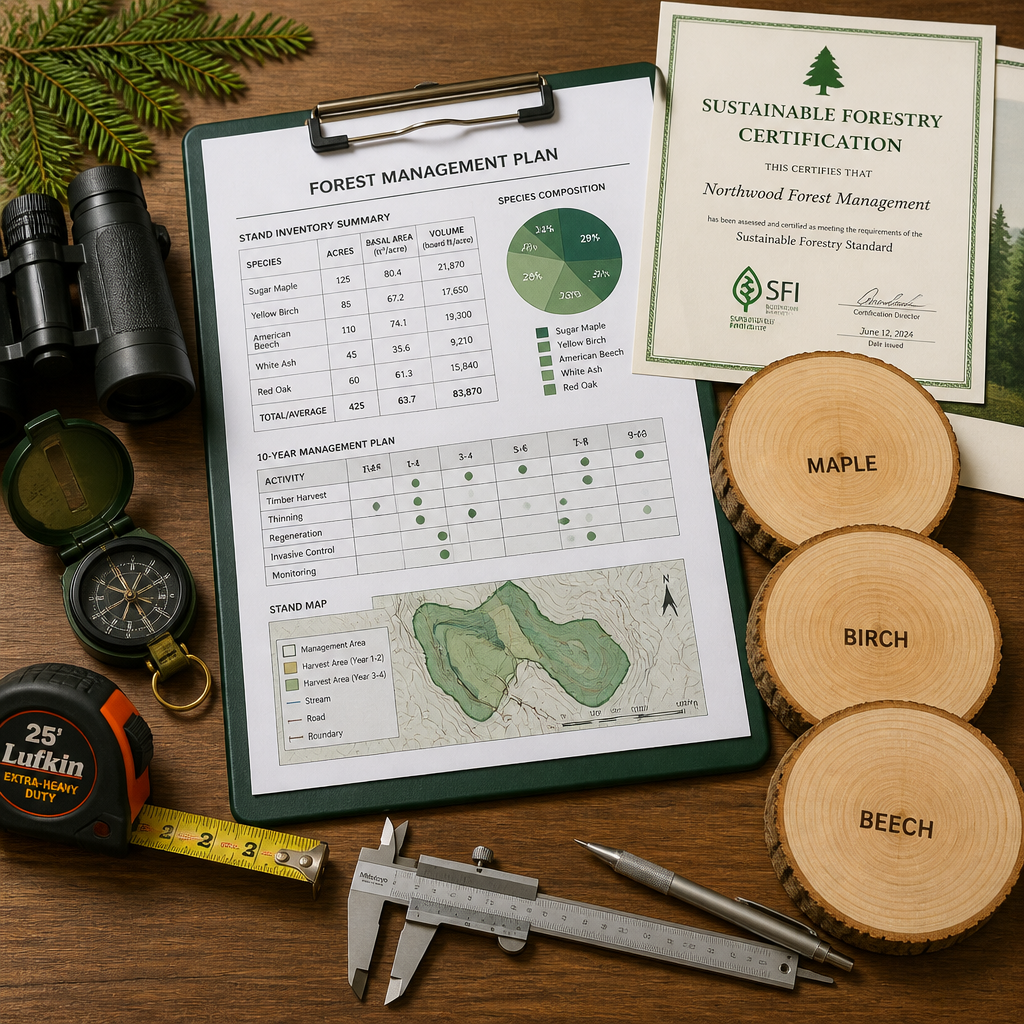
Vermont's Use Value Appraisal program, also referred to as "Current Use" or simply "UVA," is the most important policy tool the state has for encouraging long-term, responsible forest management on private land. The mechanism is direct: landowners who practice long-term forest management can have their enrolled land appraised for property taxes based on its value for forestry rather than its fair market or development value.
That distinction is significant in Vermont, where land values have risen considerably and the development pressure on forested parcels is real. Without UVA, a woodlot owner sitting on 50 acres of mature hardwood near a town might face property taxes calculated on what a developer would pay for the land, which makes unplanned or liquidation harvesting economically tempting. UVA removes that pressure, replacing it with an incentive to follow an approved forest management plan.
What UVA Enrollment Actually Requires
Enrollment is not automatic or passive. When land is enrolled in the UVA program, the state attaches a lien to the deed. The enrolled land must be actively managed according to a written forest management plan. If the landowner withdraws from the program or the land is converted to non-forestry use, there are financial consequences built into the exit terms.
Research from the USDA Forest Service that studied four counties in northern Vermont found positive correlations between UVA enrollment and the use of sustainable silvicultural practices on harvested properties. The data suggests UVA has meaningfully increased the application of responsible silviculture compared to areas of the Northeast without equivalent programs. The same research also noted that UVA's adoption is not universal, meaning a significant portion of Vermont's private forestland is harvested without the accountability structure the program provides.
Pro tip: When evaluating any Vermont wood product, "sustainably sourced" means more as a claim when the supplying forest operation has documented UVA enrollment or equivalent third-party certification. A management plan on file is better evidence of stewardship than a label.
Acceptable Management Practices: The Rules on the Ground
Vermont's Acceptable Management Practices for Maintaining Water Quality on Logging Jobs, commonly called AMPs, are the state's legally enforceable rules governing how every timber harvest must be conducted. They apply to logging operations on both public and private forestland without exception.
The AMPs address a specific and serious risk: the damage that a poorly executed timber harvest can cause to Vermont's waterways, soils, and aquatic habitat. Under Vermont statute, every logging operation must be designed and carried out in ways that prevent or minimize discharges of sediment, petroleum products, and woody debris (logging slash) from entering streams and other water bodies. The rules also require that operations improve soil health, protect aquatic habitat and wildlife, prevent erosion, and maintain natural water temperatures in streams adjacent to harvest areas.
Who the AMPs Apply To and What Non-Compliance Looks Like
The AMPs are not voluntary guidelines. Loggers and landowners who choose not to implement them can face enforcement action and significant penalties if state waters are negatively affected by a logging operation. The Vermont Department of Forests, Parks and Recreation administers and updates these rules, and a revision process completed after July 2016 strengthened several provisions.
From a practical standpoint, implementing AMPs means planning stream crossings carefully, establishing buffer zones along waterways, timing harvests to avoid periods when soils are saturated, and cleaning up logging slash in ways that do not create erosion pathways. None of this is optional, and none of it is new. Vermont has maintained this framework for decades, which is a meaningful part of why its forests remain productive and its rivers cleaner than those in states with weaker logging regulations.
Silviculture and Hardwood Forest Management in Practice
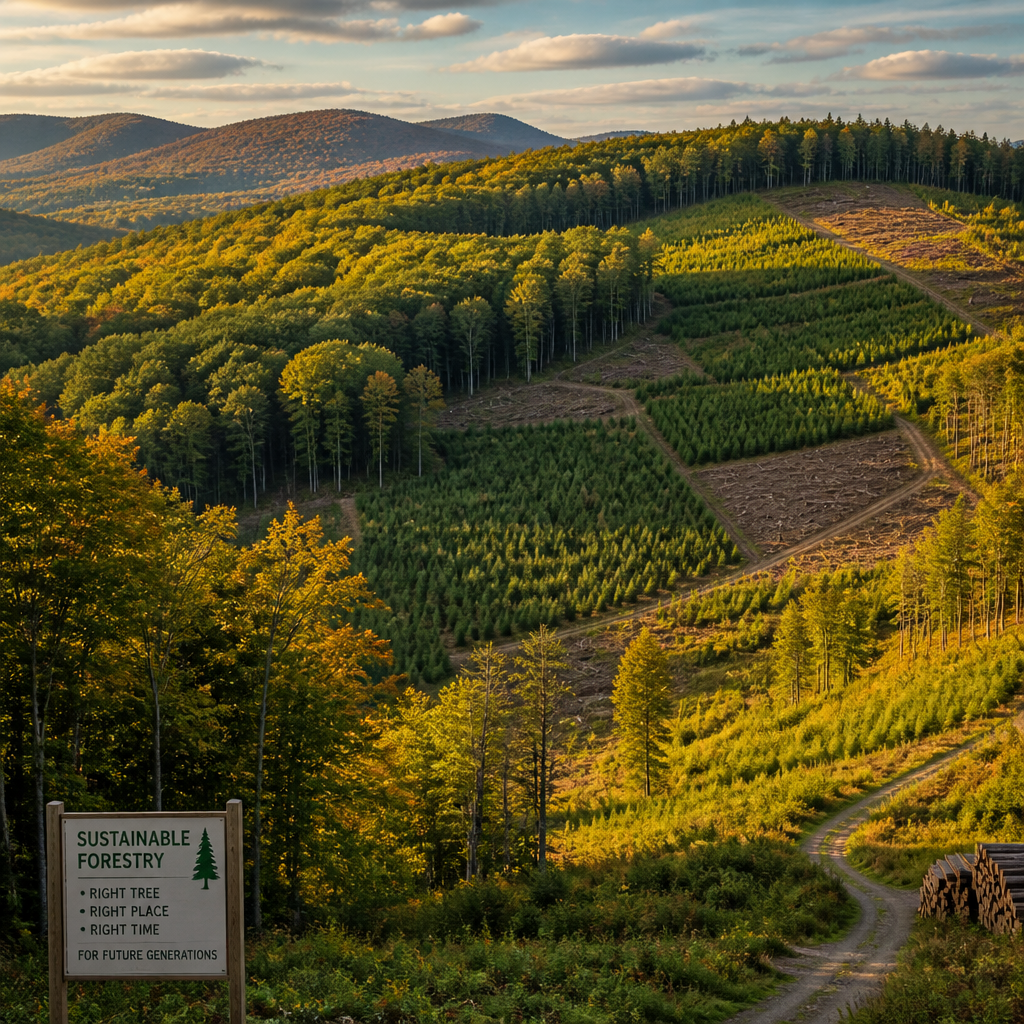
Silviculture is the science of controlling forest establishment, growth, composition, and quality. For Vermont's northern hardwood forests, silvicultural decisions determine not just what gets harvested today but what species composition the forest will carry for the next 80 to 120 years. This is where hardwood forest management moves from policy into actual on-the-ground practice.
Selection Harvesting: The Most Common Approach in Vermont Hardwood Stands
Single-tree selection and group selection are the most widely used silvicultural systems in Vermont's hardwood forests. In single-tree selection, individual trees are removed across the stand, maintaining a multi-aged forest structure at all times. This approach favors shade-tolerant species like sugar maple and beech, which can regenerate under partial canopy cover.
Group selection removes small clusters of trees, creating gaps of roughly a tenth of an acre to a half acre. This method benefits mid-tolerant species that need more light than full shade but less than a clearcut provides. Yellow birch, an important commercial species in Vermont, often regenerates well in group selection gaps.
Shelterwood Cuts and Clearcuts: When and Why They Are Used
Shelterwood systems remove mature trees in two or more cuts over a decade or more, leaving enough canopy to shelter regenerating seedlings before removing the remaining overstory. This is sometimes appropriate in stands where deer browse pressure requires some physical protection for regenerating trees.
Clearcuts are rarely the right tool in Vermont's northern hardwood context. They can be ecologically justified in specific situations, such as creating early successional habitat for certain wildlife species, but they carry higher erosion and water quality risks if not managed with extreme care, and they are inconsistent with the uneven-aged structure that most Vermont hardwood stands have historically maintained.
Third-Party Certification: FSC, SFI, and What They Actually Mean
Third-party forest certification is the mechanism that connects responsible forest management to the products consumers buy. Two major certification systems operate in Vermont: the Forest Stewardship Council (FSC) and the Sustainable Forestry Initiative (SFI). Both have real standards, but they differ in origin and approach.
| Certification | Origin and Governance | What It Covers in Practice |
|---|---|---|
| FSC (Forest Stewardship Council) | Launched in 1993 by environmental groups; international standard governed by a multi-stakeholder body including environmental, social, and economic chambers | Ecological issues, old-growth forest protections, biodiversity, native habitat, indigenous peoples' rights, and sound timber management. Requires chain-of-custody certification at every step from forest to consumer product. |
| SFI (Sustainable Forestry Initiative) | Independent non-profit; works across the United States and Canada with companies throughout the supply chain | Responsible management of forests, including replanting, responsible harvesting, sourcing practices, and treatment of indigenous land rights. Issues certificates for wood sourcing and supply chain accountability. |
| AHMI (Appalachian Hardwood Manufacturers Inc.) | Trade association specifically focused on Appalachian and northeastern hardwood forests, including Vermont species | Works directly with lumber companies to promote responsible harvesting, replanting, and sourcing. Certification signals ethically sourced hardwood from companies adhering to association standards. |
A common mistake buyers make is treating any one of these certifications as interchangeable with the others. In practice, FSC has the most rigorous chain-of-custody requirements and the most transparent governance structure. SFI is more industry-driven but still meaningfully better than no certification at all. AHMI is region-specific and particularly relevant for Vermont hardwood species. None of these certifications are self-reported. All require independent verification.
Pro tip: An FSC chain-of-custody certification on a finished wood product means every handler between the forest and your hands, including the sawmill, kiln, and manufacturer, has been independently audited. That is a much stronger claim than "sustainably sourced" printed on a hang tag.
From Forest to Eco Vermont Products: Closing the Loop
Vermont's sustainable forestry framework only delivers on its promise when the wood that comes out of managed forests ends up in products that give it long-term value rather than immediately disposable uses. This is where the concept of eco Vermont products becomes more than a marketing phrase. A product made from sustainably managed Vermont hardwood, designed to last and fully biodegradable at end of life, represents the full arc of what responsible forest stewardship is supposed to produce.
Better Wheel VT's TreeSleeve is a working example of this logic applied to an everyday object. A can insulator crafted from sustainably sourced Vermont hardwood is not a novelty. It is a deliberate choice to use a durable, renewable material for a product that most of the market makes from foam or neoprene, both petroleum-derived and non-biodegradable. The hardwood in a TreeSleeve comes from forests managed under the very practices described throughout this article: state-regulated harvesting, voluntary certification, and long-term silvicultural planning.
Why the Source of the Wood Is the Whole Story
Vermont's forest management framework is what allows a manufacturer to make a credible sustainability claim. Without it, "locally sourced wood" is just geography. With it, locally sourced Vermont hardwood means beech, birch, or maple grown in a forest managed under an approved plan, harvested in compliance with the AMPs, and processed with chain-of-custody accountability. That is a meaningful difference from generic hardwood sourced without verification.
Vermont's state forest management on public lands explicitly seeks to be "socially acceptable, economically viable, and ecologically sound," integrating silvicultural practice with an ecosystem-based approach. When that standard is met consistently, the result is a forest that continues producing high-quality hardwood timber indefinitely, which is exactly the supply chain that eco-conscious product manufacturers need to build on.
Consumers who choose a TreeSleeve over a foam koozie, or who give one as a gift to an outdoor-loving friend, are participating in that supply chain. The choice creates demand for products that depend on well-managed Vermont forests, which in turn strengthens the economic case for keeping that land in forestry rather than development. It is a closed loop, and it works.
Frequently Asked Questions
What species of hardwood trees are most common in Vermont's managed forests?
Vermont's northern hardwood forests are dominated by sugar maple, American beech, and yellow birch. Together with other hardwood species, this northern hardwood mix accounts for 71% of the state's total forest cover. Sugar maple is the most commercially and ecologically significant species, valued for both timber and maple syrup production. Yellow birch is an important timber species often targeted in sustainable harvests. Beech, while valuable as wildlife mast, has been affected by beech bark disease, which complicates management decisions in many stands.
How does the Use Value Appraisal program actually prevent bad harvesting practices?
UVA enrollment requires landowners to follow an approved, written forest management plan prepared by a licensed forester. That plan must meet state standards and is subject to review. If a landowner harvests timber in ways that violate the plan, they risk losing UVA benefits and facing financial penalties tied to the back-tax structure of the program. The lien attached to the deed upon enrollment creates a concrete disincentive for abandoning management commitments. Research comparing enrolled and non-enrolled properties found that UVA-enrolled lands show meaningfully higher rates of acceptable silvicultural practice.
Are Vermont's logging regulations among the strictest in the country?
Vermont's Acceptable Management Practices are legally binding and apply to both public and private forestland, which puts them in a stronger position than many states where equivalent guidelines are voluntary. The requirement that logging operations actively protect water quality, soil health, and aquatic habitat, with enforcement penalties for non-compliance, represents a substantive regulatory standard. Whether Vermont's rules are the strictest nationally is difficult to state categorically, but they are clearly more rigorous than states that rely purely on voluntary best-practice guidance.
What does "sustainably sourced Vermont hardwood" actually mean for a finished product?
At minimum, it should mean the wood came from a forest managed under an approved forest management plan that complies with Vermont's Acceptable Management Practices. Ideally, it also means the sourcing can be verified through third-party certification such as FSC or SFI, which require independent audits of management practices. When a manufacturer like Better Wheel VT uses sustainably sourced Vermont hardwood, that claim is most credible when it connects back to documented forest management, not just geographic origin. The forest management framework, not the state boundary, is what makes the wood genuinely sustainable.
How do I know if an eco Vermont wood product is genuinely sustainable or just greenwashing?
Look for verifiable specifics rather than general claims. A product that can cite FSC or SFI chain-of-custody certification, name the certification holder, or point to forest management documentation is in a different category from one that simply says "eco-friendly" or "natural." Ask whether the wood comes from Vermont forests managed under approved plans, whether the manufacturer can document the source, and whether the product is fully biodegradable at end of life. If the answer to all three is yes and verifiable, the sustainability claim is credible. If the manufacturer cannot answer those questions, treat the claim cautiously.
Why is Vermont particularly well-suited for producing sustainable hardwood products?
Vermont's combination of factors is relatively rare. High forest cover (76% of the state), a long-established legal framework for logging regulation, a policy instrument (UVA) that financially rewards responsible management, a professional forestry community with deep regional knowledge, and a cultural relationship with the land that predates modern sustainability marketing, all of these work together. The northern hardwood species that dominate Vermont's forests also happen to produce dense, attractive, durable timber that is well-suited to crafted wood products. The state's relatively cool climate slows tree growth, which produces tighter grain and harder wood, qualities that translate directly into product durability.
Have you ever thought twice about where the wood in your everyday products actually comes from? Share what prompted you to start asking those questions.
References
- Vermont Legislature presentation on sustainable forest management: data on forest cover, ownership, and species composition
- USDA Forest Service research on sustainable forest management practices and the Use Value Appraisal program in Vermont
- Vermont Department of Forests, Parks and Recreation: state lands management and silvicultural practices
- Vermont Agency of Natural Resources: Acceptable Management Practices for water quality on logging jobs
- Overview of FSC, SFI, and AHMI wood sourcing certifications relevant to Vermont hardwood products
Share:
Sustainably Sourced Wood Products: The Complete Guide
TreeSleeve™: Best Groomsmen Gift for Outdoor Weddings