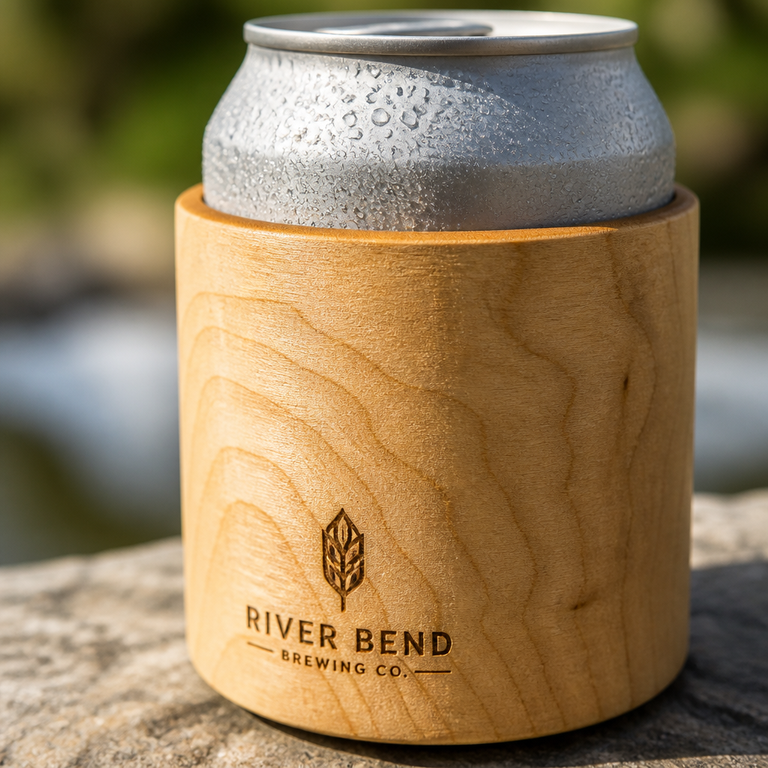
Most can insulators are made from neoprene, a petroleum-based foam that keeps your beer cold for about twenty minutes before ending up in a landfill for the next five hundred years. That trade-off bothers a lot of people, but until recently there was no credible alternative built for outdoor use. Vermont hardwood changes that equation entirely. The TreeSleeve™ from Better Wheel VT is a fully biodegradable can insulator milled from sustainably sourced wood harvested right here in Vermont's forests, and the story behind it is worth telling in full.
Table of Contents
- Quick Takeaways
- Why Vermont Hardwood Matters for a Can Insulator
- How Sustainable Sourcing Works in Vermont Forests
- TreeSleeve Design, Function, and Real-World Performance
- Eco-Friendly Beer Sleeve: How TreeSleeve Stacks Up
- Who Buys TreeSleeve and Why They Choose It
- Gifting and Custom Options for Outdoor Enthusiasts
- Frequently Asked Questions
- References
Quick Takeaways
| Key Insight | Explanation |
|---|---|
| Vermont hardwood is the right material | Dense hardwoods like maple and cherry provide natural insulation properties that neoprene foam cannot match in terms of longevity or biodegradability. |
| Sustainable sourcing is not a marketing phrase | Vermont's forests are among the most responsibly managed in the United States, with strict state-level harvesting regulations ensuring forest health long-term. |
| Biodegradability is a measurable advantage | A TreeSleeve™ returns to the earth in years, not centuries. Standard neoprene koozies take an estimated 500 years to break down in a landfill. |
| Design choices reflect the landscape they come from | Wildlife motifs and outdoor themes on TreeSleeve™ products are not decorative filler. They reflect the specific ecosystems where the wood was harvested. |
| Custom options make it a serious gift | Custom engraving on hardwood produces a tactile, permanent result that printed neoprene cannot replicate, making TreeSleeve™ a standout gift for outdoor enthusiasts. |
| Eco-conscious shoppers want proof, not promises | TreeSleeve™ answers that demand by being fully traceable to Vermont forest sources, not overseas suppliers with opaque supply chains. |
| Outdoor use is where hardwood outperforms foam | In cold, wet, or rugged outdoor conditions, a hardwood sleeve holds its shape and structure far better than a neoprene koozie that compresses and degrades with repeated use. |
Why Vermont Hardwood Matters for a Can Insulator
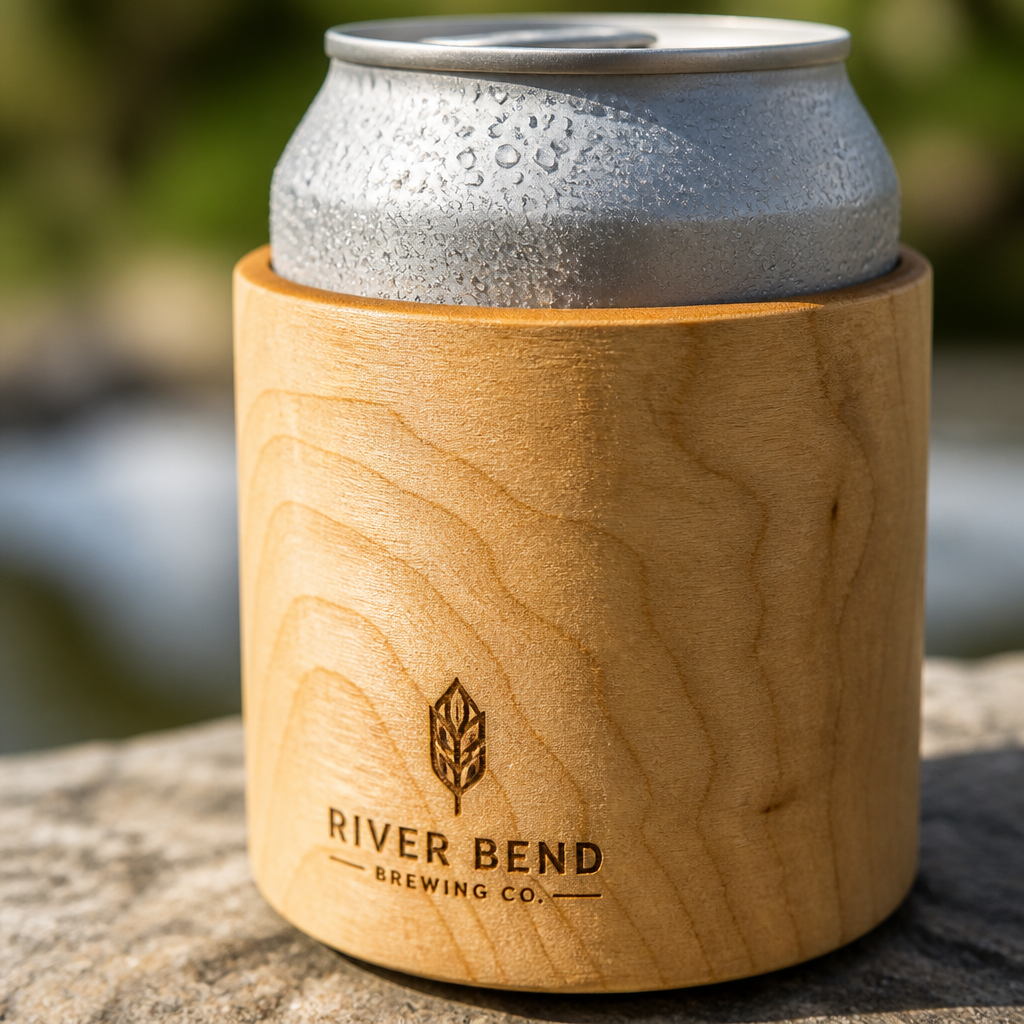
The instinct to reach for wood as a functional material is older than plastics by several thousand years. What makes Vermont hardwood specifically relevant to a can insulator is not nostalgia. It is thermal mass, density, and grain structure. Hardwoods like sugar maple, yellow birch, and black cherry, which are native to Vermont's northern forests, have a cellular structure that resists heat transfer more effectively than the thin foam walls of a standard neoprene koozie.
In practice, a thin-walled hardwood sleeve acts as a buffer between your warm hand and the cold aluminum can. The wood absorbs and dissipates body heat rather than conducting it directly to the can. That is basic thermodynamics, not clever marketing. The result is a drink that stays colder for longer during a hike, a tailgate, or a weekend at a music festival.
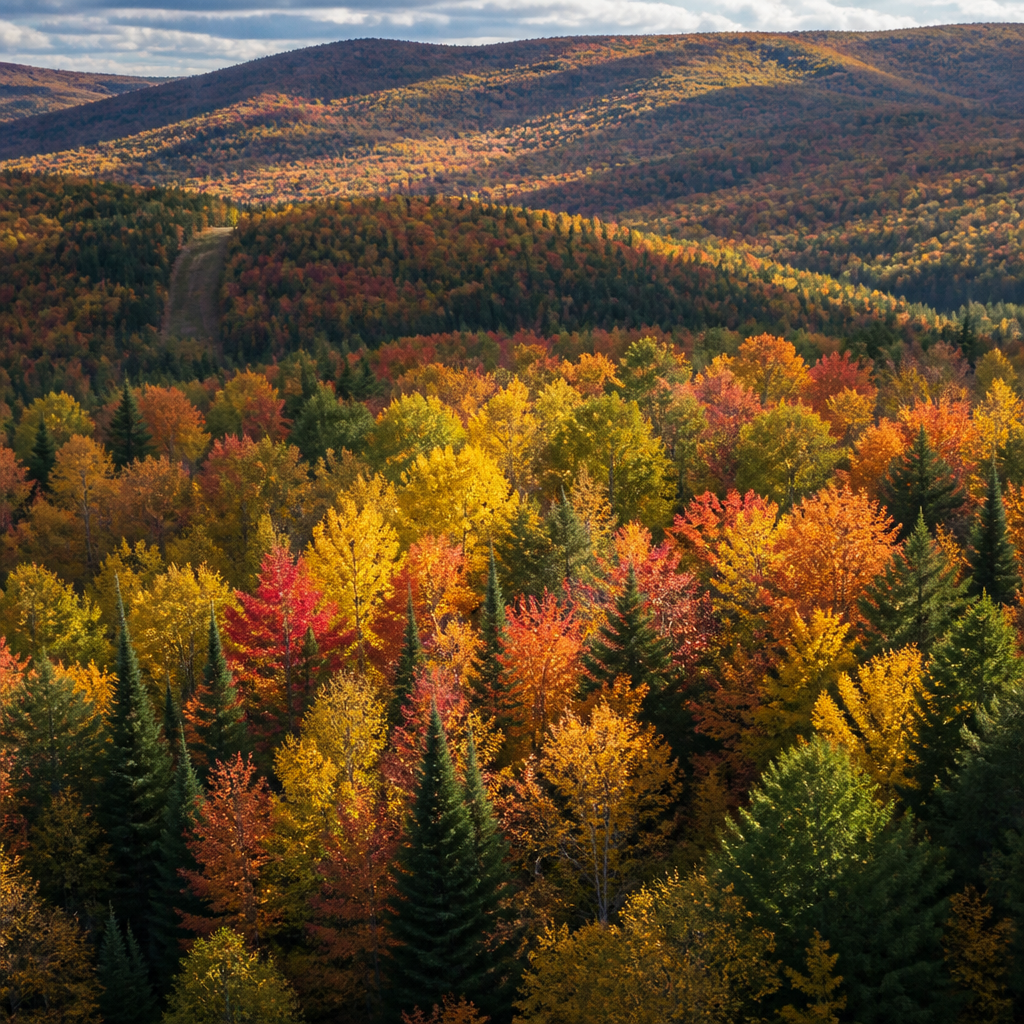
Beyond performance, the sourcing geography matters. Vermont is one of the most forested states in the continental United States, with approximately 78 percent of the state covered in forest according to the USDA Forest Service. Those forests are actively managed, not just preserved. That distinction is important because managed forests produce healthier trees, better-quality timber, and more reliable regeneration cycles than forests left entirely to chance.
Pro tip: When evaluating any wood product marketed as eco-friendly, ask where the wood was harvested and whether the supplier can name the state or region. A claim of "sustainably sourced wood" with no geographic specificity is a warning sign, not a credential.
How Sustainable Sourcing Works in Vermont Forests
Vermont has a long-standing forestry culture built around selective harvesting, not clear-cutting. The state's Current Use Program, managed through the Vermont Department of Taxes and the Agency of Natural Resources, incentivizes landowners to keep their land in active forest management by offering reduced property tax assessments. The practical effect of this program is that thousands of private Vermont landowners have a direct financial reason to maintain healthy, productive forests rather than sell them for development.
This policy infrastructure is what makes a claim of sustainably sourced wood in Vermont meaningfully different from the same claim attached to timber imported from regions with weaker environmental oversight. When Better Wheel VT sources hardwood from Vermont forests, they are drawing on a supply chain embedded in a state with real accountability mechanisms, not a certification sticker attached to opaque offshore sourcing.
What Selective Harvesting Means in Practice
Selective harvesting removes specific trees based on age, health, and species composition goals, leaving the surrounding canopy intact. This approach preserves wildlife habitat, prevents soil erosion, and allows the forest to continue sequestering carbon throughout the harvesting cycle. It is the opposite of industrial clear-cutting, and it is the standard practice for responsible Vermont timber operations.
The trees used to produce TreeSleeve™ are not old-growth specimens pulled from a protected wilderness. They are mature hardwoods from managed woodlots, harvested as part of a rotation that ensures younger trees have the space and light they need to grow. That is the full cycle of sustainable forestry, not a simplified version of it.
"Vermont's forests are 80 percent privately owned, and the stewardship decisions made by those private landowners shape the ecological health of the entire region." - Vermont Forests, Parks and Recreation, Agency of Natural Resources
A common mistake people make when buying products marketed as eco-friendly is equating "natural material" with "sustainable sourcing." Cork, bamboo, and wood can all be harvested destructively. The sustainable sourcing story only holds up when you can trace the material back to a specific, accountable supply chain. TreeSleeve™ does that by keeping its sourcing regional and transparent.
TreeSleeve Design, Function, and Real-World Performance
The TreeSleeve™ is precision-milled to fit a standard 12-ounce can. That fit is not approximate. A sloppy fit defeats the purpose of an insulator because air gaps between the sleeve and the can conduct heat. The engineering here is straightforward but unforgiving: the sleeve has to grip the can consistently across thousands of units, each milled from wood that has natural variation in grain and density.
Better Wheel VT solves this by working with the natural properties of Vermont hardwood rather than against them. The species selected for TreeSleeve™ production are chosen for dimensional stability, meaning they resist warping and shrinkage under humidity changes. This matters for outdoor use, where a koozie might go from a cooler full of ice water to a dry, sunny campsite within minutes.
Surface Designs That Come From the Source
The outdoor themes and wildlife motifs engraved on TreeSleeve™ products are not licensed stock art applied to a generic product. They reflect the actual landscape of Vermont, the same forests, deer, birds, and mountain terrain that characterize the region where the wood was harvested. That coherence between material and design is what separates a TreeSleeve™ from a printed neoprene koozie with a mountain graphic on it.
Laser engraving on hardwood produces a permanent, tactile result that does not fade, peel, or wash out. Printed foam degrades. Engraved hardwood does not. For a product positioned as a premium gift or a long-term outdoor companion, that durability difference is not a minor detail. It is the core value proposition.
Pro tip: If you are buying a TreeSleeve™ as a gift, choose a design that matches where the recipient spends time outdoors, not just a generic nature motif. A Vermont deer scene lands differently for someone who hunts or hikes than a coastal design would. The specificity of the choice signals genuine thought.
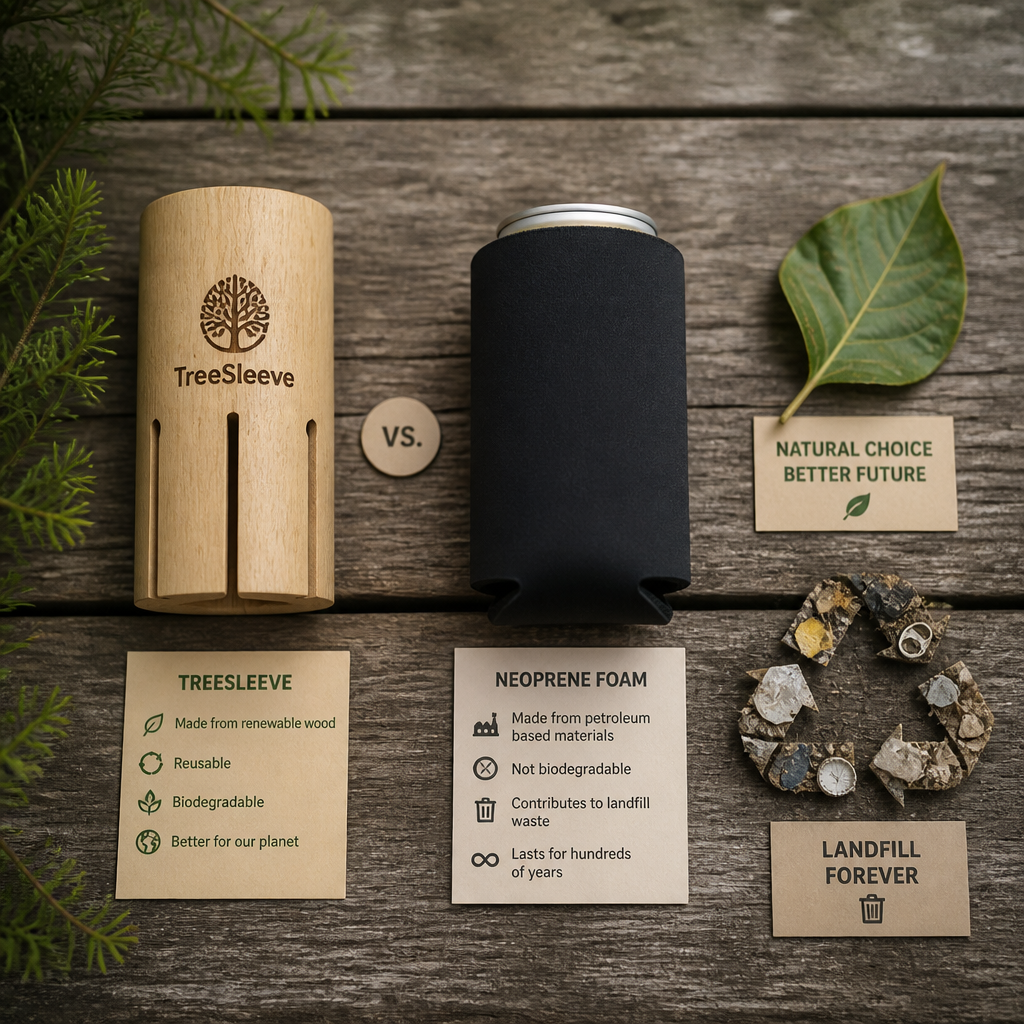
Eco-Friendly Beer Sleeve: How TreeSleeve Stacks Up
The eco-friendly beer sleeve category has grown significantly as consumers push back against single-use plastics and disposable foam products. But not all alternatives are created equal. Here is a direct comparison of TreeSleeve™ against the most common alternatives available on the market.
| Product Type | Material and Sourcing | Biodegradability and End-of-Life |
|---|---|---|
| TreeSleeve™ by Better Wheel VT | Sustainably sourced Vermont hardwood, regionally traceable supply chain, selective harvest practices | Fully biodegradable, returns to soil within years, no microplastic residue |
| Standard Neoprene Koozie (e.g., CoozieCooler, KoozieKing, CustomKoozies) | Petroleum-based synthetic foam, typically manufactured overseas with limited sourcing transparency | Estimated 500-year landfill lifespan, no biodegradation pathway, microplastic shedding under heat |
| Recycled Neoprene or Silicone Sleeve | Post-consumer recycled materials, often blended synthetics with unclear composition ratios | Slower degradation than virgin neoprene but still not biodegradable. Recycled does not mean compostable. |
The data here is not close. A product made from sustainably harvested wood that composts naturally at end of life is categorically different from a petroleum-foam product, even one made from recycled content. Recycled neoprene still ends up in the same landfill. It just took a longer route to get there.
What competitors like cooziecooler.com, koozieking.com, and customkoozies.com offer is volume, customization at low cost, and fast turnaround on bulk orders. Those are real advantages for corporate giveaways and promotional products. They are not advantages for the person who wants a single, well-made, meaningful object that does not compromise their environmental values. TreeSleeve™ is built for that person specifically.
Who Buys TreeSleeve and Why They Choose It
The TreeSleeve™ customer is not buying a can insulator. They are buying a point of view about how products should be made. In practice, the purchase decision usually comes down to one of two profiles: the outdoor enthusiast who wants gear that reflects their values, and the gift-giver who wants something that stands out from the standard options available at any big-box retailer.
For the outdoor enthusiast, the appeal is tactile and philosophical at once. Holding a hardwood sleeve feels different from squeezing a foam koozie. The weight, the grain, the engraving, all of it communicates that this object was made carefully from a real material with a real origin. That experience does not exist in the neoprene category at any price point.
For the gift-giver, the TreeSleeve™ solves the hardest problem in gifting: finding something specific enough to feel personal but useful enough to actually get used. A beer enthusiast who camps, hikes, or attends outdoor festivals has a clear use case for a well-made can insulator. Pair it with a local Vermont craft beer and you have a gift that communicates genuine effort without requiring excessive spending.
According to Statista, the eco-friendly products market in the United States was valued at over $150 billion in 2021 and continues to grow as younger consumers, particularly millennials and Gen Z, actively prioritize sustainability credentials in their purchasing decisions. TreeSleeve™ sits at the intersection of that consumer trend and the premium gifting market, which is exactly where growth is happening.
Gifting and Custom Options for Outdoor Enthusiasts
Custom engraving is where the TreeSleeve™ concept becomes genuinely hard to replicate. On a neoprene koozie, customization means printing. The result is flat, two-dimensional, and subject to fading. On hardwood, engraving burns the design into the material itself. It does not sit on top of the surface. It is part of it.
Better Wheel VT offers custom options that make TreeSleeve™ appropriate for a range of gifting occasions: weddings, birthdays, retirement gifts, festival souvenirs, and corporate gifts where the brand wants to communicate environmental responsibility rather than just cost-consciousness. The ability to engrave a name, a date, a logo, or a specific design gives the product a permanence that printed foam cannot approach.
A common mistake gift-givers make is choosing novelty over utility. A novelty item gets used once and forgotten. A well-made, personalized object with a clear use case gets used repeatedly and remembered. TreeSleeve™ is designed to be the second kind of gift. The hardwood construction means it will outlast any comparable foam alternative by years, and the custom engraving means it will carry a specific meaning that a mass-produced koozie cannot hold.
For outdoor enthusiasts specifically, the product works across contexts: a can of beer after a long hike, a cold drink at a summer music festival, a craft IPA at a tailgate. The form factor is universal. What the TreeSleeve™ adds to that universal use case is material quality, environmental integrity, and a design vocabulary that comes directly from the Vermont landscape the wood came from.
Frequently Asked Questions
What type of hardwood is used in TreeSleeve™?
TreeSleeve™ is crafted from sustainably sourced Vermont hardwoods, which include species native to northern New England forests such as sugar maple, yellow birch, and cherry. The specific species used may vary, but all sourcing prioritizes dimensional stability and responsible harvesting from managed Vermont woodlots.
Is the TreeSleeve™ actually biodegradable?
Yes, and the distinction matters. TreeSleeve™ is made entirely from natural wood with no synthetic coatings or foam liners that would prevent decomposition. When the product reaches the end of its useful life, it returns to soil naturally over years, not centuries. Standard neoprene koozies do not biodegrade in any meaningful timeframe.
How does a hardwood sleeve keep a beer cold?
Dense hardwood slows heat transfer between your hand and the aluminum can by absorbing and dissipating body heat rather than conducting it directly to the drink. The natural cellular structure of Vermont hardwood provides thermal buffering that is comparable to, and in some conditions better than, a thin neoprene sleeve, particularly in outdoor environments where the koozie may be wet or compressed.
Can I get a TreeSleeve™ with a custom design?
Yes. Better Wheel VT offers custom engraving options for TreeSleeve™, making it suitable for personal gifts, wedding favors, corporate gifts, and special occasions. Laser engraving on hardwood produces a permanent, tactile result that does not fade or peel the way printed designs on neoprene do. Contact Better Wheel VT directly through betterwheelvt.com for custom order inquiries.
How is TreeSleeve™ different from a standard koozie from sites like customkoozies.com or koozieking.com?
The differences are material, sourcing, and end-of-life outcome. Standard koozies from those suppliers are petroleum-based neoprene, manufactured at scale with no meaningful connection to a specific place or material origin. TreeSleeve™ is made from regionally sourced Vermont hardwood using selective harvesting practices. It biodegrades. It is engraved, not printed. And it comes from a place with a documented commitment to responsible forest management. These are not incremental differences. They are categorical ones.
Is the TreeSleeve™ good for outdoor use specifically?
It is designed for it. Vermont hardwood species selected for TreeSleeve™ production are chosen for dimensional stability, meaning they resist warping under humidity and temperature changes common in outdoor environments. Unlike neoprene, which compresses and deforms with repeated use, hardwood maintains its shape and fit against a standard 12-ounce can over time. For hikers, campers, festival-goers, and anyone spending significant time outdoors, that durability is a direct performance advantage.
Does the wood affect the taste of the beer?
No. TreeSleeve™ is a sleeve that holds the exterior of an aluminum can. The wood never contacts the beer itself. The can is the barrier between the beverage and the sleeve, just as it would be with any other insulator. There is no flavor transfer, no off-gassing, and no interaction between the wood and the drink.
Have you tried a hardwood can sleeve outdoors? Share your experience or tell us what design you would want to see engraved on your TreeSleeve™.
References
- USDA Forest Service: data on Vermont forest cover percentage and forest management practices in the northeastern United States
- Statista: market size and growth trends for eco-friendly and sustainable consumer products in the United States
- Forbes: reporting on consumer demand for sustainable products and how eco-conscious purchasing decisions are reshaping retail categories
- U.S. Environmental Protection Agency: data on neoprene and synthetic foam waste, landfill timelines, and biodegradability standards for consumer products
- Vermont Agency of Natural Resources: information on Vermont's Current Use Program, selective harvesting regulations, and private forest stewardship incentives
Share:
Hardwood Can Insulator: The Outdoor Enthusiast's Upgrade
8 Reasons to Ditch Foam Koozies and Go Biodegradable